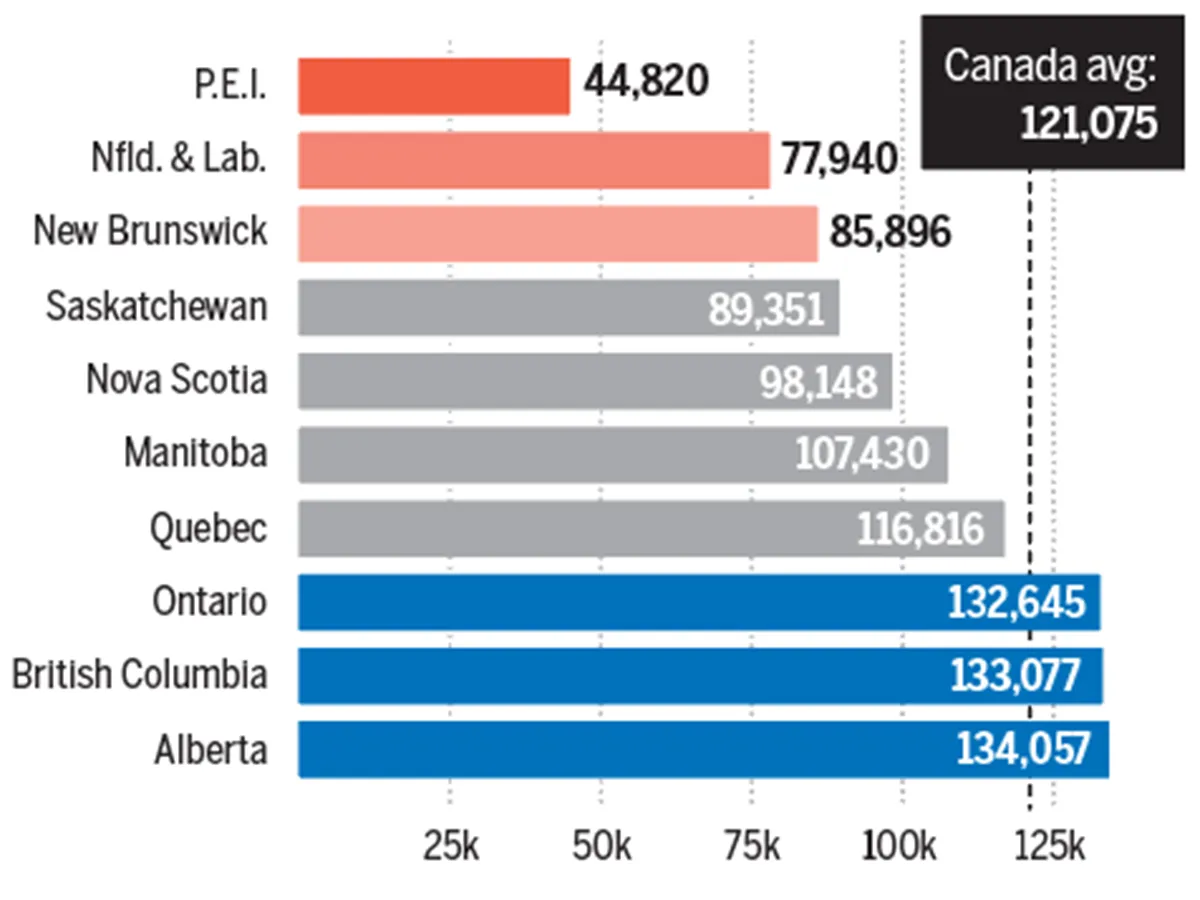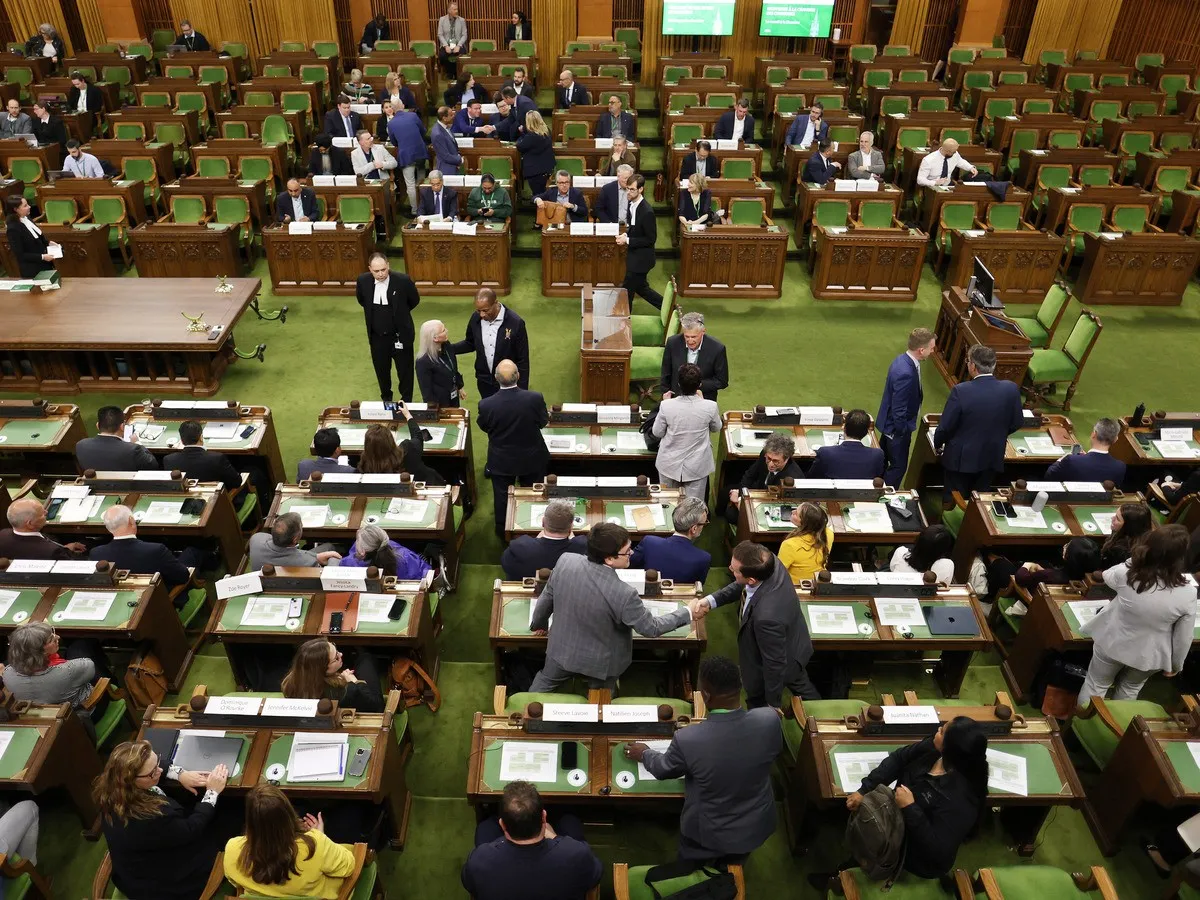
Skip to Content Subscribe Our Offers My Account Manage My Subscriptions FAQ Newsletters Canada Canadian True Crime Canadian Politics Health World Israel & Middle East Financial Post NP Comment Longreads Puzzmo Diversions Comics NP News Quiz New York Times Crossword Horoscopes Life Eating & Drinking Style Sponsored Play for Ontario Travel Travel Canada Travel USA Travel International Cruises Travel Essentials Culture Books Celebrity Movies Music Theatre Television Business Essentials Advice Lives Told Tails Told Shopping Buy Canadian Home Living Outdoor Living Tech Style & Beauty Kitchen & Dining Personal Care Entertainment & Hobbies Gift Guide Travel Guide Deals Savings National Post Store More Sports Hockey Baseball Basketball Football Soccer Golf Tennis Driving Vehicle Research Reviews News Gear Guide Obituaries Place an Obituary Place an In Memoriam Classifieds Place an Ad Celebrations Working Business Ads Archives Healthing Epaper Manage Print Subscription Profile Settings My Subscriptions Saved Articles My Offers Newsletters Customer Service FAQ Newsletters Canada World Financial Post NP Comment Longreads Puzzmo Diversions Life Shopping Epaper Manage Print Subscription HomeNP CommentOpinion: Riding sizes in House of Commons should reflect current population realitiesOntario, B.C., and Alberta are massively disadvantaged. Rebalancing would increase electoral fairness on the House floorLast updated 32 minutes ago You can save this article by registering for free here. Or sign-in if you have an account.The House of Commons chamber on Parliament Hill May 21, 2025 in Ottawa, Canada. Photo by DAVE CHAN /AFP via Getty ImagesCanada in 2026 is obviously not the Canada of 1867. At Confederation, Canada’s population was nearing 3.5 million. As of 2026, it’s almost 42 million. In 1867, there was no Alberta, no Manitoba, no Saskatchewan, and 80 per cent of Canadians lived in rural areas. Today more than 80 per cent live in cities. In 1867, women could not vote. Today they comprise more than half the electorate. In the 19th century, the rights of some Canadians — Indigenous, Jewish, East Asian — were restricted. After the Second World War in particular, the institutional brick walls of discrimination were torn down.Enjoy the latest local, national and international news.Exclusive articles by Conrad Black, Barbara Kay and others. Plus, special edition NP Platformed and First Reading newsletters and virtual events.Unlimited online access to National Post.National Post ePaper, an electronic replica of the print edition to view on any device, share and comment on.Daily puzzles including the New York Times Crossword.Support local journalism.Enjoy the latest local, national and international news.Exclusive articles by Conrad Black, Barbara Kay and others. Plus, special edition NP Platformed and First Reading newsletters and virtual events.Unlimited online access to National Post.National Post ePaper, an electronic replica of the print edition to view on any device, share and comment on.Daily puzzles including the New York Times Crossword.Support local journalism.Create an account or sign in to continue with your reading experience.Access articles from across Canada with one account.Share your thoughts and join the conversation in the comments.Enjoy additional articles per month.Get email updates from your favourite authors.Create an account or sign in to continue with your reading experience.Access articles from across Canada with one accountShare your thoughts and join the conversation in the commentsEnjoy additional articles per monthGet email updates from your favourite authorsSign In or Create an AccountorGiven the demographic, social, legal and political changes in the past 159 years, we suggest one more: Let’s finally make ridings in the House of Commons near-equal in terms of population per riding (with an exception for the territories given their vast size).This newsletter from NP Comment tackles the topics you care about. (Subscriber-exclusive edition on Fridays)By signing up you consent to receive the above newsletter from Postmedia Network Inc.We encountered an issue signing you up. Please try againSome background. In 2025, Alberta (one member of Parliament per 134,057 people) had the highest number of people per federal riding followed by British Columbia (133,077) and Ontario (132,645). The other seven provinces ranged from 44,820 people per riding (Prince Edward Island) to 116,816 (Quebec).Importantly, the ratio of overrepresentation or underrepresentation has not changed much in six decades. According to our new study, which spotlights six election years (1974, 1984, 1993, 2004, 2015 and 2025), the same three provinces — B.C., Ontario and Alberta — were the most underrepresented provinces every year (although their order varied depending on the year).How can a modern democracy treat a vote in one province as two or three times more valuable than in another province? Last year, a federal vote in P.E.I. was worth three times that of a vote in Ontario. A vote cast in Newfoundland and Labrador was worth almost twice that of an Alberta vote.The honest answer is that disparities cannot be justified except for 19th century political hangovers and 21st century politicking. While some House of Commons rebalancing occurs every ten years along with additional seats, provisions including the “Senatorial Clause” (no province shall have fewer MPs than it has senators) and the “Grandfather Clause” (no province may have fewer MPs than in 2019) lead to chronic underrepresentation in the House of Commons for Ontario, Alberta and British Columbia.One cannot justify these disparities on principle. So, here’s what accurate representation would look like.In our study, we calculated a scenario where in 2025 federal ridings were nearly equal in population counts (excepting the territories). We also increased the number of seats to 350 from the actual 343 to ensure no province would end up with fewer seats than warranted by its share in Canada’s population.Here’s what this House of Commons would look like: Ontario would gain 12 seats followed by British Columbia (+5), and Alberta (+4). Saskatchewan would lose three seats. Every Atlantic province and Quebec would lose two seats each. Manitoba would lose one.This rebalancing would increase electoral fairness on the House floor. This matters, especially in light of inequities in the Senate. For example, B.C. has one senator for every 953,720 people compared to 379,651 in Quebec. And recall that the Senate is virtually unreformable due to a 2014 Supreme Court of Canada decision.This type of reform would also bring Canada more in line with other parliamentary democracies.In the United Kingdom, for example, the maximum divergence permitted from the average constituency population is five per cent. As a result, rebalancing occurs regularly. Recently, in response to a review of Westminster constituencies for the 2024 election, England gained 10 constituencies, Northern Ireland’s seat count stayed the same, Scotland lost two constituencies and Wales lost eight constituencies.Similarly, when redistribution occurs in Australia, newly-created constituencies must not diverge from the average of their states or territories by more than 10 per cent. In New Zealand, according to its electoral commission, “Regularly adjusting the electorate boundaries makes sure each electorate has about the same number of people. This gives all New Zealanders equal representation in Parliament.”In Canada, a majority of the public recognizes that unequal ridings are a problem. In our recent Leger poll, 66 per cent of respondents “strongly” or “somewhat” agreed that ridings should have “equal representation.” The strongest support (72 per cent) existed in B.C. with significant support even in overrepresented provinces such as Quebec (64 per cent) or regions such as Atlantic Canada (61 per cent).Of course, rebalancing the House of Commons would be no easy task given politics and the constitutional “floor” for provinces like P.E.I. But we suspect that, like it or not, separatist threats in the West and Quebec may crack open constitutional matters once again. Canadians in underrepresented provinces may wish to think ahead.Canada is the outlier among parliamentary democracies by de facto discounting the weight of votes in one riding vis-à-vis another. It’s time to end the practice.National PostMark Milke is the president and Ven Venkatachalam is a senior economist at the Aristotle Foundation for Public Policy. The Hon. Gordon Campbell is a former premier of British Columbia. They are authors of “It’s 2026, not 1867: A 21st-century review of population and representation in the House of Commons and Senate.” Join the Conversation This website uses cookies to personalize your content (including ads), and allows us to analyze our traffic. Read more about cookies here. By continuing to use our site, you agree to our Terms of Use and Privacy Policy.
Opinion: Riding sizes in House of Commons should reflect current population realities
Ontario, B.C., and Alberta are massively disadvantaged. Rebalancing would increase electoral fairness on the House floor
1,359 words~6 min read