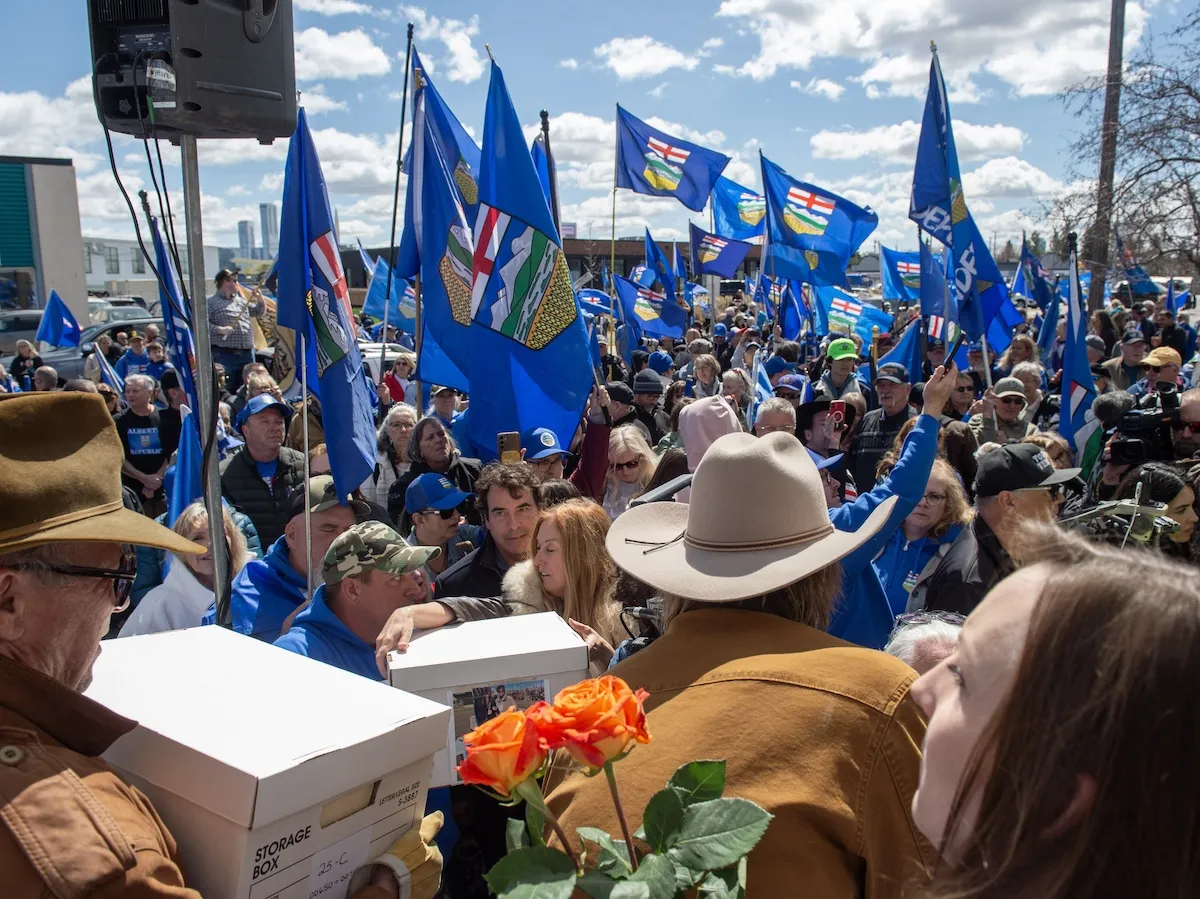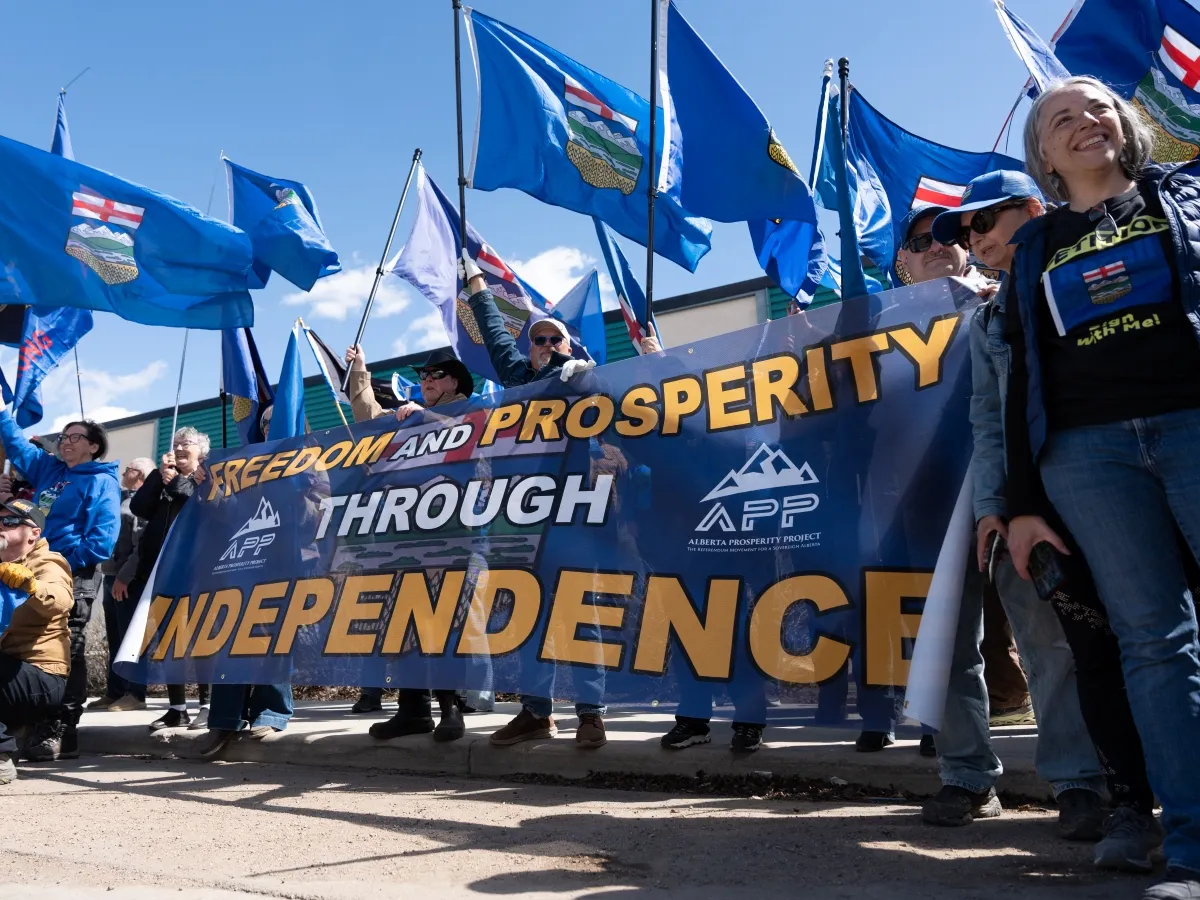
Skip to Content Subscribe Our Offers My Account Manage My Subscriptions FAQ Newsletters Canada Canadian True Crime Canadian Politics Health World Israel & Middle East Financial Post NP Comment Longreads Puzzmo Diversions Comics NP News Quiz New York Times Crossword Horoscopes Life Eating & Drinking Style Sponsored Play for Ontario Travel Travel Canada Travel USA Travel International Cruises Travel Essentials Culture Books Celebrity Movies Music Theatre Television Business Essentials Advice Lives Told Tails Told Shopping Buy Canadian Home Living Outdoor Living Tech Style & Beauty Kitchen & Dining Personal Care Entertainment & Hobbies Gift Guide Travel Guide Deals Savings National Post Store More Sports Hockey Baseball Basketball Football Soccer Golf Tennis Driving Vehicle Research Reviews News Gear Guide Obituaries Place an Obituary Place an In Memoriam Classifieds Place an Ad Celebrations Working Business Ads Archives Healthing Epaper Manage Print Subscription Profile Settings My Subscriptions Saved Articles My Offers Newsletters Customer Service FAQ Newsletters Canada World Financial Post NP Comment Longreads Puzzmo Diversions Life Shopping Epaper Manage Print Subscription HomeNP CommentRaymond J. de Souza: Will Alberta prove a model to emulate in the age of upset?The province has plenty of experience with grievance politicsLast updated 1 day ago You can save this article by registering for free here. Or sign-in if you have an account.Alberta separatism supporters rally in front of the Elections Alberta headquarters in Edmonton, on May 4, 2026. Photo by Henry MARKEN / AFP via Getty ImagesCALGARY — When Albertans vote this October on whether they should vote to separate from Canada at some point, it will be 40 years to the month that Preston Manning gathered a few close advisers to discuss what would become the Reform Party a year later. The slogan then was “The West Wants In.” Now the question is whether Alberta wants out or, to be precise, whether Albertans want to be asked about whether Alberta wants out.Enjoy the latest local, national and international news.Exclusive articles by Conrad Black, Barbara Kay and others. Plus, special edition NP Platformed and First Reading newsletters and virtual events.Unlimited online access to National Post.National Post ePaper, an electronic replica of the print edition to view on any device, share and comment on.Daily puzzles including the New York Times Crossword.Support local journalism.Enjoy the latest local, national and international news.Exclusive articles by Conrad Black, Barbara Kay and others. Plus, special edition NP Platformed and First Reading newsletters and virtual events.Unlimited online access to National Post.National Post ePaper, an electronic replica of the print edition to view on any device, share and comment on.Daily puzzles including the New York Times Crossword.Support local journalism.Create an account or sign in to continue with your reading experience.Access articles from across Canada with one account.Share your thoughts and join the conversation in the comments.Enjoy additional articles per month.Get email updates from your favourite authors.Create an account or sign in to continue with your reading experience.Access articles from across Canada with one accountShare your thoughts and join the conversation in the commentsEnjoy additional articles per monthGet email updates from your favourite authorsSign In or Create an AccountorNo snide remarks, please, about Alberta’s referendum question. Compared to the ambiguities and obfuscations of the Quebec questions in 1980 and 1995, Alberta’s ballot paper will be a model of clean, clear prose.This newsletter from NP Comment tackles the topics you care about. (Subscriber-exclusive edition on Fridays)By signing up you consent to receive the above newsletter from Postmedia Network Inc.We encountered an issue signing you up. Please try againManning, now the grand old man of conservative populism, shared this past week the lessons he considers should have been learned from the 1995 Quebec referendum, namely that voting to remain does not mean a vote for the status quo.It’s worth recalling the tradition which Manning knew well — his father Ernest Manning was Alberta’s longest-serving premier, 1943-1968 — and in which he operated: grievance politics.It’s not an attractive name, but should not be taken as pejorative, but descriptive. Whether grievance politics serves the common good or not depends upon the purposes to which it is put. The Trump phenomenon is the most powerful grievance movement at the moment and is especially creative in finding causes for grievance — immigrants, fake news, real news, trading partners, Ukraine, Greenland and Canada. Whether for good or ill, no one can doubt its political potency.Grievance has always been a part of Alberta politics (and not exclusive to Alberta). Any group that considers itself a minority is inclined toward grievance. And Albertans consider ourselves to be a minority in Canada, and not one kindly treated.That’s not new. There are cartoons from the 1930s with farmers shaking their first at the skies which provided no rain, inveighing against the Canadian Pacific Railway as the central Canadian cause of all their woes. Long before the National Energy Program of the 1980s, the political culture of the West was shaped in significant part by grievance against the prevailing (central Canadian) consensus, both on the right (Social Credit) and the left (Cooperative Commonwealth Federation).When Brian Mulroney defeated the long-governing Liberals in 1984, there was a sense in Alberta that long-standing grievances would be remedied by a new party in charge of the same federal system. In 1986, Manning sensed that those grievances ran deeper than a change in parties could fix. Those parties, after all, depended upon populous central Canada’s seats to win power. If a new party did not solve the old grievances, perhaps it was an entirely new arrangement that was needed, an arrangement that found room for a West that wanted in.The rise of Reform helped take out the party of Sir John A. Macdonald, no mean accomplishment. It did mean another 13 years of easy Liberal rule under Jean Chrétien and Paul Martin. But things were genuinely different. Fiscal responsibility returned to Ottawa, the federal government was a help, not a hindrance, to the development of Alberta’s oil and gas and, post-1995, the 20-year dominance of the Quebec question on the national agenda receded. Manning’s responsible channeling of grievances was a big reason for all that.An age of grievance has returned, around the world and here at home. Albertans know it well. Even in the heady days of the 1970s under Peter Lougheed, when the province had more money than it could possibly spend — and Lougheed was prodigious in his efforts to spend as much as he could — grievance against Ottawa was nurtured. With Lougheed winning all but a handful of seats, he had no local opposition, so it was the federal government that had to play that role.In recent years, fuelled in part by a new digital political culture, a vigorous faction in Alberta politics has feasted upon a collection of grievances — federal energy policy and pandemic measures perhaps the most prominent. Jason Kenney rode the former to the premier’s office, and then the most aggrieved part of his coalition threw him out over the latter.Separatism has now become a point of convergence for an array of grievances, including energy — despite Danielle Smith saying that she can work with Mark Carney — and the pandemic, the fires of which are still being carefully stoked. Equalization, immigration and Indigenous relations are part of the mix too, as well inflation, housing, health care, pensions and other issues which don’t appear to have a particular Alberta angle. Nevertheless, the grievances of today can be offered solutions in a sovereign future, an unfalsifiable argument given that independence has not yet been tried.Everyone in Alberta agrees with Manning, to the extent that (most of) the grievances are acknowledged as legitimate, and the status quo is not defended. The political issue is whether grievances can be guided toward something good, a constructive politics, or come to grief in a politics of destruction.Grievance is not unique to Alberta politics, but Albertans do have more experience in handling it. How they choose to conduct the next several months ahead of the referendum will be a model — either to emulate or avoid — by others in this age of upset.National Post Get the latest from Father Raymond J. de Souza straight to your inbox Join the Conversation This website uses cookies to personalize your content (including ads), and allows us to analyze our traffic. Read more about cookies here. By continuing to use our site, you agree to our Terms of Use and Privacy Policy.
Raymond J. de Souza: Will Alberta prove a model to emulate in the age of upset?
The province has plenty of experience with grievance politics
1,397 words~6 min read