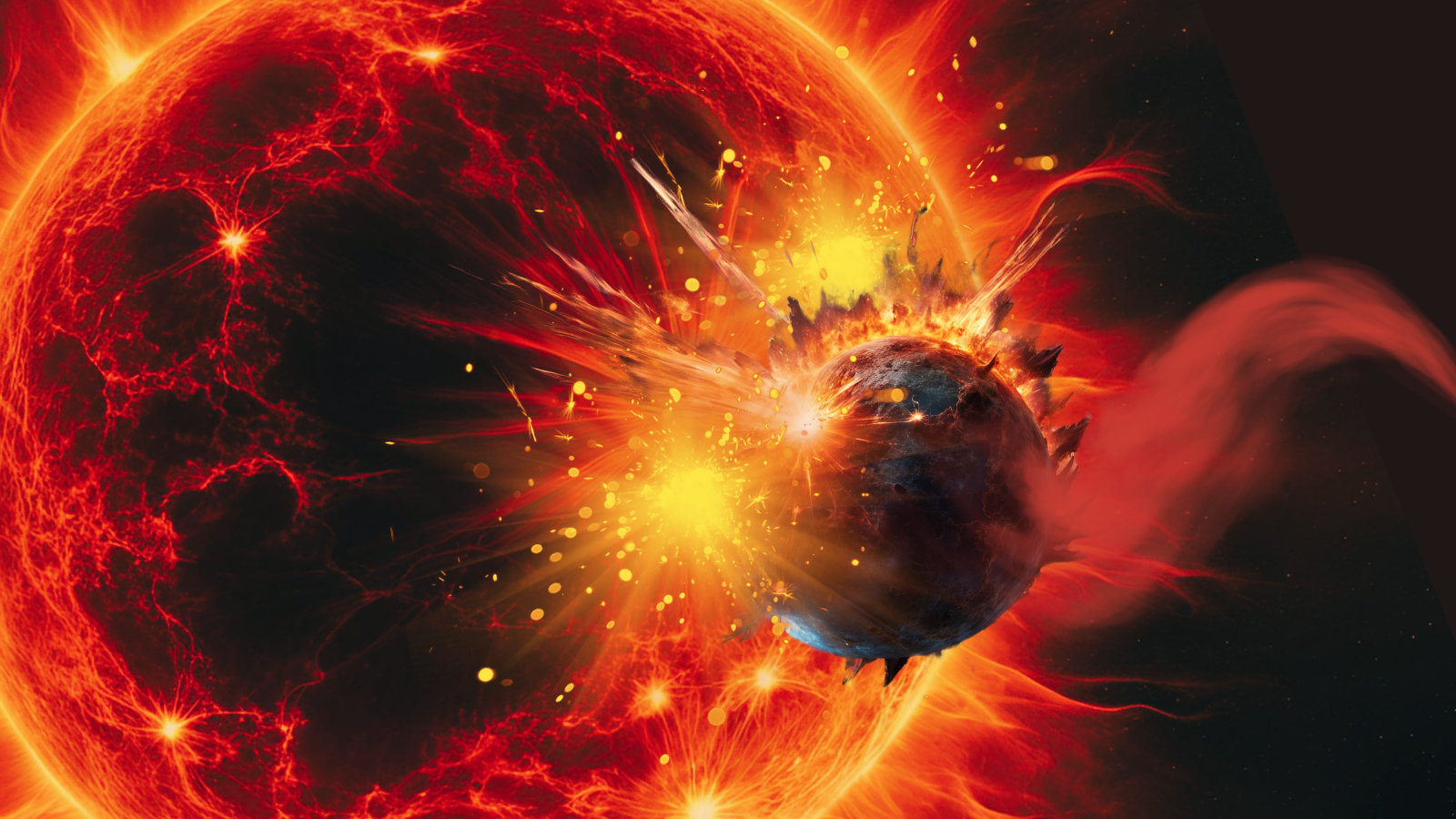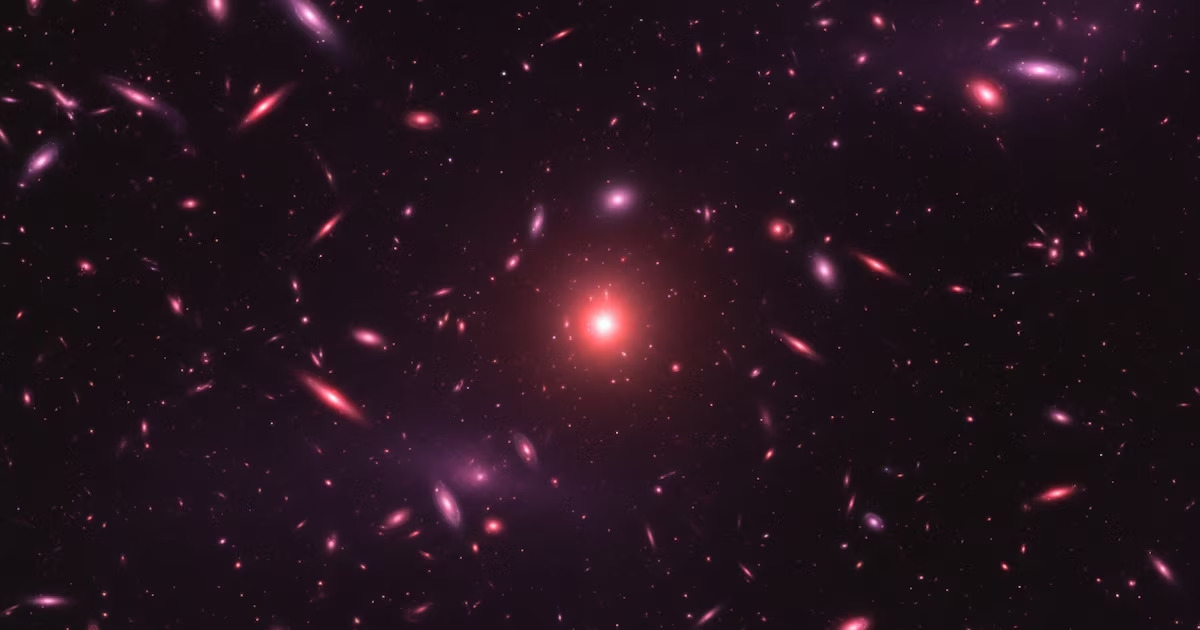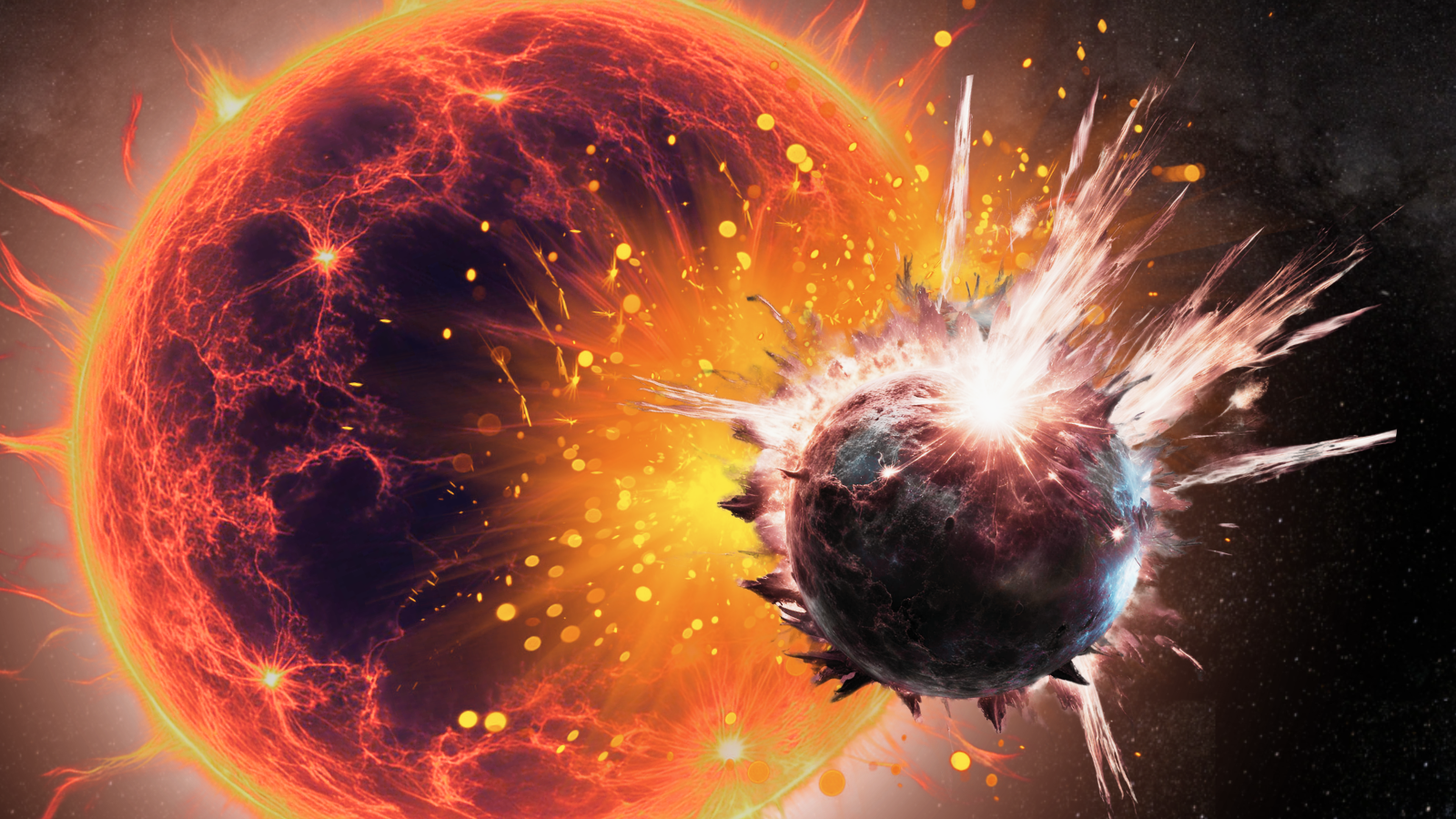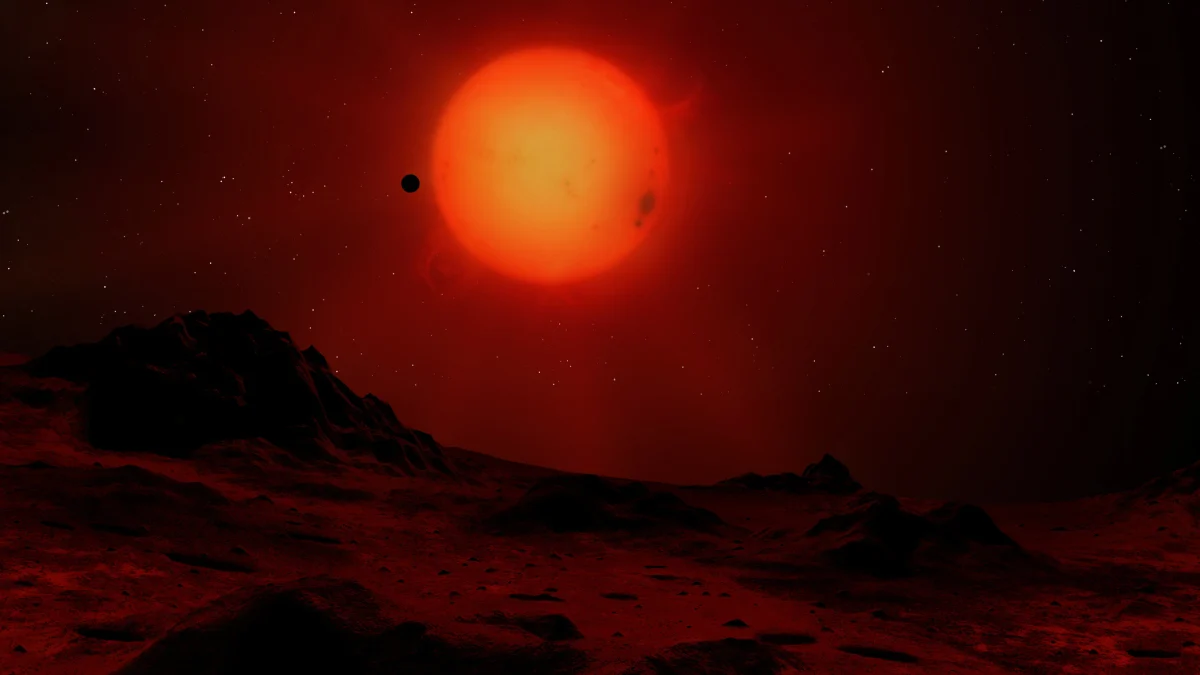
Based on a strange clue, astronomers have found a collection of young red dwarf stars in space that may have gobbled up rocky planets — perhaps similar worlds to Earth. Like sniffing a teenager's breath for alcohol or cigarette smoke, researchers noticed the stars had more lithium in their atmospheres than they should. That could mean they still had the stench of their last meal on them. A red dwarf is a small, cool type of star, and lithium is a lightweight chemical that stars eventually destroy through nuclear reactions. In stars like these, lithium usually disappears early in life because the stars' hot interiors incinerate it. By the time these stars reach adolescence — around 50 to 200 million years old — astronomers expect little to no trace of lithium.
You May Also Like
But a team found six stars out of thousands surveyed that broke the rules in a new study published in Monthly Notices of the Royal Astronomical Society. These stars contained much more lithium than other stars of the same age in their clusters, said Robin Jeffries, lead author of the paper, from Keele University in the United Kingdom. The lithium-rich stars made up only about 2 to 3 percent of stars in that temperature range, making them rare but not flukes. "Even a small amount of lithium stands out clearly in these stars — a bit like throwing paint onto a blank canvas," Jeffries said in a statement. Astronomers already knew stars could swallow planets, but the evidence has usually come from faint, debatable chemical detections. This study may have found a much clearer signal: young red dwarf stars somehow regained lithium, likely by swallowing several Earths' worth of rocky planet material that contains the element.