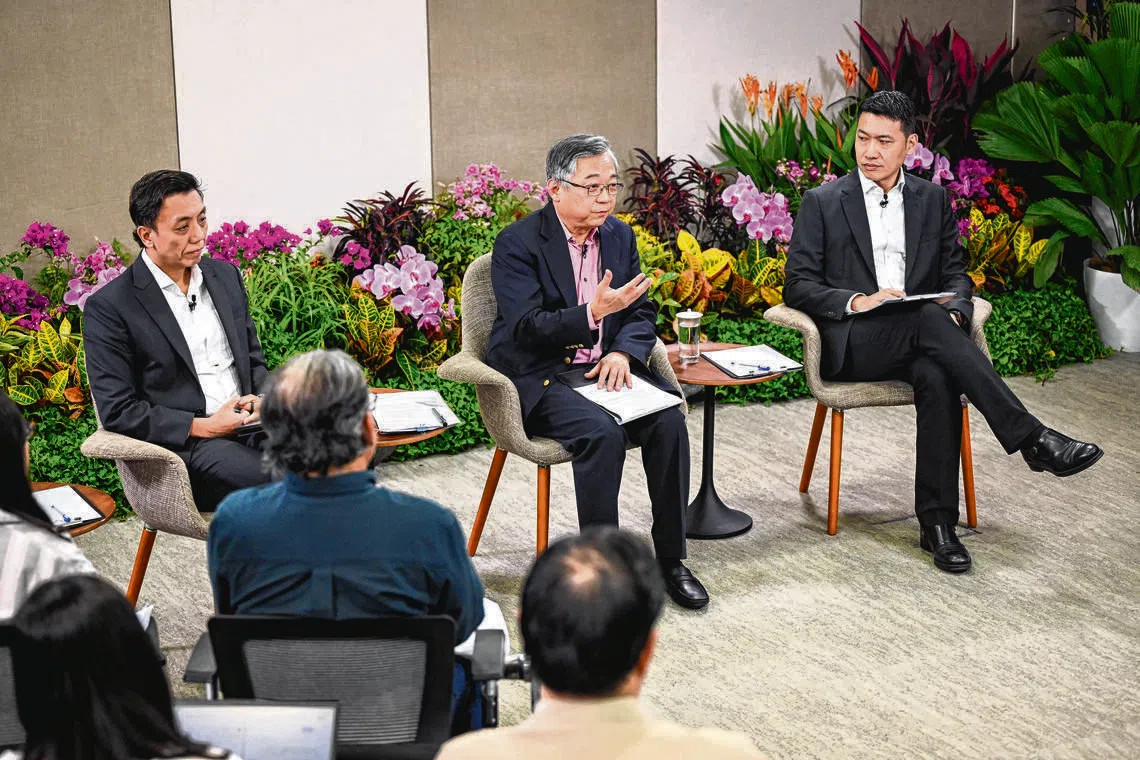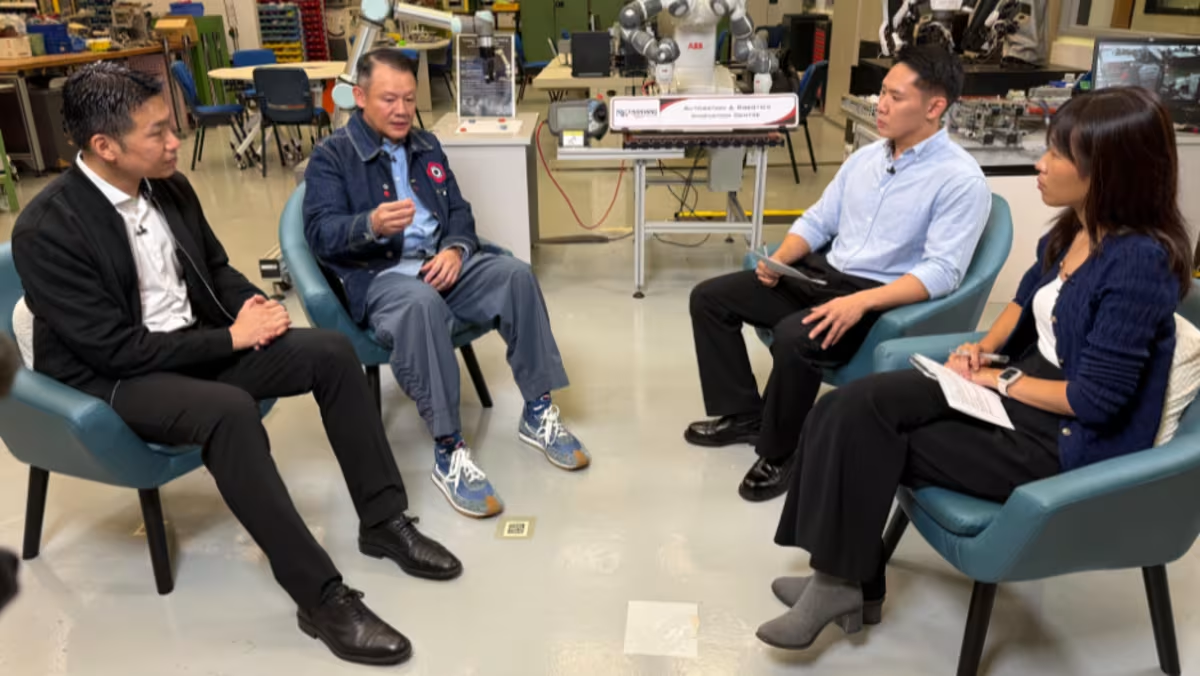
SINGAPORE: Workers in Singapore are likely to feel the impact of artificial intelligence disruption sooner than many elsewhere in the world, said the Economic Strategy Review (ESR) committee on human capital. The warning comes as a national push gets underway to create a wider range of good jobs, while helping workers remain agile and adaptable amid rapid technological transformation. The committee focused on empowering workers said Singapore cannot afford to slow AI adoption simply to preserve existing jobs, as that would erode the nation’s competitiveness. Speaking to CNA, its co-chair David Neo and member Marcus Lam said the priority is not to protect every job, but to ensure workers remain adaptable, competitive and supported as industries evolve.
“We want to protect every worker, but we don't want to do that through protecting every job,” said Mr Neo, who is also acting minister for culture, community and youth. “If we were to just protect jobs in the short term, we'll be doing our workers a disservice in the long term. Because if we are not competitive, then (businesses) will move out of Singapore.” Countries that fail to adapt risk losing industries and investments to more competitive economies, he added. Instead, Singapore should focus on helping workers reskill and upskill, while strengthening career transition support for those whose jobs may be disrupted, he said. WHY SG MAY FEEL AI DISRUPTION SOONER Mr Lam, who is the executive chairman of accounting firm PwC Singapore, said the country's position as a highly open and globally connected economy means technological shifts tend to have a faster and more pronounced impact here. “We’re an open economy, highly competitive, highly skilled and highly value-added. Technological advancement has a compounded impact on us. (We) will feel the impact faster than anyone else in the world,” he said. He acknowledged that this will inevitably create anxiety for workers – from fresh graduates worried about finding a career path to mid-career employees concerned about staying relevant in the age of AI. Business owners, too, are under pressure to keep companies competitive in an increasingly volatile environment, he noted. WHAT MAKES A “GOOD JOB”? A "good job" in Singapore today must go beyond just wages, said Mr Neo.“A good job is not just a job that offers a good pay check. A good job should be one that offers good dignity, stability, as well as social mobility.”The ESR has therefore emphasised broadening the range of quality jobs available across the economy, not just for younger workers, but for workers at every stage of their career, he added.While AI will inevitably automate some tasks, it will also create entirely new opportunities, Mr Neo said.“For example, a prompt engineer wasn't something that existed two or three years ago. But now, it’s a thing,” he added. Beyond economic security, younger Singaporeans are also placing greater emphasis on purpose and meaning at work.Mr Neo cited survey findings showing that three in five young Singaporeans would leave roles that do not align with their sense of purpose.“This is a wonderful opportunity for our businesses to also seek to make that social impact … to provide quality jobs that (not only offer) mobility, dignity, as well as stability, but also meaning and purpose,” he said. When asked what a successful AI-augmented worker might look like five years from now, Mr Neo said the answer remains uncertain, but several traits are already becoming clear. Workers who thrive will be those who utilise AI to handle repetitive and routine tasks while focusing on higher-value work that requires critical thinking, he said. They will also be able to integrate AI meaningfully into business processes and identify new opportunities created by technological advances. Importantly, workers will need to remain agile and adaptable as entirely new sectors and job categories emerge, he noted.ADAPTABILITY WILL BE KEY Both Mr Neo and Mr Lam said Singapore’s success in navigating the AI transition will depend heavily on adaptability and cooperation among workers, businesses and the government. Mr Neo pointed to Singapore’s longstanding tripartite model as a key strength. “This very strong relationship we already have between the government, businesses, unions and workers … is a unique strength that has brought us so far over the last 60 years,” he said.While some policies and initiatives may not work exactly as intended, what matters is the ability to identify problems early, make adjustments and move forward together, he added.“The more we have that sense of community, relationship, and trust … the more we'll be able to ride out this transition well,” said Mr Neo.“The countries, industries and sectors that are better able to incorporate AI to augment their workers to do well will be the ones that come up on top.”Mr Neo stressed the need to evolve jobs at pace so that Singapore remains a competitive hub for companies and industries.“Ultimately, that’s going to be what provides good jobs, not just today but tomorrow for all our workers,” he said.