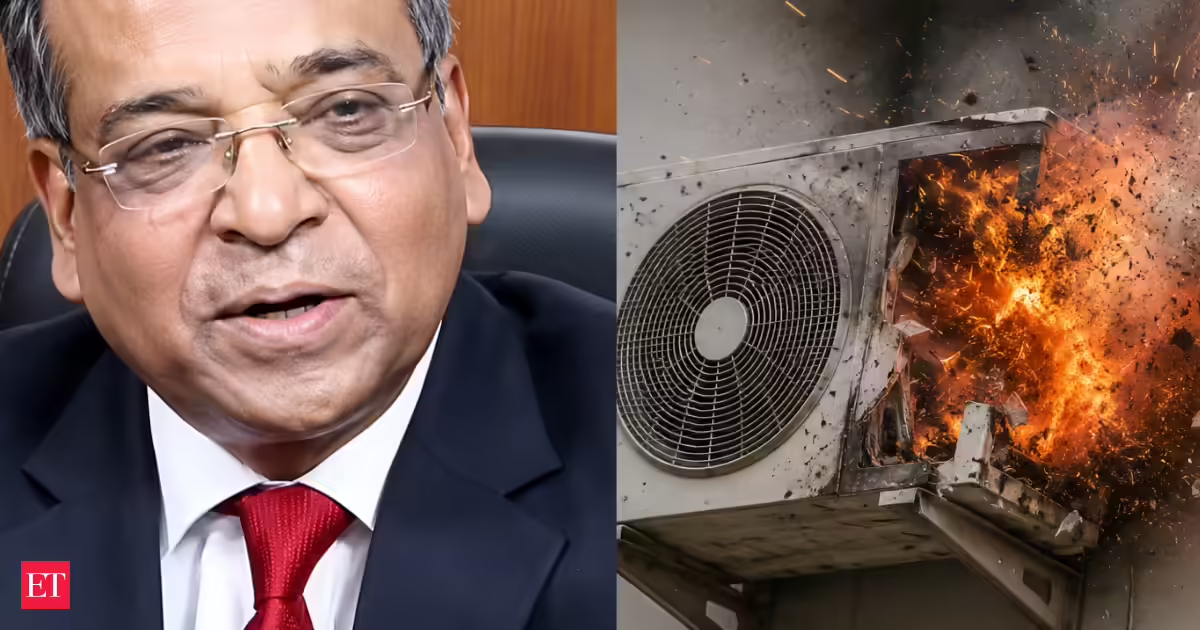
As soaring summer temperatures push power grids to their absolute limits, our reliance on air conditioners morphs from a luxury into an absolute necessity. However, a tragic reality check recently shook the national capital. The sudden demise of Dhanendra Kumar, a retired IAS officer and the first chairman of the Competition Commission of India, has brought home safety into sharp focus. A late-night fire, triggered by a suspected AC blast at his Hauz Khas residence, serves as a grim warning about appliance maintenance.A fire broke out around 11:18 pm on a Thursday night. According to the police, a total of five people, including family members and domestic help, were present in the house at the time of the incident. While police teams and fire department personnel rushed to the spot to rescue the members and put out the fire, Dhanendra Kumar unfortunately lost his life. Officials said his son sustained injuries and is undergoing treatment.This devastating event underscores why ensuring the safe operation of split air conditioners is crucial for all users. Regular checks and preventive measures are necessary to avoid dangerous situations like AC blasts. By adopting proactive safety practices, users can stay cool without compromising safety.1. Overheating due to continuous operationWhen summer temperatures peak, households often leave their cooling units running back-to-back for days. This continuous usage puts immense pressure on the compressor, forcing it to work harder and longer without a break. Consequently, this relentless strain can lead to severe overheating, potentially resulting in catastrophic fires or explosions. To prevent your system from overheating, experts suggest running your split AC for 2 to 3 hours at a time before switching it off, allowing the compressor to rest. Utilising timers or smart AC controllers can also help manage your daily usage efficiently.2. Refrigerant gas leaksThe chemical components keeping your room chilly pose a severe threat if they escape. A leakage of refrigerant gas—often called Freon, which is essential for the heat exchange process—can disrupt the entire system. When leaks in the refrigerant lines or components allow this gas to escape, it compromises the unit's cooling ability. This forces the system to work harder and overheat, potentially leading to a fire or explosion. Homeowners should monitor for hissing or bubbling sounds, weak airflow, warm air vents, and excessive ice buildup on evaporator coils.3. Severe voltage fluctuationsAn unstable power supply is more than just a minor inconvenience; it can structurally ruin your appliance's electrical core. Frequent voltage fluctuations adversely affect split AC functionality, as sudden spikes or drops in voltage can permanently damage the compressor and other sensitive electrical components. This electrical instability significantly increases the risk of a hazardous blast. To safeguard your machine, it is highly recommended to install a dedicated voltage stabiliser, choose an AC with an inverter or dual inverter to maintain consistent power levels, or use a surge protector.4. Clogged Filters and blocked airflowWhile a clogged filter might seem like a minor issue that only impacts your comfort, it creates a dangerous domino effect. When dust and debris block the airflow, internal components are starved of the vital air circulation they require to regulate temperatures. As a result, the internal machinery strains heavily to draw in air, causing a massive spike in operating temperatures. This restricted airflow forces the compressor to run at dangerously high thermal thresholds, rapidly increasing the likelihood of an internal electrical short or an outright mechanical explosion.5. Poor Maintenance and aged wiringOver time, electrical wires naturally degrade, insulation cracks, and critical connections loosen. When old, frayed wiring meets the massive electrical current required to run a split AC, it creates a hotbed for electrical short circuits. Skipping annual professional servicing means that worn-out parts, deteriorating capacitors, and loose connections go entirely unnoticed. When these compromised components are subjected to extreme heat and prolonged summer usage, the risk of a catastrophic explosion skyrockets. Investing a few hundred rupees in timely servicing is a small price for safety.
5 common reasons for AC blast during summers as first chairman of Competition Commission of India, an ex-IAS officer, dies at Delhi home
A retired IAS officer's tragic death in a suspected AC blast highlights critical home safety concerns. Continuous operation, refrigerant leaks, voltage fluctuations, clogged filters, and poor maintenance are identified as major risks. Experts urge regular checks and preventive measures to ensure air conditioners operate safely, preventing similar devastating incidents.
655 words~3 min read