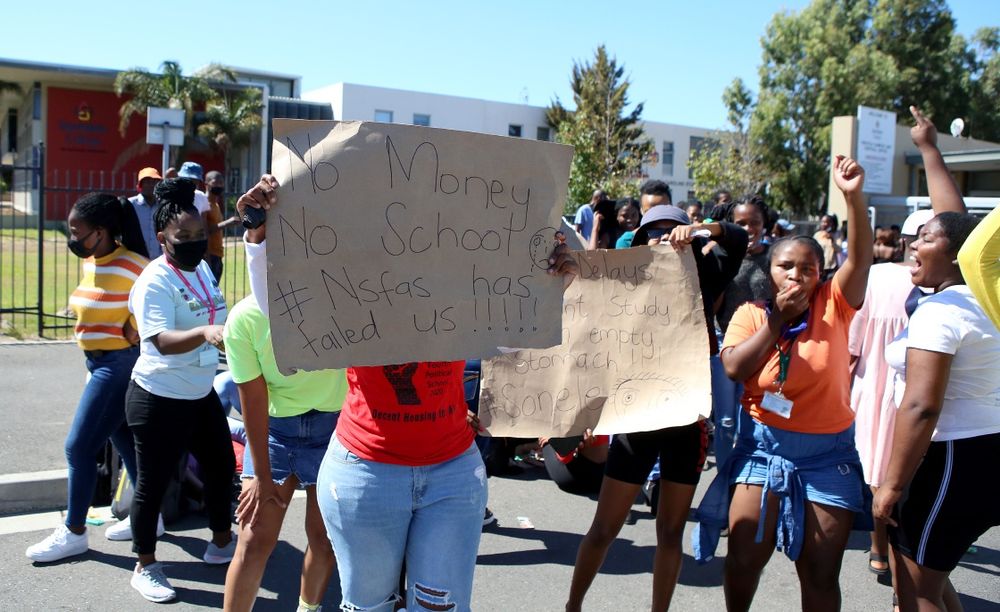
Higher education minister Buti Manamela has defended his controversial decision to place the National Student Aid Scheme (NSFAS) under administration, saying it is essential to stabilise the organisation before implementing broader student funding reforms. Work is under way on a new student funding model, which is to be phased in next year, he said.NSFAS is central to the government’s efforts to widen access to tertiary education to students from poor and working-class households. It provides bursaries and loans to more than 800,000 beneficiaries. Despite taking a steadily increasing share of the higher education budget, NSFAS has reported a growing financial shortfall and has for years been dogged by allegations of corruption. A probe by the Special Investigating Unit found thousands of ineligible students had received payments they were not entitled to in 2016-21 due to its lack of financial controls. It also received a disclaimer from the auditor-general for its 2024/25 annual report. Manamela, who has drawn fire from opposition parties and the DA over his decision to place NSFAS under administration, is expected to address parliament’s portfolio committee on higher education & training on the issue on Friday. He said his move to dissolve the NSFAS board and appoint Hlengani Mathebula as administrator on May 4 was a purely administrative decision and one that had not been reached lightly.“I am quite clear there were grounds for us to intervene,” he said in an interview with Business Day on Thursday. The board had not been properly constituted, there were alleged irregularities in the appointment of its CEO and the organisation had failed to address issues raised by the auditor-general, he said. The board had also been hobbled by a series of resignations that left it devoid of key skills, he said. Manamela said he is extremely worried about the scale of student debt confronting universities, arguing that it highlights the pressing need to reform South Africa’s student financing model. He also questioned why NSFAS has awarded so few loans, saying there is clearly a need for financial support among students who do not qualify for bursaries. Earlier this week, the department of higher education & training told parliament that by end-2024 universities faced student debt of R24bn and are withholding certificates from 165,00 students to persuade them to settle their accounts. Most of this outstanding debt is owed by “self-funded” students, who are not eligible for NSFAS bursaries. More recent, but unaudited figures from Universities South Africa put the total debt currently owed to universities at R59bn. NSFAS awards bursaries to students from households with an annual household income of less than R350,000. A loan scheme announced by former higher education & training minister Blade Nzimande in January 2024, which is available to students who are ineligible for bursaries but come from households with an annual income below R600 000, has elicited a lacklustre response. Barely 1,500 loans have been awarded this year.Work on a new student funding model is expected to be completed by August, and a report will then be submitted to cabinet for approval, said Manamela. The proposed scheme will have four tiers: a full grant for the poorest students, income-contingent loans for the “missing middle”, bursaries for scarce and critical skills, and a reformed tier for private sector contribution, he said.
Manamela defends decision to place NSFAS under administration
Minister cites need to stabilise student aid scheme before reforms get under way
545 words~2 min read