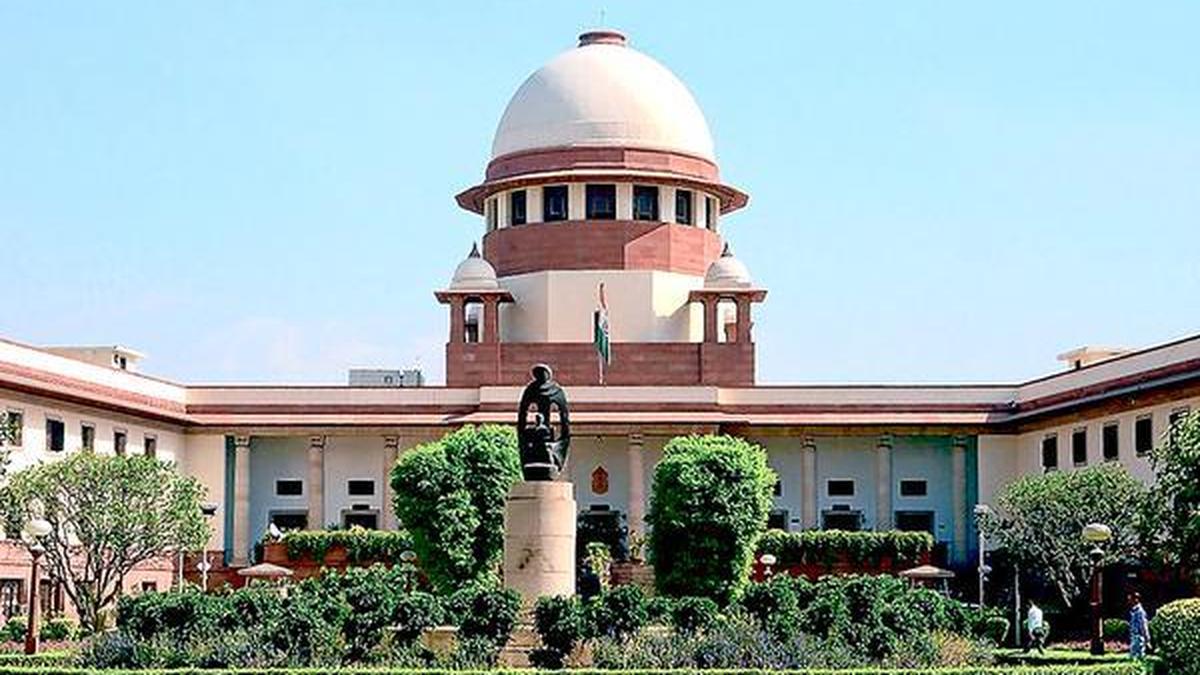
Happy Friday! The Supreme Court’s latest GST ruling is the final blow for real-money gaming platforms after last year’s ban. This and more in today’s ETtech Morning Dispatch.Also in the letter:■ Mumbai’s data centre pitch■ India’s privacy laws vs AI■ Kissht’s Q4 reportAll bets are off as SC’s GST ruling squeezes RMG companies The Supreme Court’s decision to uphold the retrospective 28% goods and services tax (GST) on online gaming is effectively a final nail in the coffin for real-money gaming (RMG) platforms, coming on the heels of last year’s blanket ban.SC ruling: On Wednesday, the apex court held that these companies are not mere intermediaries and must pay 28% GST on the full value of bets placed, not just on platform fees.Tell me more:A retrospective tax demand of Rs 92,000 crore on past transactions could push smaller RMG firms into insolvency and make it hard for larger ones to pivot to new businesses, industry experts said.Dream11 parent Dream Sports rebranded itself as a “second screen sports platform” in December and, in May this year, launched DreamStreet, a stockbroking platform.Winzo has expanded into the US and, last August, launched ZO TV, a short-form video streaming platform.ET insight: The ruling doesn’t require companies to pay the tax immediately, and they can still challenge it. But industry experts and lawyers warn that delays will only increase interest outgo and inflate the Rs 92,000 crore bill.Listed new-age internet firms brace for a costly ride as war clouds margins India’s listed new-age consumer internet firms may see profits shrink over the next two quarters as higher fuel, packaging, freight and raw material costs linked to the West Asia conflict threaten to erode the unit economics gains they posted in FY26. Analysts say the key test is how much of this cost surge can be passed on to customers without hurting order frequency.Tell me more:BofA Securities said Q1FY27 will be crucial, as higher fuel prices begin to show up in internet companies’ numbers.Food delivery and quick commerce firms have buffers such as platform and handling fees, advertising income, and better delivery density.Logistics players may feel rising fuel costs sooner, but Delhivery’s fuel surcharge and diesel indexing cover more than 90% of its contracts.What it means:Internet-first companies have less room than traditional consumer goods firms to raise prices without denting demand.Input-heavy categories such as furniture, luggage, beauty and eyewear may face sharper margin pressure.FY27 will test whether new-age firms can defend profitability while still growing. Listed payment companies clock stronger FY26 as margins and volumes rise Listed Indian digital payment companies finally turned a corner in FY26 after years of losses. For instance: Pine Labs and Paytm have reported full-year net profits for the first time, while Mobikwik is moving into the black in the second half of the fiscal.Industry insiders attribute the improved financials to richer payment-processing margins, as fintechs deepen integrations with banking partners, invest in in-house tech stacks to keep costs low, and scale up their non-payment businesses.'With 50% of India’s capacity, Mumbai is the country’s data centre capital' (L-R) Naiyya Saggi, founder of Babychakra and ED; Aakrit Vaish, cofounder of Activate and Neysa CEO Sharad SanghiMumbai will remain India’s data centre capital, thanks to its power infrastructure, subsea cable connectivity and dense concentration of enterprises, top entrepreneurs told ET. Maximum city: Nearly 50% of the country’s data centre capacity sits in Mumbai, making it the natural hub for AI adoption by large enterprises, said Sharad Sanghi, founder and CEO of Neysa AI.He spoke to ET ahead of the Tech Entrepreneurs Association of Mumbai’s (TEAM) two-day event, which starts Friday. Also in the discussion were Aakrit Vaish, cofounder of Activate, and Naiyya Saggi, founder of Babychakra and new-age appliance maker EDT.Tell me more: Vaish said India has over 100 AI startups, but most foundational research talent remains in Silicon Valley. “India has a lot of great emerging companies being built locally. But 100-odd companies don’t need more than a few million dollars to get off the ground. The total investment in those companies is only a few hundred million dollars — an angel cheque for a big lab today,” he said.Jobs and policy: AI is creating new job categories in India, with over 30,000 AI job applications based in Mumbai last year, Saggi said. The founders also stressed that India needs India-centric models and policy support, warning that the window to build globally competitive AI products is narrowing.Also Read:From financial services to healthcare, enterprises driving AI adoption in India are all in Mumbai: TEAMIndia’s privacy laws may not be ready for in-home physical AI India’s privacy laws may not be enough to regulate physical AI systems that learn inside homes, experts have warned. The concerns were triggered by controversy around startup Pronto’s in-home recording pilot.What’s the issue: The core worry is that even if raw recordings are deleted, these systems may still retain behavioural insights, predictions and model improvements.This new use case for AI raises hard questions about how physical systems learn from people’s routines, conversations, movement patterns and behaviour in private spaces.Laws not enough: India’s privacy regime is largely built around conventional personal data processing. Lawyers say the new regulatory challenge goes beyond collecting or deleting recordings, because AI memory can retain behavioural intelligence, predictive insights and model improvements derived from such interactions.Other Top Stories By Our Reporters Kissht cofounder Ranvir SinghKissht’s Q4 report: Mumbai-based digital lending startup Kissht, operated by OnEMI Technology Solutions, reported a 67% jump in operating income to Rs 619 crore for the quarter ended March 2026. Net profit for the quarter rose 52% to Rs 82.2 crore from Rs 54.2 crore a year earlier.TCS ties up with Mistral: Tata Consultancy Services (TCS) on Thursday said it has partnered with French AI startup Mistral to co-build custom AI models. TCS is the first global systems integrator (GSI) partner for Mistral Forge, the company’s enterprise platform for building frontier AI systems, it said in a statement.Global Picks We Are Reading■ Nvidia chief Jensen Huang to join board at prestigious Beijing University (FT)■ China’s tech rise is creating a new kind of tourism (Rest of World)■ Plots, love letters and remedies: The medieval secrets being revealed by AI (BBC)
RMG cos reel from GST ruling; new-age firms’ costly ride
Happy Friday! The Supreme Courts latest GST ruling is the final blow for real-money gaming platforms after last years ban. This and more in todays ETtech Morning Dispatch.
1,029 words~5 min read