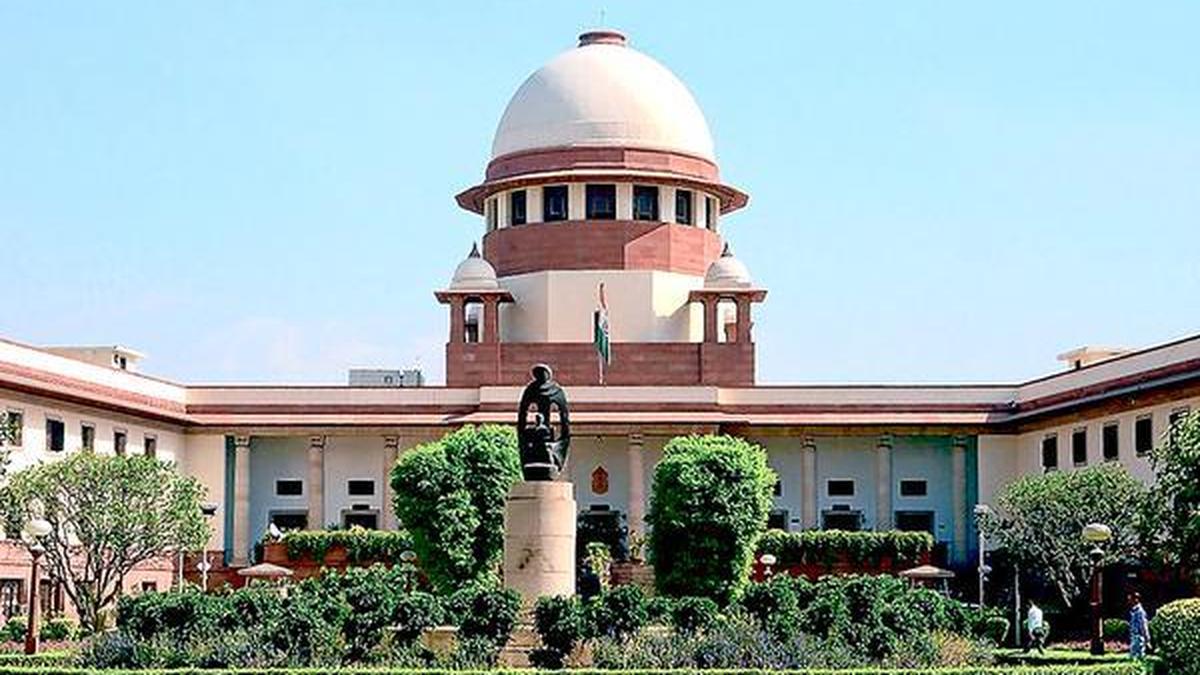
1. SC upholds retrospective levy of 28% GST on online gaming cos, laws enacted by Tamil Nadu, KarnatakaThe Supreme Court on Wednesday upheld retrospective levy of 28 per cent GST on online gaming companies. The court also clarified that final decision in the matter is left to the concerned GST authorities.At the same time, it also upheld the laws enacted by Tamil Nadu and Karnataka criminalising online games played for money or stakes, including games such as rummy, poker and fantasy sports.A Bench of Justices J B Pardiwala and R Mahadevan said, “The online gaming operators are not mere facilitators or intermediaries, but are suppliers of actionable claims amenable to GST,” it said. Accordingly, the levy of GST on the supply of actionable claims arising from betting and gambling is constitutionally valid, it said while setting aside a Karnataka High Court judgment.The case arose from GST notices issued to real-money gaming companies on the basis that 28 per cent tax was payable on the full face value of bets or contest entry amounts, and not merely on the platform fee or gross gaming revenue. The gaming industry’s case was that GST could only be levied on gross gaming revenue, which is the amount retained by platforms after deducting winnings.The Supreme Court ruling upholding GST levy on online gaming companies, which have been slapped with over Rs 1 lakh crore worth of showcause notices under GST, will put pressure on their margins, and survival will hinge on aggressive cost-rationalisation and rapid business model adaptation, tax experts said on Wednesday.2. Cabinet clears tech-driven overhaul of PDS; extends SARTHAK Scheme with ₹25,530 crore outlayIn a move aimed at turning the country’s vast ration distribution network into a technology-driven welfare platform, the Cabinet Committee on Economic Affairs (CCEA) on Wednesday approved continuation of the SARTHAK-PDS scheme for another five years with a central outlay of ₹25,530 crore.The revamped scheme seeks to modernise the public distribution system (PDS) by bringing together foodgrain logistics, beneficiary management and grievance redressal on a single digital architecture, while also easing the financial burden on States for transporting grains to ration shops.Information and Broadcasting Minister Ashwini Vaishnaw said the scheme covers the entire supply chain, from identification of beneficiaries and movement of foodgrains to citizen feedback mechanisms and reduction in transportation delays. The scheme will run till March 31, 2030.3. Air India to cut 22% domestic flights amid high fuel pricesAir India will reduce up to 22 per cent of its domestic flights amid rising operational costs due to high fuel prices, according to sources.The loss-making airline, which is facing financial headwinds, has reduced international flights by around 27 per cent, the sources said.Air India operates around 4,400 weekly flights. Out of them, about 3,600 are domestic and 800 are international services.“In continuation of our previously announced adjustments to select international services between June and August 2026, we have temporarily rationalised operations on certain domestic routes during the same period, with a reduction in frequencies on select routes,” Air India said in a statement on Wednesday.Sources said 20-22 per cent of the domestic flights would be reduced.The airline said these adjustments are driven by the sustained impact of high fuel prices on overall operations.4. Draft US-Iran peace framework proposes lifting Hormuz blockade, US troop pullbackAs tensions in the Middle East approach a critical juncture, reports have surfaced regarding a draft memorandum of understanding between the United States and Iran aimed at de-escalating the ongoing conflict, Iranian state media reported on Wednesday.With President Trump convening senior officials to finalise a potential agreement, the proposal offers a roadmap for restoring stability in the vital Strait of Hormuz while navigating the complexities of regional military presence.According to Iran’s state television, the preliminary document outlined a multi-layered peace process designed to wind down hostilities and address the primary economic and security concerns.Iran would restore commercial shipping through the Strait of Hormuz to pre-war levels within 30 days. Under this arrangement, transit would be managed by Iran in coordination with Oman, though the current draft reportedly excludes US military vessels from this specific transit framework.(Research and VO: Siddharth Mathew Cherian)Published on May 28, 2026
Top Business & Market Headlines Today — BL Morning Report, May 28, 2026
BL Morning Report May 28, 2026: Get today’s top business news, market headlines about the Stock Market, Sensex & Nifty trends, key market insights, economic highlights, and the latest updates from India and global markets.
689 words~3 min read