Alzheimer's pathology appeared as early as midlife and correlated with poorer cognitive performance in a cohort study.Blood biomarkers identified Alzheimer's pathology in 6% of middle-age adults.Baseline pathology predicted steeper 5-year declines in verbal memory and processing speed.
Alzheimer's disease pathology was detected in midlife and was tied to minor changes in cognitive performance in people without dementia, data from a prospective cohort study showed.
This pathology, measured by amyloid and tau blood biomarkers, was uncommon in middle age, and was associated with a higher likelihood of cognitive decline over 5 years, reported Kristine Yaffe, MD, of the University of California San Francisco, and co-authors in The Lancet.
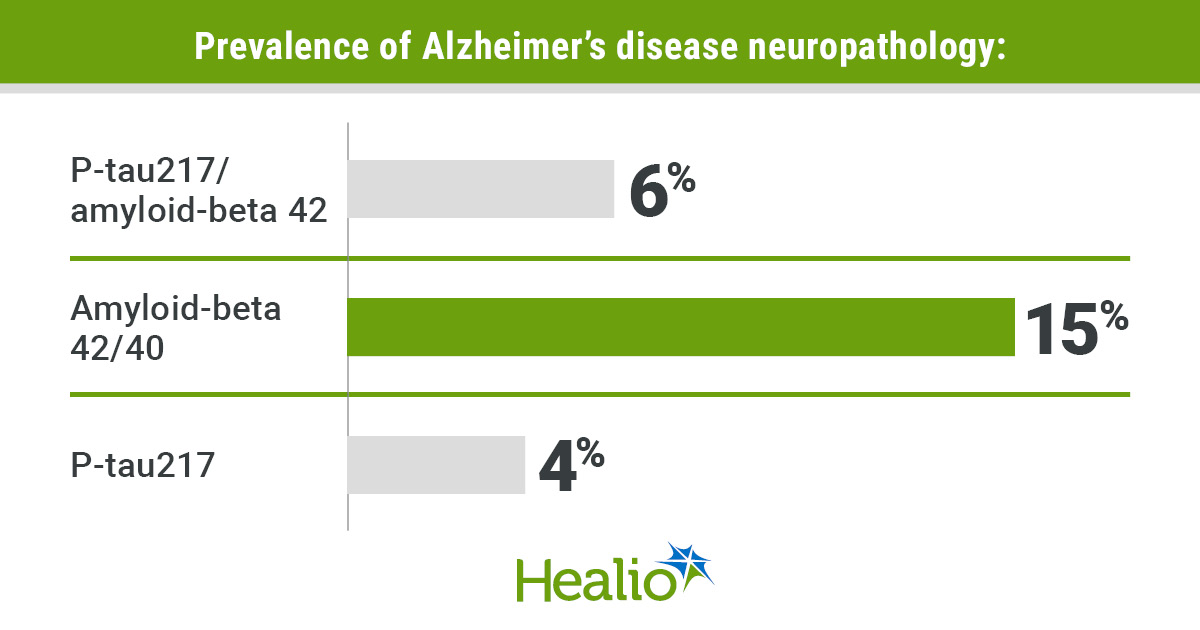
In a cohort of 1,350 middle-age adults, 6% tested positive for Alzheimer's pathology based on the ratio of plasma phosphorylated tau 217 (p-tau217) to amyloid-beta 42. At baseline, people with positive biomarkers scored lower in processing speed and executive function than those without pathology, but no differences were seen in global cognition or memory.
Five years later, people with baseline Alzheimer's pathology had more than twice the risk of rapid decline in verbal memory (OR 2.44, 95% CI 1.16-5.13) and a nearly fourfold increased risk of rapid decline in processing speed (OR 3.98, 95% CI 1.71-9.3), suggesting a higher likelihood of developing Alzheimer's disease.