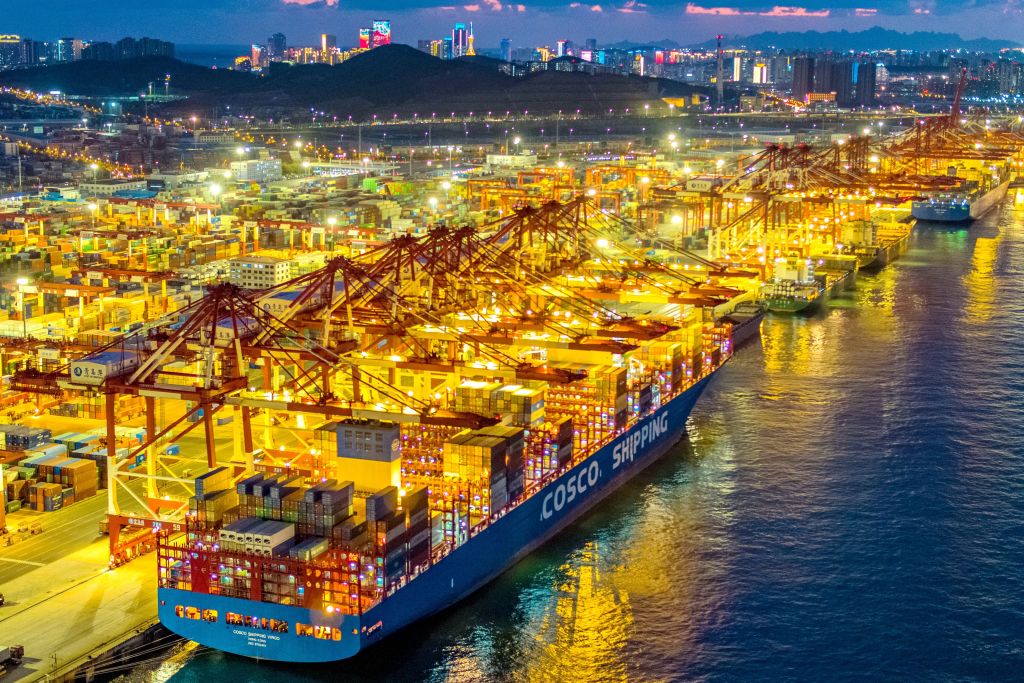
At the 2026 Conference on EU-China Relations in Beijing this month, Jens Eskelund, president of the EU Chamber of Commerce in China, described the economic relationship he is paid to promote as “a 400-metre-long giant container ship loaded with 24,000 containers going to Europe and coming back almost empty.”
Over the past five years, the EU’s goods trade deficit with China has ballooned, and in 2022 it reached a peak of nearly €400 billion. At the same time, the EU’s services surplus remains meager, and net positive FDI stocks have stagnated too. While the Chinese market is shrinking for both European products and investment, its output is not slowing at all—and Beijing is increasingly looking to Europe to absorb these goods.
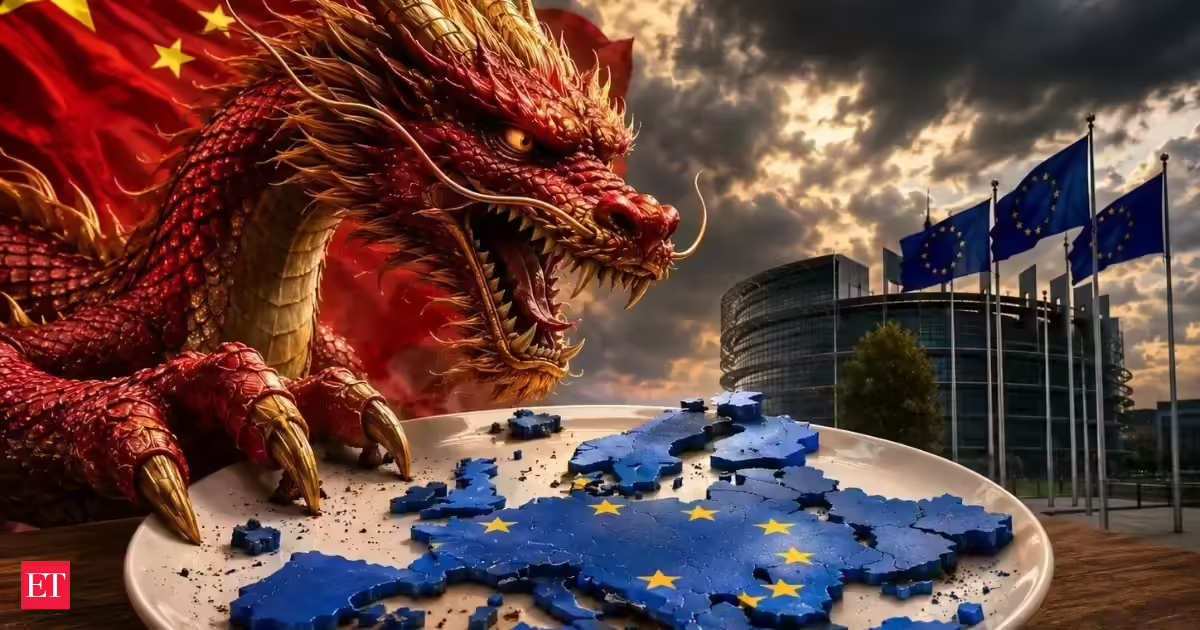
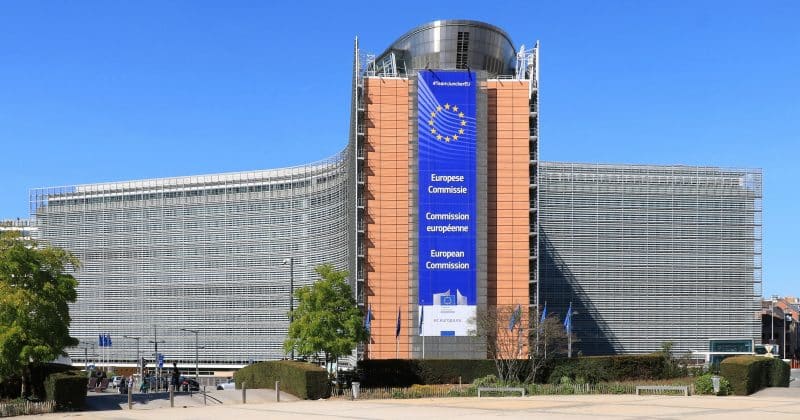
But the Brussels machine is slowly cranking up to deal with Chinese manufacturing overcapacity. The European Commission has committed to presenting new economic security tools by September 2026, and tomorrow, on May 29, it will hold a policy orientation debate on the issue. The meeting is being closely watched as five member states—Spain, Italy, France, the Netherlands, and Lithuania—have just signed a joint paper calling for more aggressive action against “systemic and structural industrial overcapacity.”