The work, published May 13 in Nature Photonics, was led by Liaoyong Wen of Westlake University in Hangzhou and Jinfeng Zhu of Xiamen University. The device detects cancer biomarkers about 10,000 times more sensitively than the standard enzyme-linked immunosorbent assay (ELISA), the dominant clinical immunoassay used in hospitals worldwide, the paper reports.
"This work establishes a scalable and robust nanophotonic biosensing paradigm for miniaturized, high-performance diagnostics in clinical, remote and at-home settings," the authors wrote in the paper's abstract.
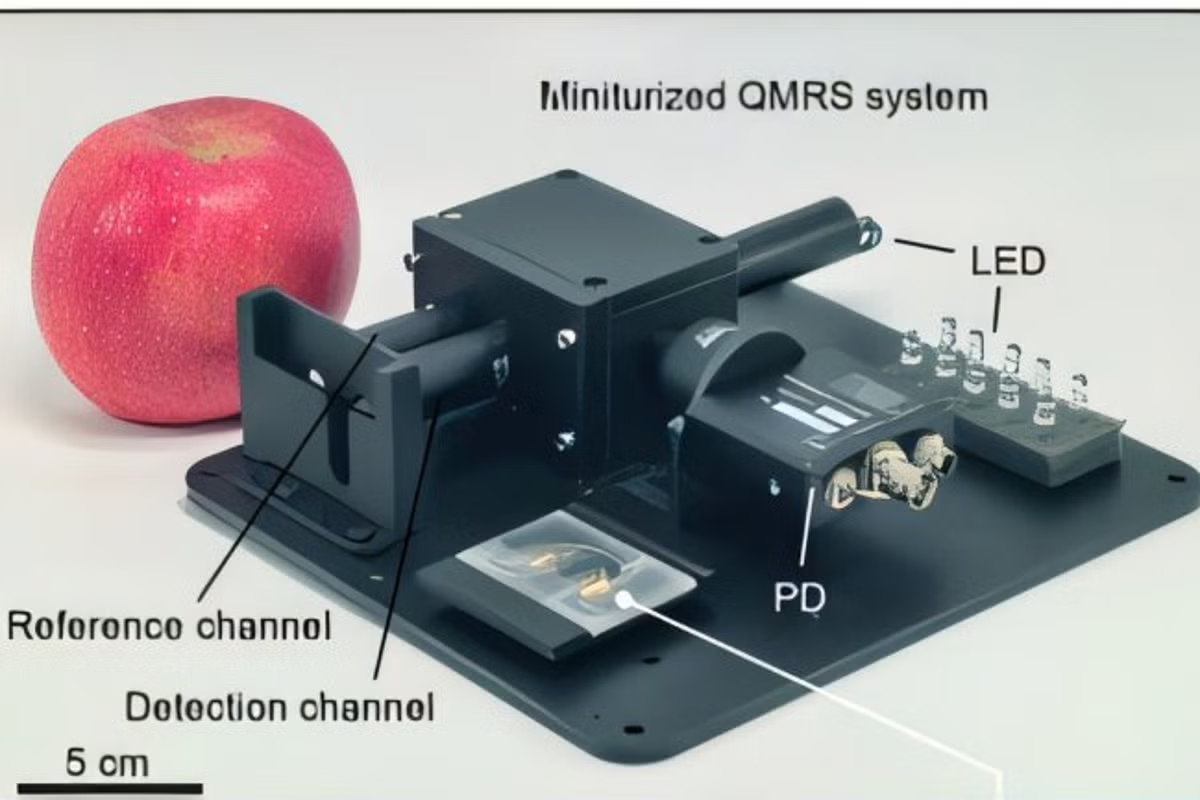
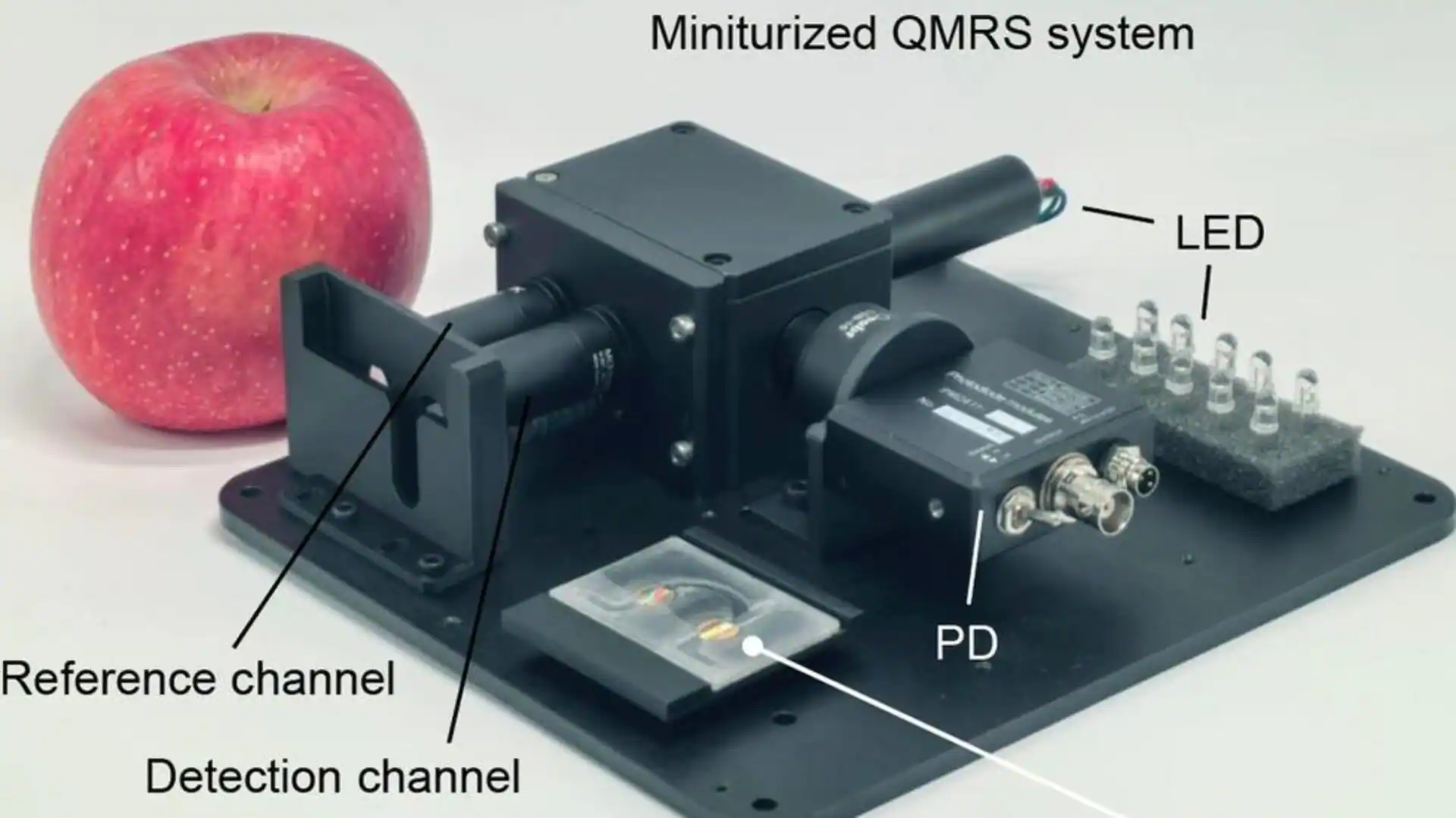
The breakthrough rests on a sensing mechanism the team calls Q-modulated refractometric sensing, according to the study. Conventional optical biosensors detect cancer biomarkers by measuring the wavelength of light passing through a sample, the paper explains, which requires prisms, spectrometers and complex optical paths typically housed in machines the size of a double-door refrigerator. The new mechanism instead measures light intensity, allowing the team to strip the system down to three components: a 3D photonic chip, an LED light source and a photodetector, the authors wrote.
The chip itself is built from metamaterials, engineered surfaces that manipulate light in ways natural materials cannot. The work builds on a 2025 Nature Materials paper in which the same group used aluminum to achieve high-precision lithography across scales from nanometers to macroscopic dimensions.