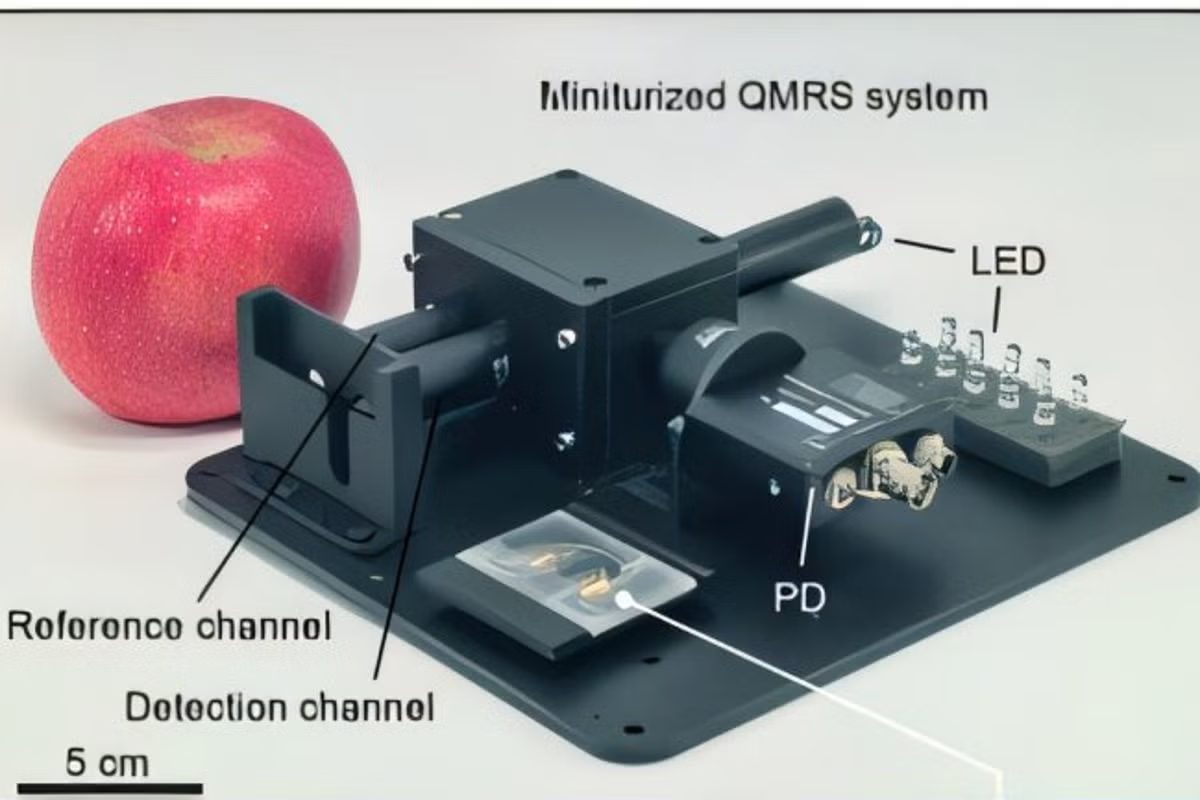
Cambridge scientists hunting tell-tale killer ‘zombie’ cells that signal early lung cancer have developed a world-first urine test that could transform diagnosis and survival for thousands of patients.
As published this week in Nature Aging, the team has shown that this simple and affordable test could detect the earliest signs of lung cancer months, or even years, before symptoms appear, as well as monitor whether treatment is working and identify potential relapse.
It works by identifying the presence of senescent cells in the lungs – so called ’zombie cells’ – that stop dividing but linger and release abnormal inflammatory signals that damage surrounding tissue and help create an environment that lowers the body’s ability to fight the cancer.
The study, funded by Cancer Research UK, marks a major leap towards more precise therapy and a test for early cancer and treatment efficiency that could be rolled out across the NHS one day.
Lung cancer is the UK’s most common cause of cancer death taking the lives of around 32,800 people every year. Thanks to huge strides in prevention, detection and treatment, in the UK, lung cancer has seen a 22% reduction in death rates in the last decade. And around two in three people (65%) with lung cancer in England survive their disease for five years or more when diagnosed at the earliest stage. But when diagnosed at the latest stage, this falls to 5 in 100 (5%).