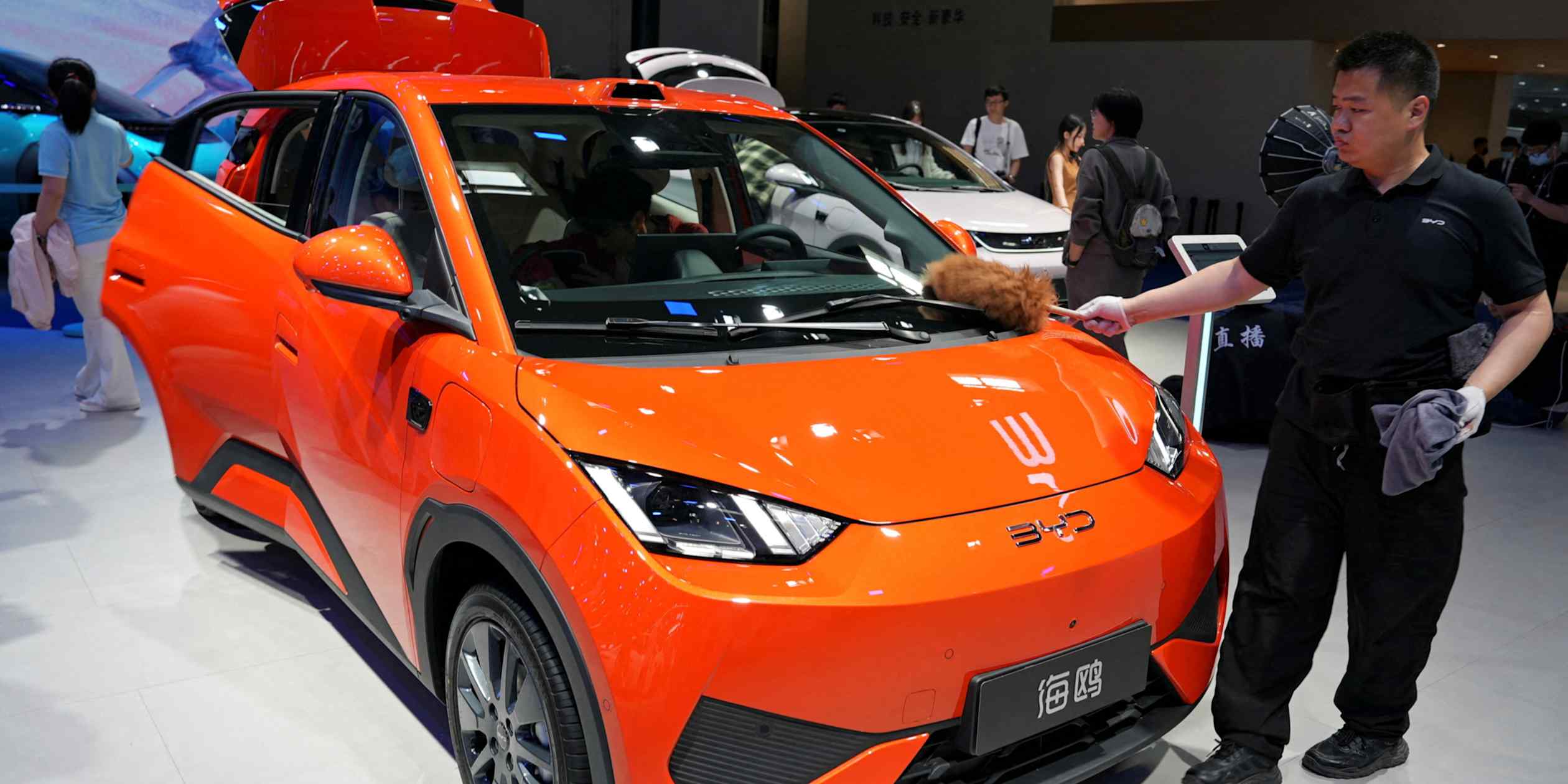
TL;DRBYD has unveiled the Xuanji A3, China’s first automotive-grade 4nm chip for self-driving cars, delivering 700 TOPS per chip. The company is expanding its God’s Eye driver-assistance system to mass-market EVs including the $10,300 Seagull, as eight consecutive months of falling sales and a 55% profit decline force a technology-led pivot.
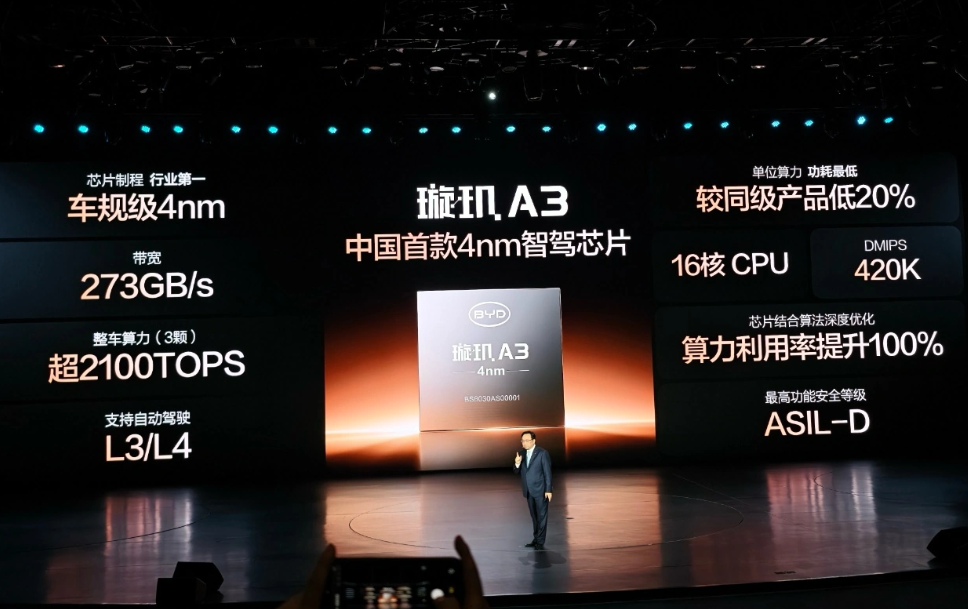
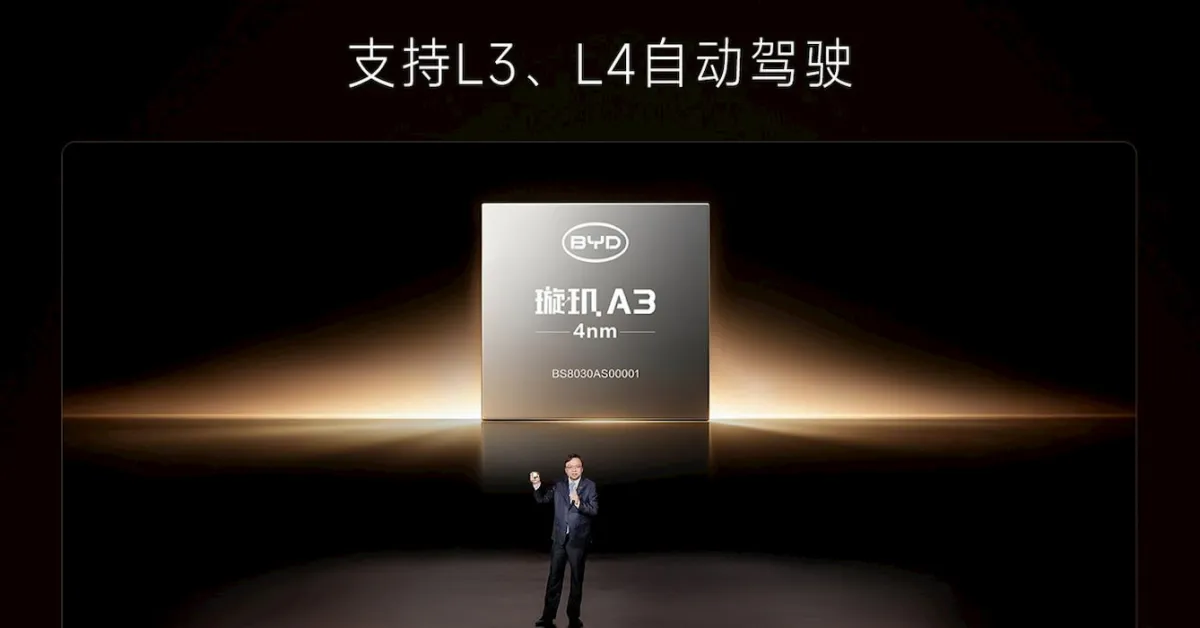
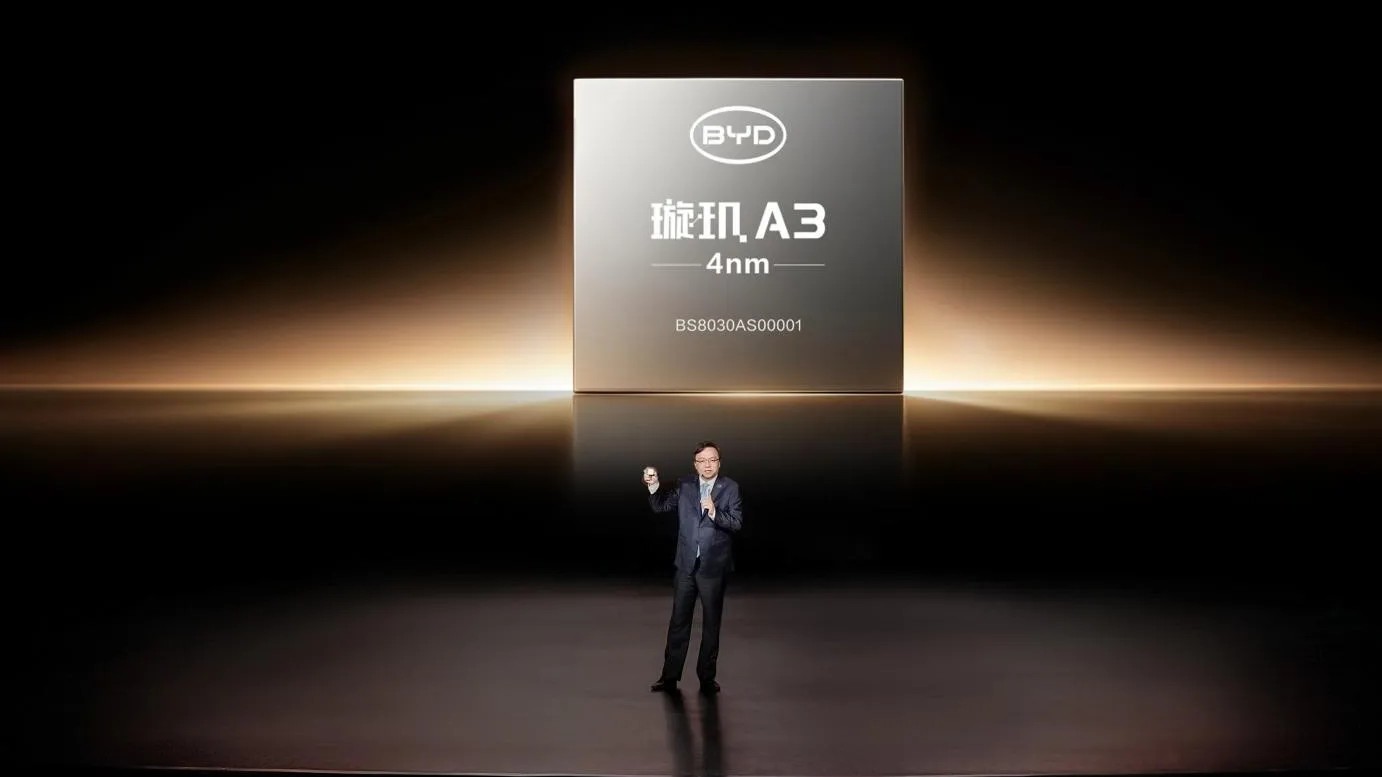
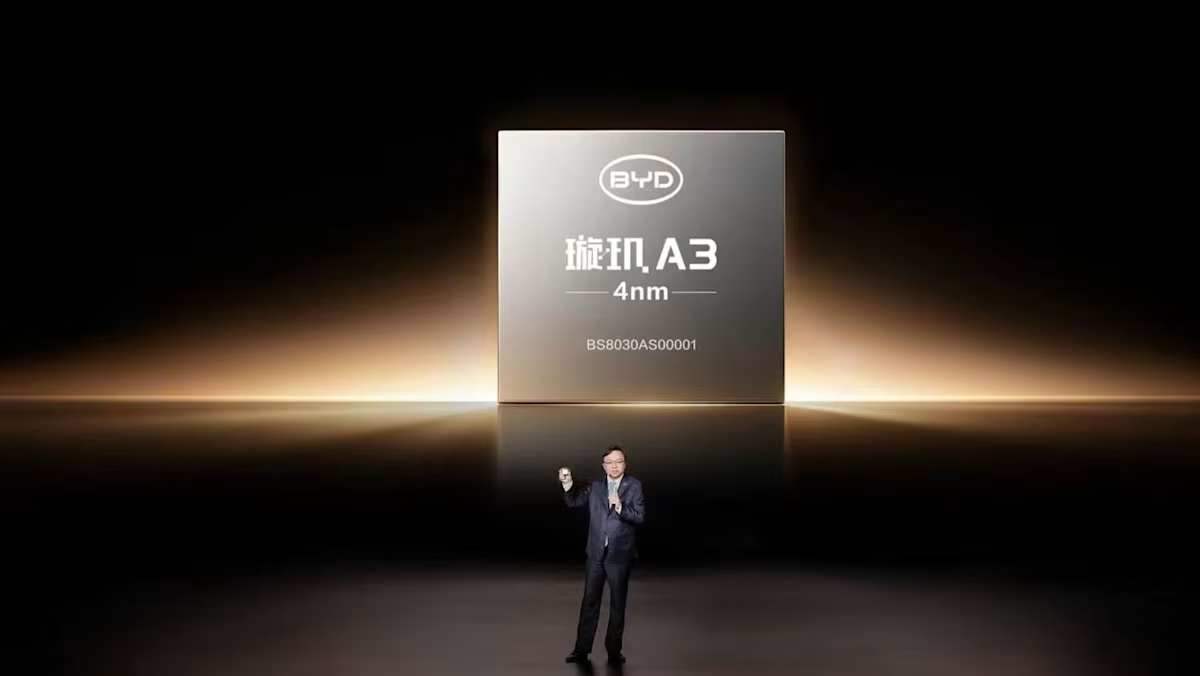
BYD has unveiled the Xuanji A3, which it calls China’s first automotive-grade 4-nanometre chip for self-driving vehicles. CEO Wang Chuanfu announced the chip at an event at BYD’s Shenzhen headquarters on 28 May, saying it delivers the lowest power consumption per unit of compute in its class, drawing roughly 20% less than comparable semiconductors. The chip has already entered mass production.
A single Xuanji A3 delivers 700 TOPS of computing power. A cluster of three chips reaches 2,100 TOPS, enough to support Level 3 and Level 4 autonomous driving functions. The chip is the centrepiece of a new laptop-sized central computing platform that unifies three previously separate vehicle domains: the smart cockpit, the driver-assistance system, and the core electric propulsion.
The semiconductor approaches the capabilities of Huawei Technologies, which currently makes automotive chips at a 7nm geometry but has pledged to debut 1.4nm chips by 2031. The most advanced chip globally is TSMC’s 2nm N2 node. BYD’s ability to design and mass-produce its own 4nm driving chip deepens a vertical integration strategy that already spans batteries, motors, and vehicle manufacturing.