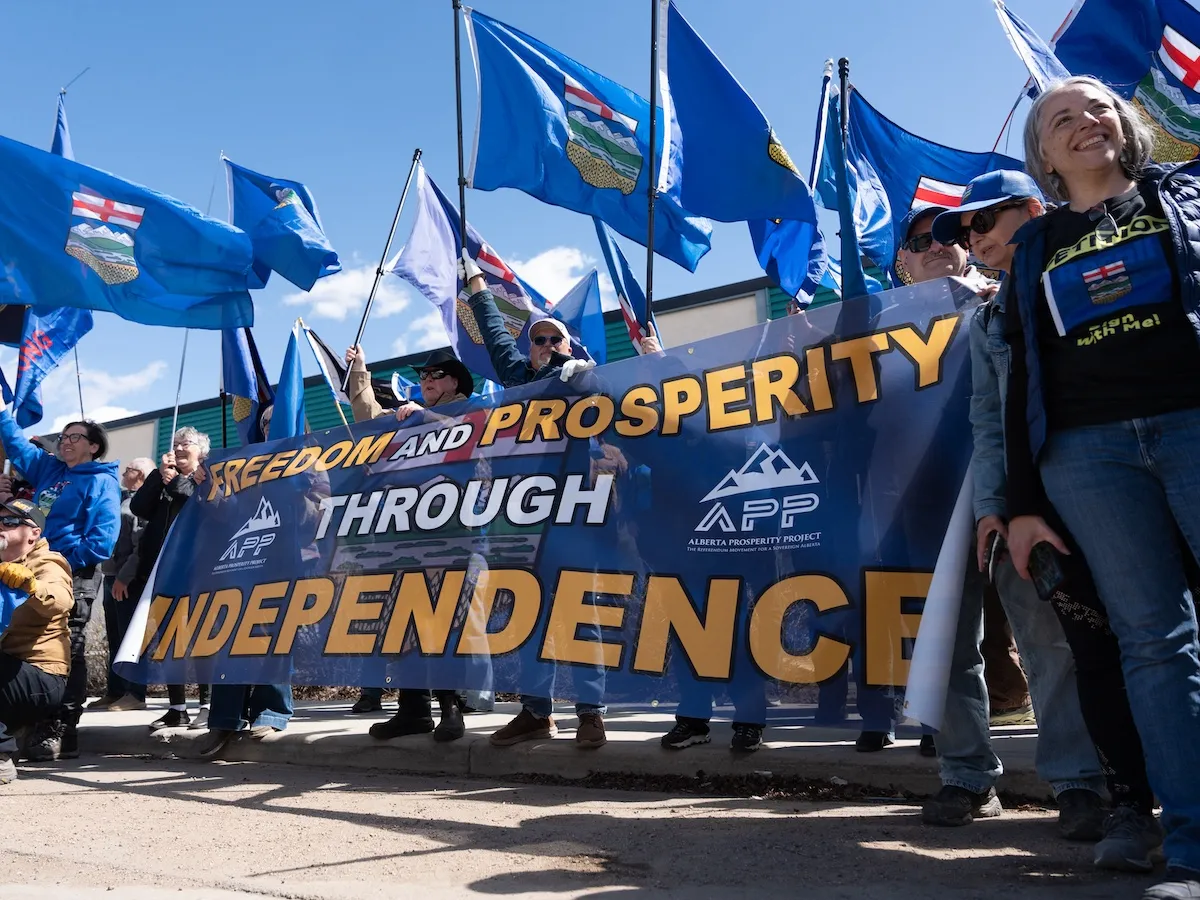
Skip to Content Subscribe Our Offers My Account Manage My Subscriptions FAQ Newsletters Canada Canadian True Crime Canadian Politics Health World Israel & Middle East Financial Post NP Comment Longreads Puzzmo Diversions Comics NP News Quiz New York Times Crossword Horoscopes Life Eating & Drinking Style Sponsored Play for Ontario Travel Travel Canada Travel USA Travel International Cruises Travel Essentials Culture Books Celebrity Movies Music Theatre Television Business Essentials Advice Lives Told Tails Told Shopping Buy Canadian Home Living Outdoor Living Tech Style & Beauty Kitchen & Dining Personal Care Entertainment & Hobbies Gift Guide Travel Guide Deals Savings National Post Store More Sports Hockey Baseball Basketball Football Soccer Golf Tennis Driving Vehicle Research Reviews News Gear Guide Obituaries Place an Obituary Place an In Memoriam Classifieds Place an Ad Celebrations Working Business Ads Archives Healthing Epaper Manage Print Subscription Profile Settings My Subscriptions Saved Articles My Offers Newsletters Customer Service FAQ Newsletters Canada World Financial Post NP Comment Longreads Puzzmo Diversions Life Shopping Epaper Manage Print Subscription HomeNP CommentCarson Jerema: The separatist rebellion brewing in downtown CalgaryIf after a successful referendum, separatists unilaterally declare independence, things could get ugly You can save this article by registering for free here. Or sign-in if you have an account.Keith Wilson, left, debates former premier Jason Kenney on Alberta independence on Monday, May 25 at the Grand Theatre in downtown Calgary. Photo by New West VideoCALGARY — Whenever a practical question arises of how an independent Alberta would work, a lot of separatists tend to respond by accusing the other side of “fear-mongering.” In fact, the source of any fear is the separatists themselves. A largely disorganized group of activists, with zero democratic legitimacy, suddenly discussing, on the regular, a “unilateral declaration of independence,” or as it is known in the Criminal Code, sedition, does not exactly spell calm, confident and trustworthy. Here’s the thing: it is scary, and pointing that out is hardly fear-mongering.Enjoy the latest local, national and international news.Exclusive articles by Conrad Black, Barbara Kay and others. Plus, special edition NP Platformed and First Reading newsletters and virtual events.Unlimited online access to National Post.National Post ePaper, an electronic replica of the print edition to view on any device, share and comment on.Daily puzzles including the New York Times Crossword.Support local journalism.Enjoy the latest local, national and international news.Exclusive articles by Conrad Black, Barbara Kay and others. Plus, special edition NP Platformed and First Reading newsletters and virtual events.Unlimited online access to National Post.National Post ePaper, an electronic replica of the print edition to view on any device, share and comment on.Daily puzzles including the New York Times Crossword.Support local journalism.Create an account or sign in to continue with your reading experience.Access articles from across Canada with one account.Share your thoughts and join the conversation in the comments.Enjoy additional articles per month.Get email updates from your favourite authors.Create an account or sign in to continue with your reading experience.Access articles from across Canada with one accountShare your thoughts and join the conversation in the commentsEnjoy additional articles per monthGet email updates from your favourite authorsSign In or Create an AccountorAt a debate on Alberta independence put on by the Aristotle Foundation in downtown Calgary earlier this week, former premier and staunch federalist Jason Kenney pointed out just how complicated separatism would be. A successful leave vote would, theoretically, begin “complicated multi-year negotiations over everything from currency to citizenship to debt allocation to CPP to how to build a military to how to get access to trade agreements in Canada and around the world.”This newsletter from NP Comment tackles the topics you care about. (Subscriber-exclusive edition on Fridays)By signing up you consent to receive the above newsletter from Postmedia Network Inc.We encountered an issue signing you up. Please try againIt would take “constructive relations with Alberta First Nations” and turn them “upside down,” he added. Kenney even warned of an Oka-style land dispute on all 47 First Nations in the province.As there is no right to separation in the Constitution, a constitutional amendment would be required for Alberta to leave lawfully. That means, very likely, all 10 provinces, as well as the federal Parliament, would have to agree to any secession deal. That could mean a referendum in each individual province on whether to accept Alberta leaving, or a nationwide referendum, or both. It could mean multiple elections in Alberta, followed by multiple referendums on various versions of a deal. It would not be a straightforward process.In the extremely likely event that negotiations failed, a separatist government may choose to declare independence unilaterally and unlawfully. When Kenney raised this possibility as a warning during the debate, separatists in the audience cheered enthusiastically. “I heard a big cheer for unilateral declaration of independence. The next day, Ottawa cancels your Canadian passport. Good luck getting into the United States,” he quipped.After such a declaration, Kenney said, there’d be no guarantee that Albertans would retain their Canadian passports, no guarantee of maintaining the same access to the U.S. market to sell oil and gas, as many pipelines run through other provinces, no guarantee of the needed aviation agreements for international flights to be recognized, no guarantee of anything, really, that we have come to expect from living within Canada.None of this is hyperbole. Severing a state after 159 years of evolution, integration and growth won’t be like flipping a switch.And yet, when Kenney raised these concerns, his opponent, lawyer Keith Wilson, responded with “you’re hearing a lot of fear,” or “all the other side’s got is fear,” or he complained about the “the fear-mongering about businesses,” and so on.Now, if you’re threatening to dismember the country, accusing your opponents of spreading fear is more than a little hypocritical.That said, Wilson did make a persuasive case for how Alberta has been unfairly treated, and during the debate he quite nearly matched Kenney’s rhetorical skill. He spoke of how, in his view anyway, every tactic Alberta has tried to get fair treatment in the federation has failed. “We’ve tried loyalty, we’ve tried patience, we’ve tried to reform,” he said.Referring to electing Stephen Harper’s government, Wilson added, “We’re told, send the right people, make the right arguments, build the right conditions and the right coalitions and Confederation will work well.” But it is a strategy, he said, that’s “been proven wrong time and time again.”His argument is convincing, but ultimately overlooks the successes that Alberta has had in gaining, for example, constitutional control of its resources, or successes in the courts, such as against the Impact Assessment Act, as well as in extracting a pledge from Ottawa, however tenuous, to approve another pipeline. When Kenney pointed this out, Wilson responded by dismissing it as being forced to grovel.On the case for why Alberta should leave, the separatists have somewhat of an advantage, because federalists tend to largely agree with them on the very real frustrations with Confederation, but the separatists miss how essential compromise is to achieving progress in any democratic country.However, where things truly fall apart for the independence side is in what hypothetically comes next. And by that, I don’t only mean the mechanics of state, such as currency, military, border policing, taxation, etc., but just how serious an undertaking this would be.During the debate proper, Wilson spoke of following the “legal pathway” to separation, which, according to the Supreme Court, as I already alluded to, obligates Canada and the provinces to negotiate the breakup of the country in the event of a clear expression of democratic will to secede. He avoided the words, “unilateral declaration of independence.”Instead, Wilson acknowledged the Supreme Court ruling, and punctuated it with, “What a Canadian thing!”But, at a later gathering of separatists in the cramped upstairs private party room of a Calgary bar called the Bourbon Room, Wilson stated his belief that, after a successful referendum, Alberta should give Canada a deadline for coming to an agreement. And then, should the deadline not be met, Alberta should respond by declaring independence on its own, suggesting anything less than speedy negotiations would be proof of bad faith.Wilson referred specifically to the final paragraph of the Supreme Court’s 1998 ruling, which contemplated “an unconstitutional declaration of secession.” To be clear, this is not a “legal pathway,” but merely the court acknowledging that such a “de facto secession” would depend entirely “on recognition by the international community.” That is, other countries would be recognizing facts on the ground. According to Wilson, some 20 other countries are prepared to recognize an independent Alberta.So it is not at all clear that those who count among the independence movement’s leadership are actually committed to negotiating a deal or following the law.Things could become very ugly very quickly.Here is how the Criminal Code defines “Seditious intention”: anyone who advocates “the use, without the authority of law, of force as a means of accomplishing a governmental change within Canada.” So, for instance, if members of a separatist government in Alberta declare independence unilaterally, thereby advocating the use of force to uphold Alberta’s own laws, rather than Canada’s, they could be charged with sedition, facing up to 14 years in prison. If they take it a step further and actually carry out the enforcement of their own laws, over Canada’s, they could be guilty of treason, which carries a penalty of life in prison.That does not mean it would come to that, but nothing about this would be quick and easy. In the event of an unlawful declaration of independence, it is possible that Canada would try to force Alberta to negotiate by, as Kenney suggested, shutting down pipelines or tolling exports, or refusing to recognize Albertans’ Canadian passports. Wilson is adamant that Canada would not risk the economic fallout, but some things, such as the geographical integrity of Canada, are more important than the bottom line.Hopefully, we never have to find out just how important.National Post Get the latest from Carson Jerema straight to your inbox Join the Conversation This website uses cookies to personalize your content (including ads), and allows us to analyze our traffic. Read more about cookies here. By continuing to use our site, you agree to our Terms of Use and Privacy Policy.
Carson Jerema: The separatist rebellion brewing in downtown Calgary
If after a successful referendum, separatists unilaterally declare independence, things could get ugly
1,699 words~8 min read