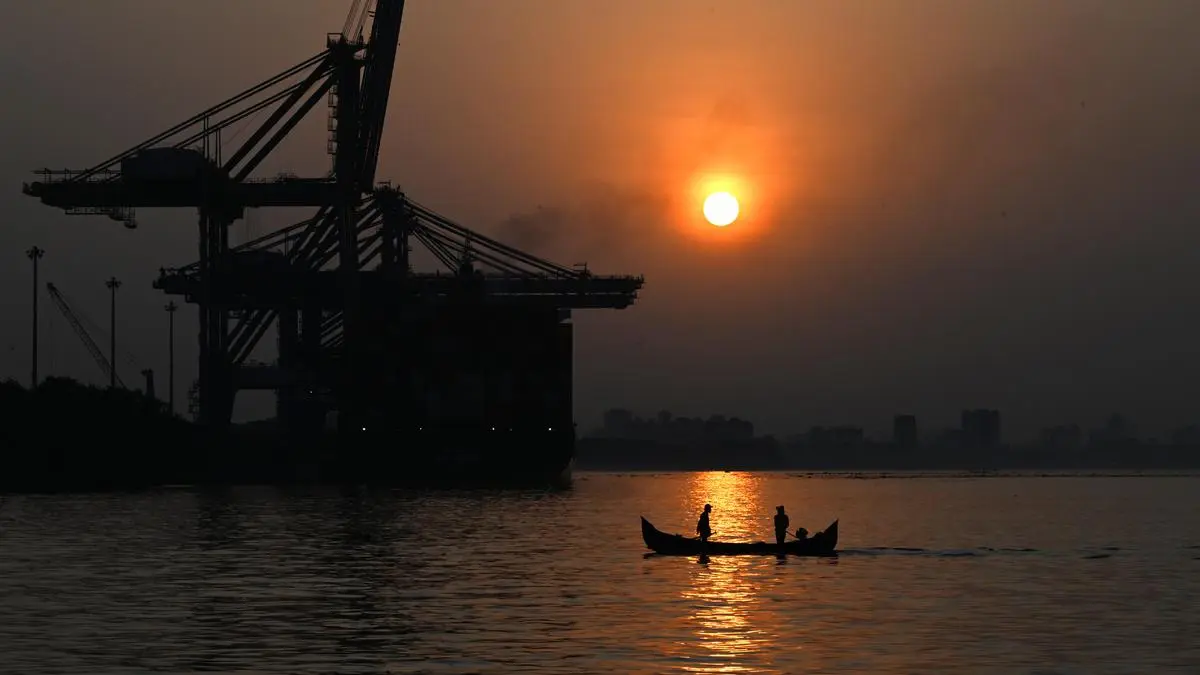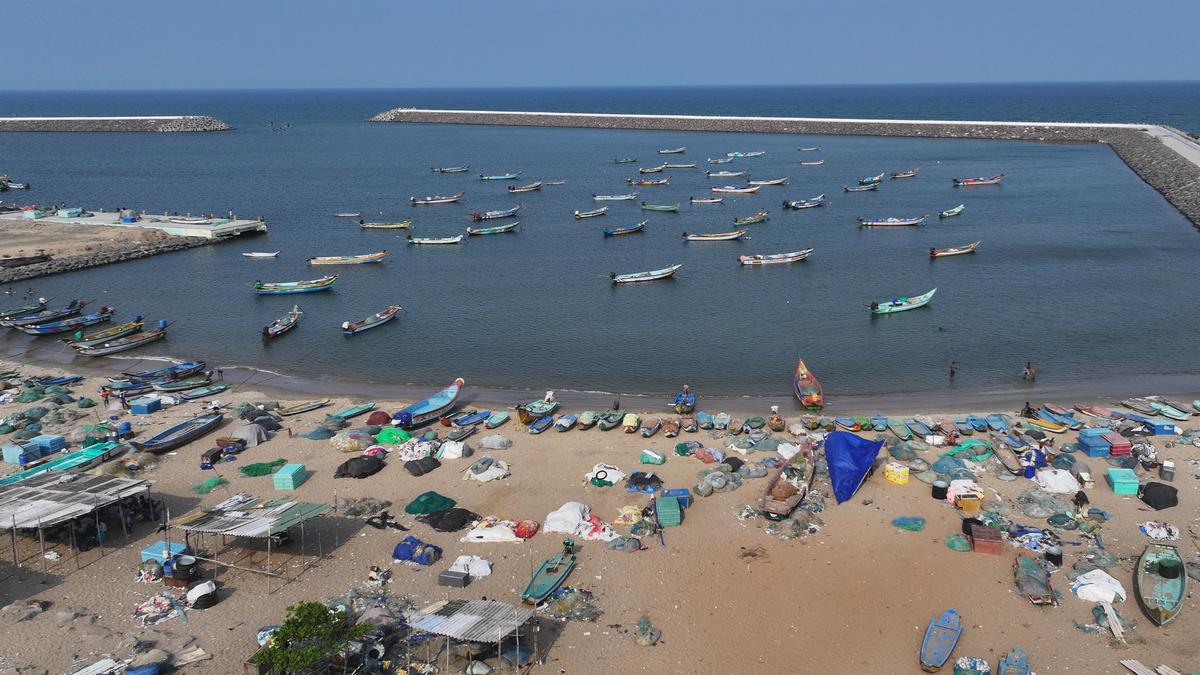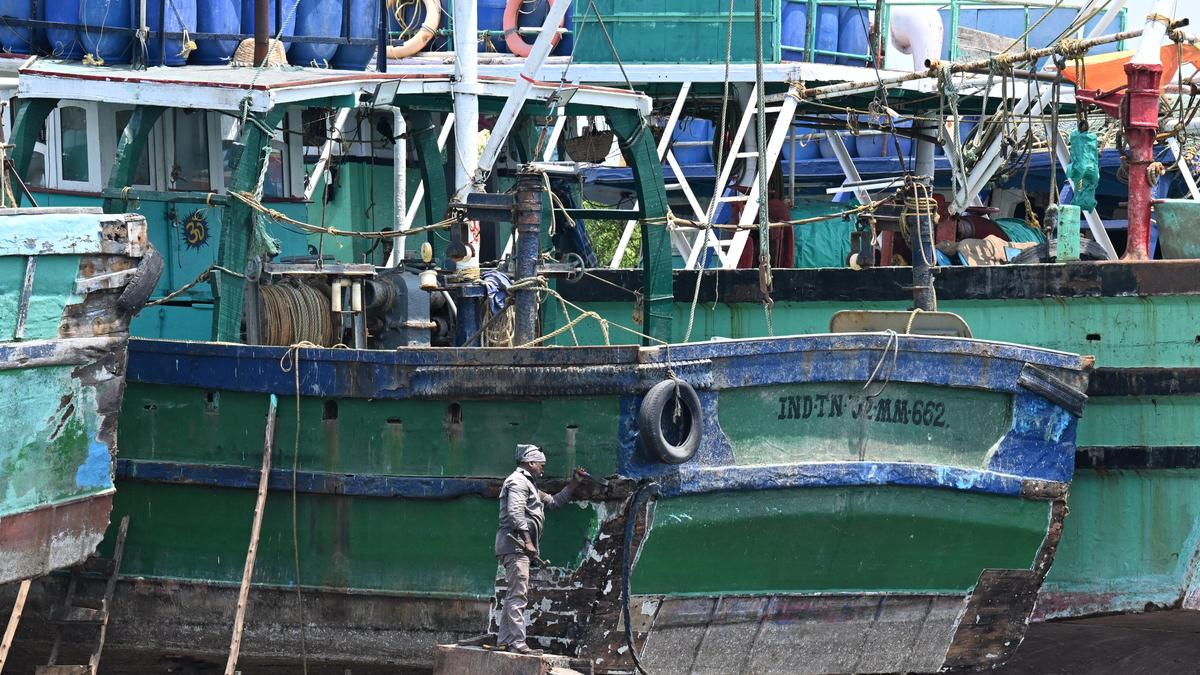
At present, there are a total of 1,547 notified fish landing centres and fishing harbours in 13 coastal States and Union Territories. File photo for representational purposes only.
| Photo Credit: The Hindu
Around 1,200 fishing harbours and fishing landing sites are all set to be brought under the oversight of the Central Industrial Security Force (CISF) as part of Union Home Ministry’s plan to fortify and secure India’s coastline.A senior government official said that after assigning the security-related duties at around 250 sea ports to the CISF, the Ministry proposes to bring the fishing harbours and landing sites also under the overall supervision of the CISF.“It is not possible to deploy CISF personnel at all the fishing harbours but the CISF will be roped in to design the security template and guide the local administration in managing the security protocol. From regulating the movement of fisherfolk through biometric attendance system to providing smart ID cards, the CISF can provide an overall framework,” said the official.At present, there are a total of 1,547 notified fish landing centres and fishing harbours in 13 coastal States and Union Territories of West Bengal, Odisha, Andhra Pradesh, Tamil Nadu, Puducherry, Kerala, Karnataka, Goa, Maharashtra, Gujarat, Daman and Diu, Andaman and Nicobar Islands, and Lakshadweep.The fishing sites are managed both by the State and Union governments. While the States are responsible for post-construction management, maintenance, and operation of the fishing harbours under their control and have arrangements for management of these harbours, those under the control of the Central government are under the aegis of Port Trusts, the Ministry of Fisheries informed the Rajya Sabha on December 17, 2025.The official said that there are multiple security agencies deployed along the coastline, starting from the local police to Indian Coast Guard and Indian Navy further in the sea.“As there are multiple agencies involved, a uniform security template is missing. The CISF can be used to plug the gaps and also sensitise the local population about coastal security,” the official added.26/11 Mumbai terror attacksAjmal Kasab, the only terrorist captured alive during the 26/11 Mumbai terror attacks in 2008, told investigators that he and the other terrorists came by sea from Pakistan as part of the Lashkar-e-Taiba (LeT) operation. They travelled from Karachi, hijacked an Indian fishing vessel, and then used inflatable boats and landed at a fishing colony in Colaba from where they entered the city.In December 2025, Union Home Minister Amit Shah convened a meeting for the constitution of a dedicated body, the Bureau of Port Security (BoPS), for the security of vessels and port facilities. The body, on the line of the Bureau of Civil Aviation Security (BCAS), is still in the making.Earlier, to plug the gaps in coastal security, the Union government designated the CISF as the security regulator for over 250 seaports in the country. Officials said that the government intends to deploy “sovereign entity” also at private seaports which handle cargo, bringing them under the a uniform security architecture. The CISF currently provides security to all 13 major seaports in Tamil Nadu, Kerala, West Bengal, Maharashtra, Gujarat, Goa, Maharashtra, Karnataka, Odisha, Andaman and Nicobar Islands, and Andhra Pradesh. In 2023, following deliberations at the National Security Strategy Conference, guidelines were issued by the Ministry of Home Affairs (MHA) to handle sea-port security. India has a coastline of 7,516 km. Published - May 28, 2026 07:58 pm IST