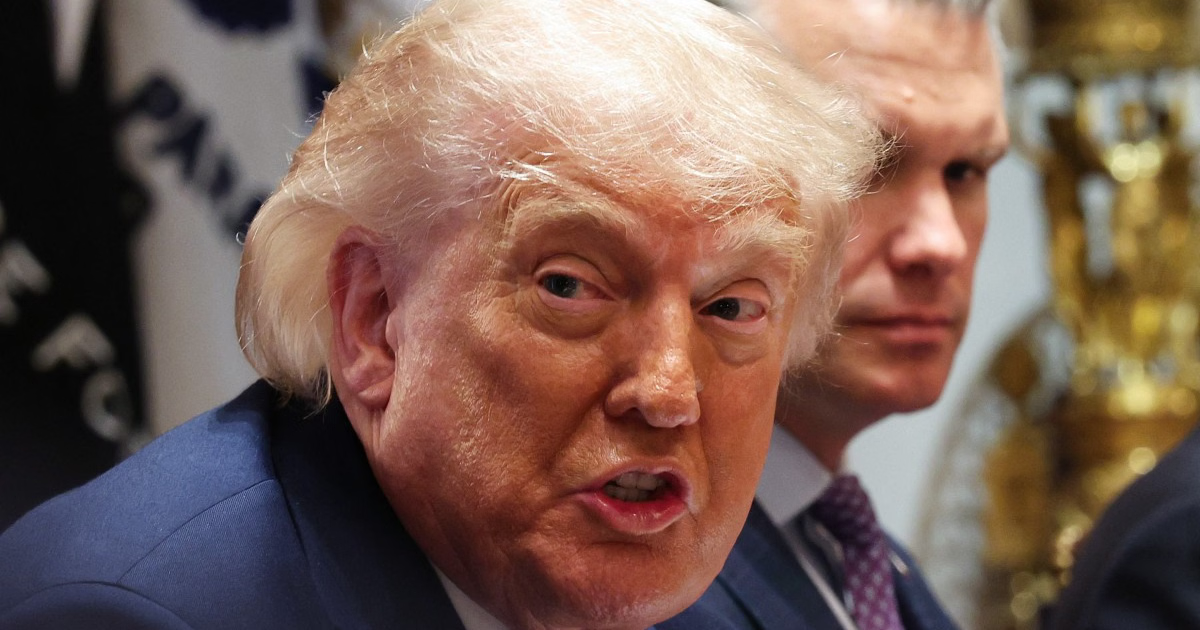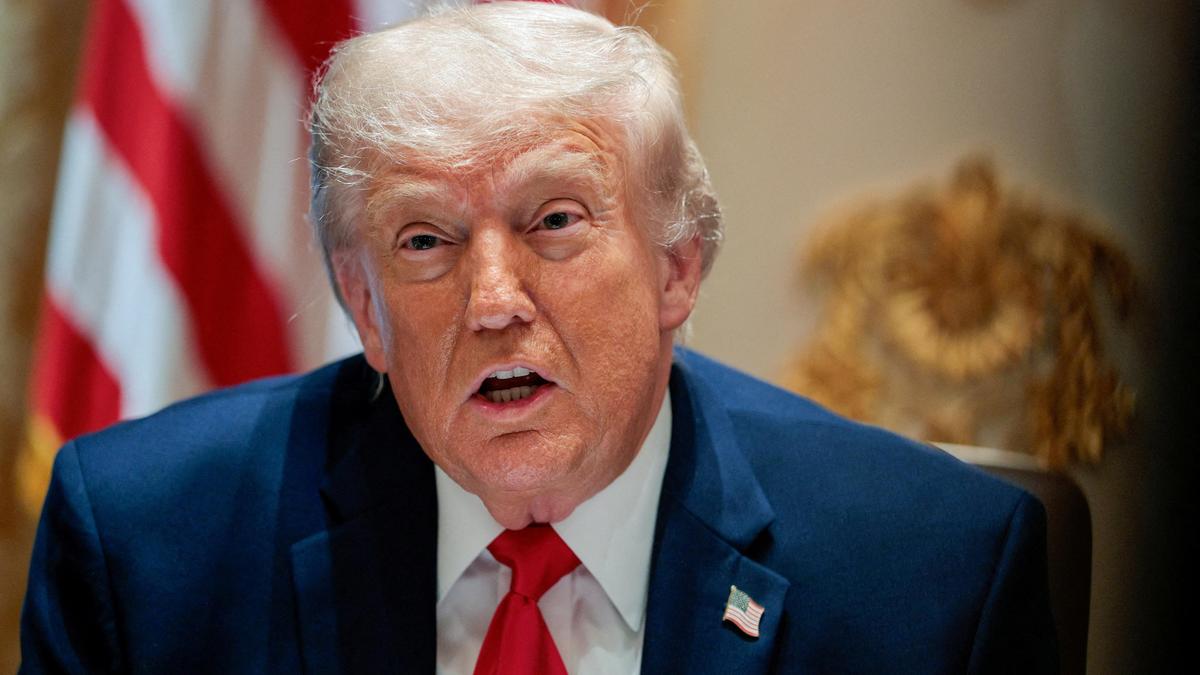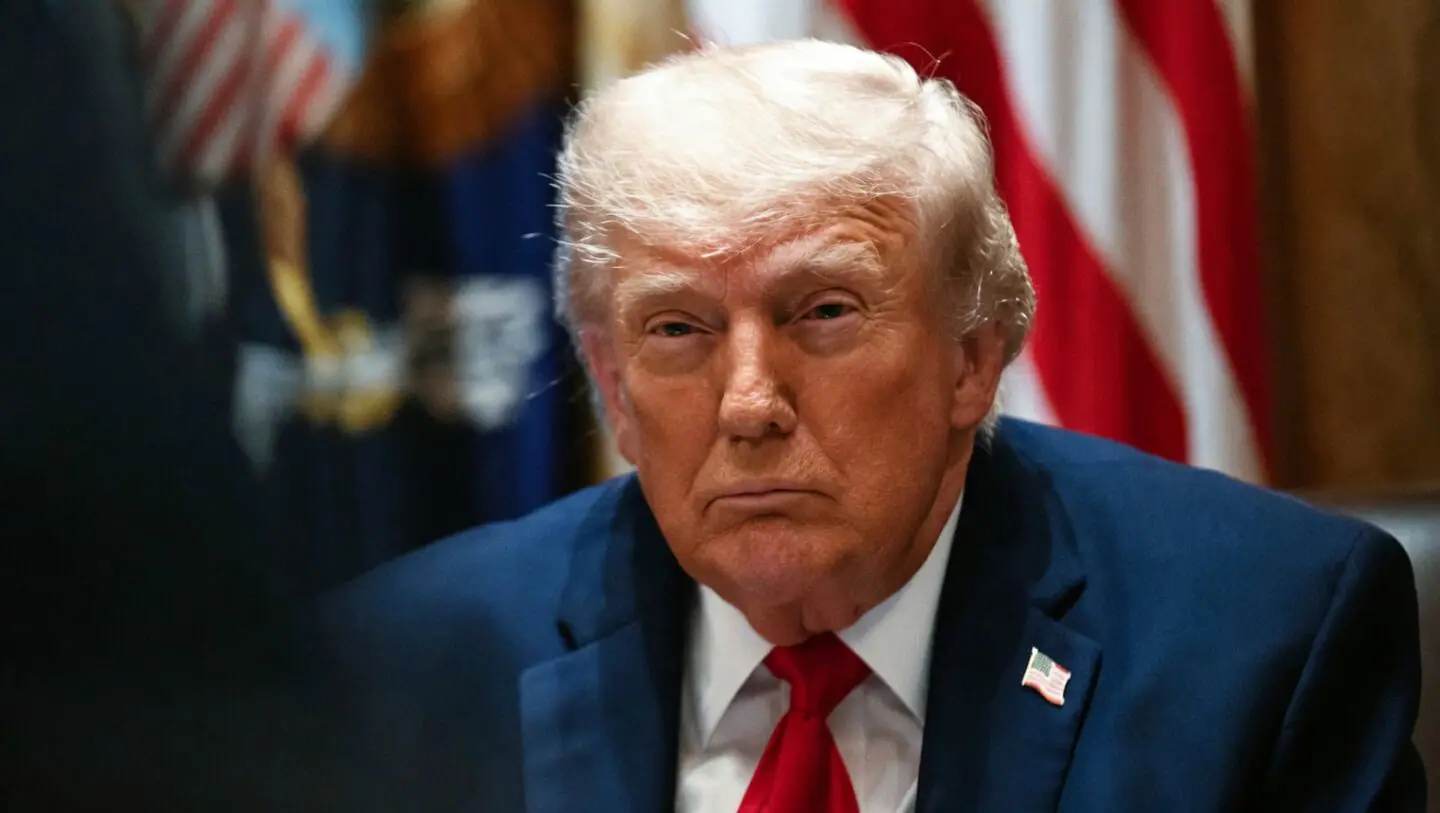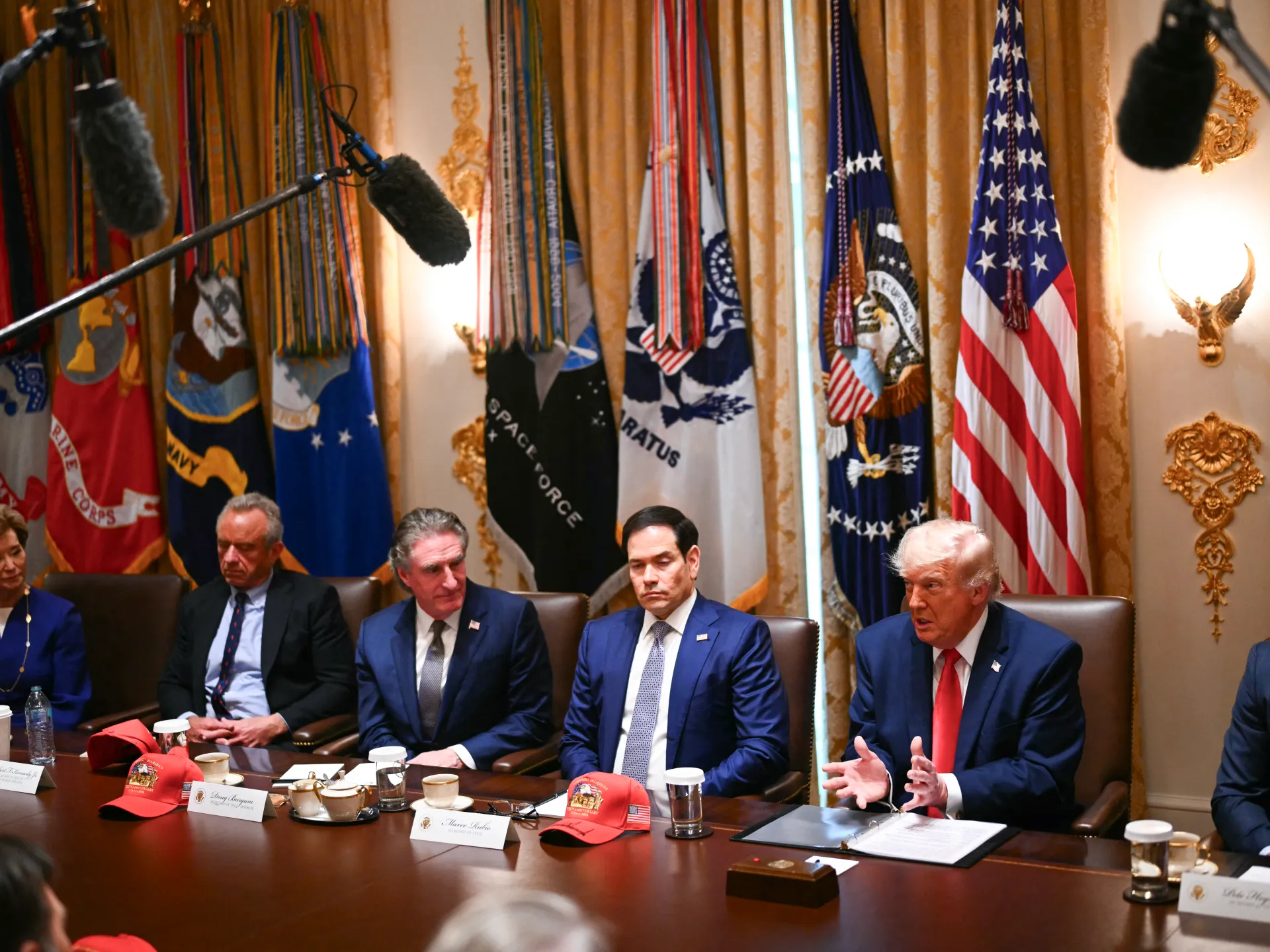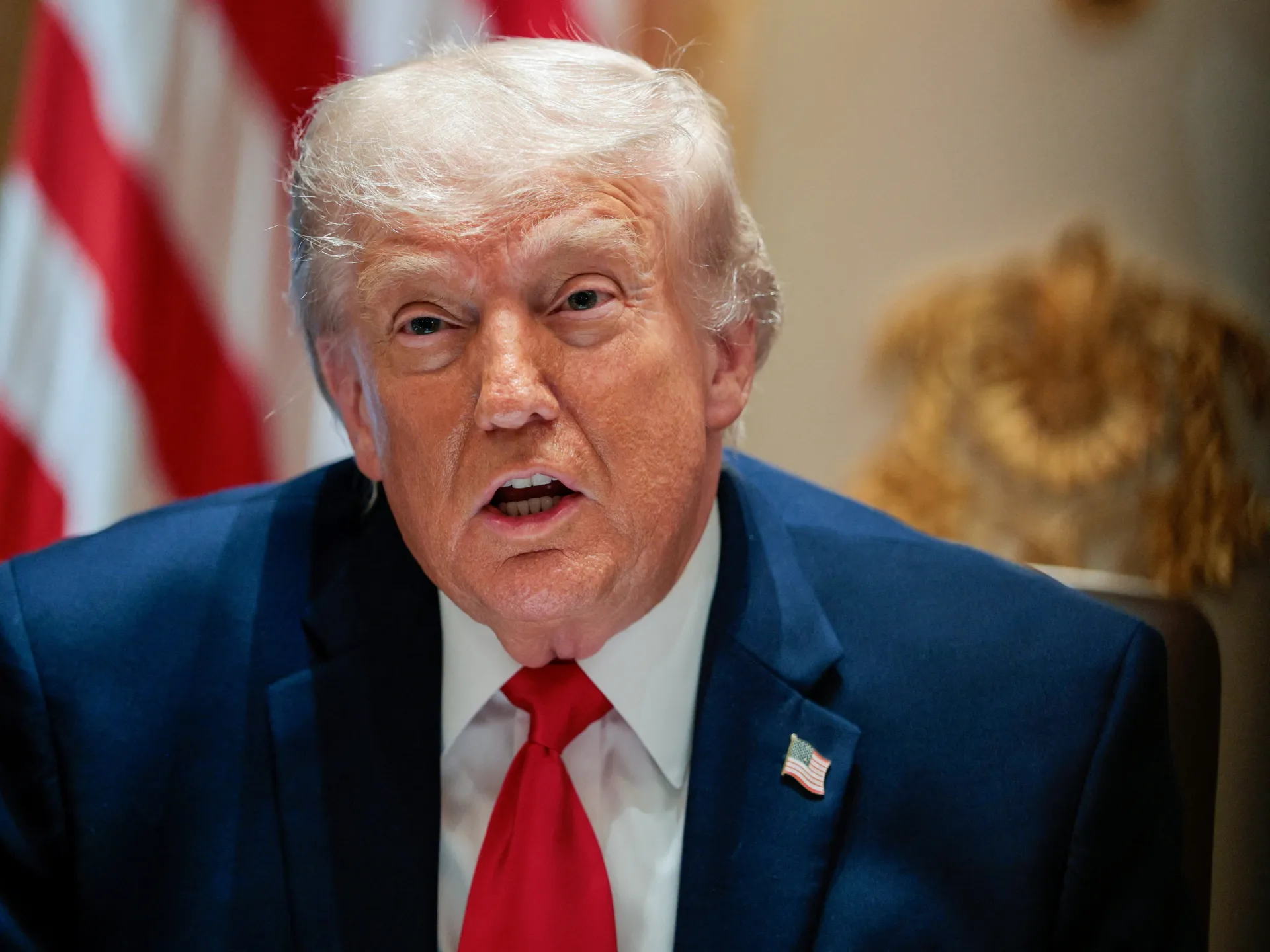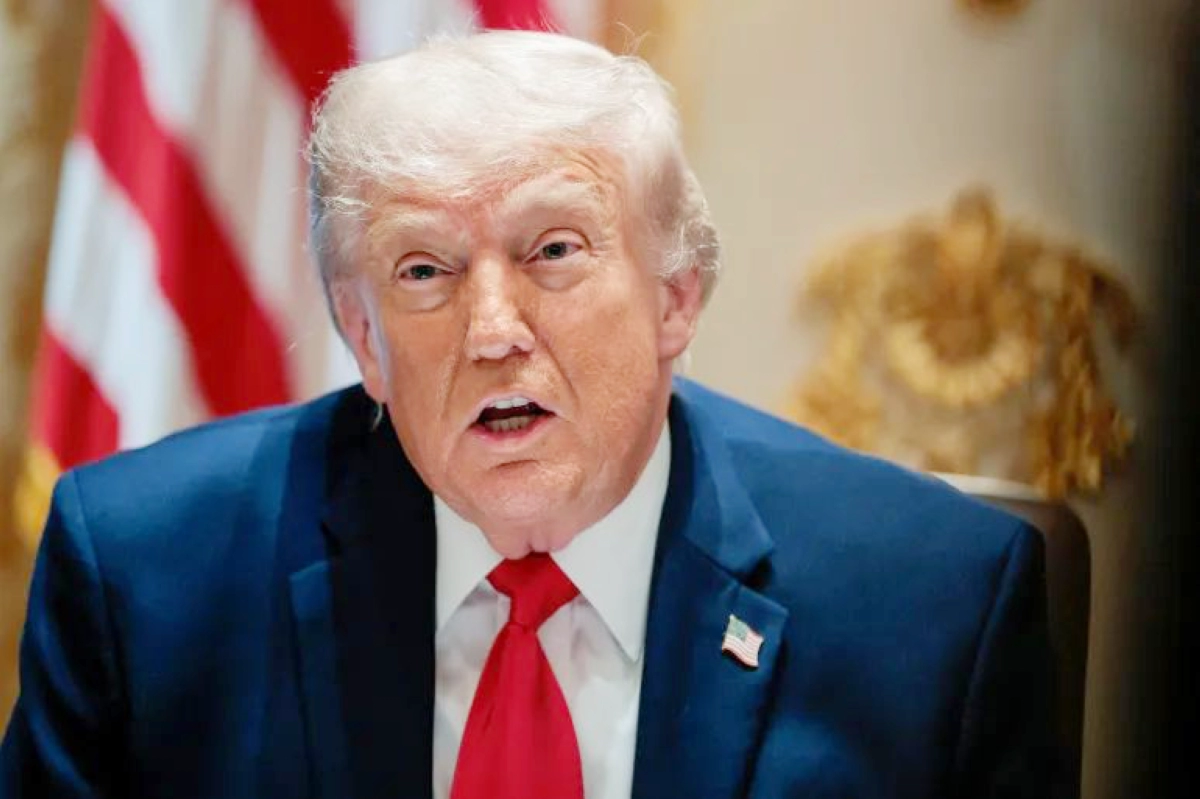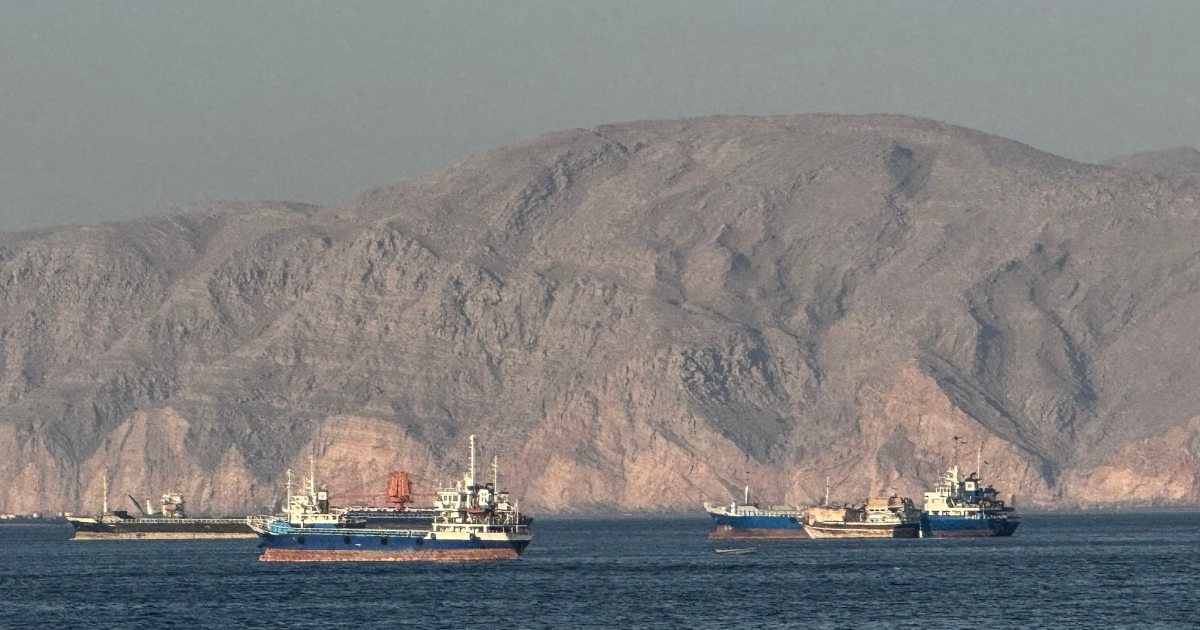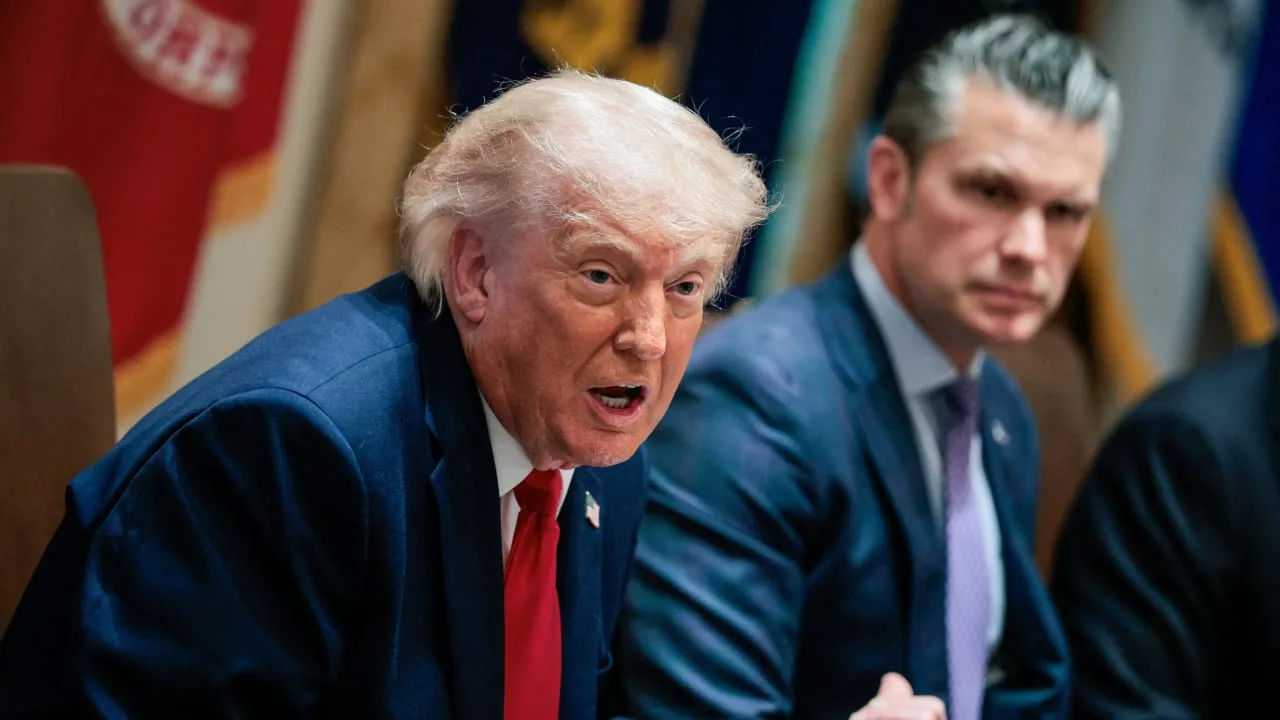
Jerusalem Post/Middle EastUS President Trump threatened Oman over the Strait of Hormuz, putting a longtime Gulf partner on edge and raising regional concerns over diplomacy and stability.Follow us on GoogleUS President Donald Trump speaks next to Defense Secretary Pete Hegseth during a cabinet meeting in the Cabinet Room at the White House, in Washington, DC, US, May 27, 2026.(photo credit: REUTERS/Evan Vucci)BySETH J. FRANTZMANMAY 28, 2026 17:32Many were surprised on May 27 when US President Donald Trump appeared to threaten Oman. “The Strait is going to be open to everybody. It’s international waters. We’ll watch over it, but nobody’s going to control it. Oman will behave like everybody else, or we’ll have to blow them up. They understand that,” the US president said.Oman? Why Oman? Some people thought that Trump had meant to say Iran and that he had been misunderstood. However, the US Department of State posted the president’s comments, leaving little chance that they were misunderstood or that he misspoke. The American president is known for making a lot of statements that are up for interpretation. He has threatened Iran throughout the last months of conflict, for instance. He has also hinted at being near a deal often.What has happened with Oman? Oman has historically been a friend of the US. However, many US partners and friends abroad have found themselves getting the cold shoulder in recent years from the US administration. Whether it is NATO allies, or Denmark, Ukraine, or Taiwan, many countries feel the US is moving away from historic partnerships. In recent days, America’s Gulf friends and allies have also been put under pressure to join the Abraham Accords. It’s possible the US may be moving toward a critique of the Gulf as well.Long history of Oman-US tiesOman has a long history of ties with the US. In recent years, it has helped mediate talks with Iran. However, it felt that its role as mediator was being exploited in June 2025 and also in February 2026 because while it was mediating, plans for war appeared to be afoot. As such, the mediation has moved to Pakistan and Qatar now. Pakistan, a nuclear-armed country, brings more clout to the table. Qatar, a major non-NATO ally of the US, is important as well.Oman has one of the lowest GPD per capita in the Gulf Cooperation Council. It is not an economic powerhouse like Saudi Arabia or the UAE. It is not as wealthy in oil or other resources. It does have a strategic place in the region, though, on the Gulf of Oman and near the entrance to the Strait of Hormuz.According to the US State Department’s embassy in Oman, “the friendship between the United States and Oman dates back over two hundred years, when the American ship, the Boston Rambler, sailed to the port of Muscat in 1790.” Formal ties date from the 1830s. “In 1840, the Sultan’s envoy Ahmad bin Na’aman sailed to New York on the Sultanah, and bin Na’aman became the first Arab diplomat accredited to the US. The Sultanah was also the first Arab ship to sail to the United States. In 1880, the US established its first Consulate in Muscat in order to strengthen political and economic ties with Oman,” the US Embassy notes.In 1972, the US opened an embassy in Muscat, the capital of Oman. “Oman and the United States signed a military cooperation agreement in 1980, which was revised and renewed in 2010, continuing its close military partnership.” A free trade agreement followed in 2006. Oman has generally remained outside various tensions and conflicts in the region.In recent years, its role as a neutral power has helped it host talks. For instance, in 2021, Omani Foreign Minister Badr Al-Busaidi hosted US Special Envoy for Yemen Timothy Lenderking in Muscat. The goal was to help talks with the Iranian-backed Houthis in Yemen. Oman continued its role as a mediator and host with Iran.Oman has also played a key role in the lead-up to the Abraham Accords. In 2018, Israel’s Prime Minister Benjamin Netanyahu went to Oman for a meeting with Oman’s Sultan Qaboos. When the sultan died in 2020, the Israeli prime minister praised him as an incredible leader. The Israeli visit to Oman led to several ministerial visits to Gulf countries. This helped move the UAE and Bahrain toward ties with Israel. Oman continued to encourage moderation in talks in Jordan. However, Oman appeared to move away from Israel after 2020. The Abraham Accords, for instance, didn’t expand to include Oman, even though it seemed like an ideal candidate to join.The role Oman played in the US-Iran talks prior to the US and Israeli strikes on Iran has led to Muscat being concerned about the trajectory of conflict in the region. Omani Foreign Minister Badr Albusaidi was open in his critique after the strikes on February 28. "I am dismayed. Active and serious negotiations have yet again been undermined," Albusaidi wrote on X. "Neither the interests of the United States nor the cause of global peace are well served by this….I urge the United States not to get sucked in further," he added. "This is not your war…I pray for the innocents who will suffer," he wrote. It appears Oman believes Israel pressured the US into war. Many Gulf countries are worried about Israel’s more aggressive policy in recent years, especially after airstrikes on Qatar in 2025.Iran attacked many countries in the region after the February 28 strikes. Oman was also struck by Iran, but only in a few limited incidents. Oman likely hopes the current ceasefire will continue. On May 24, the country’s foreign minister hosted Iran’s Deputy Foreign Minister Kazem Gharibabadi.Iran’s foreign minister has not responded to the recent comments by President Trump. However, Abdullah Baabood, an Academic specialist in International Relations, the Gulf, and Middle Eastern affairs, wrote on X about the US comments. “Threatening Oman, a peaceful, neutral, and longtime US partner, is a serious strategic mistake. Undermining one of the most reliable and trusted diplomatic bridges with Iran only weakens diplomacy and further damages American credibility in the Gulf.”The recent US push for countries to join the Abraham Accords and the language being used against Saudi Arabia, Qatar, and Pakistan is raising eyebrows in the region. Many Gulf countries take language very seriously. They are modest and cautious in their tone. While they may expect that US-European relations may be more abrasive and coarse, and they know the current US administration is known for being very direct in its language in dealing with Europe, the Gulf countries tend to think that the White House will be more polite in its ties in the region.US partners and allies are on edge. They don’t know which America they will wake up to every day. The new war in Iran has led many to consider a broken and Hobbesian world order. They had already been hedging in global affairs since the Obama era, seeking out more ties to China, India, and other places. A sense that the US was leaving the Middle East or not committed to historic relationships, drawing down and becoming more erratic and isolationist, led many countries to increase defense spending and contemplate a post-American world order. This may have also aided the Abraham Accords, as US allies seek to work together. However, countries like Oman becoming victims of rapidly changing policies was not something most Gulf countries expected. Oman is a neutral and friendly state that hasn’t done anything to anyone. It’s likely that concerns are growing in Riyadh, Cairo, Islamabad, and Doha. Follow us on Google
Donald Trump threatens Oman, raising questions about US Gulf policy | The Jerusalem Post
US President Trump threatened Oman over the Strait of Hormuz, putting a longtime Gulf partner on edge and raising regional concerns over diplomacy and stability.
1,264 words~6 min read