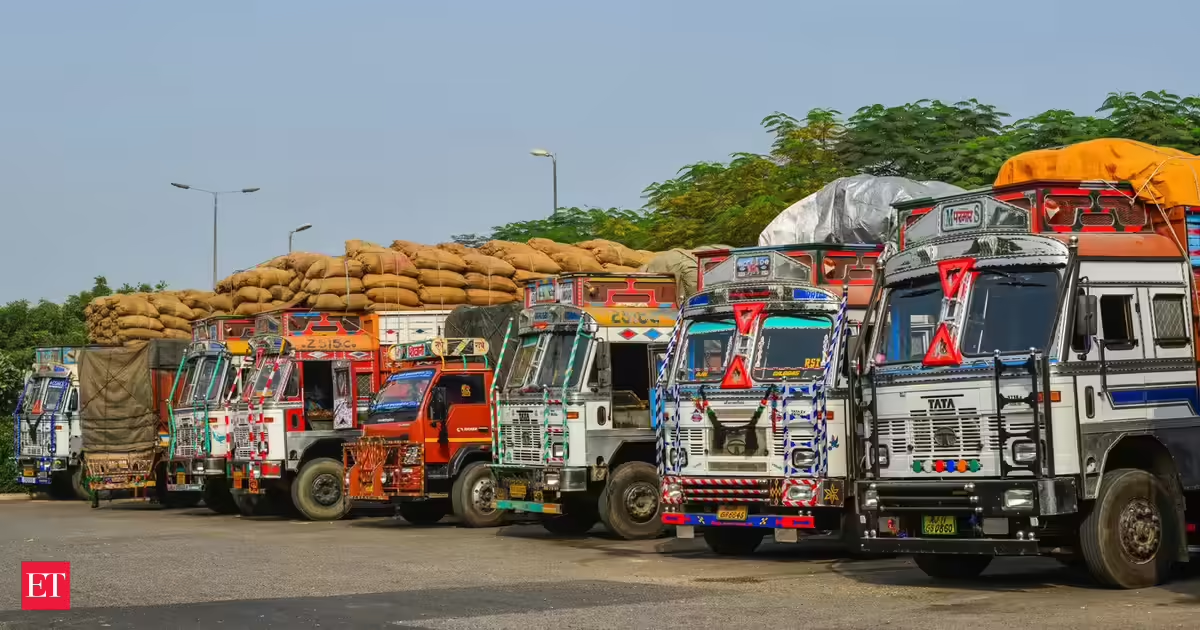
SynopsisThe Indian commercial vehicle sector shows remarkable strength. Fuel price increases from the West Asia conflict have not significantly impacted demand. Lower GST rates and the replacement of old vehicles are driving sales. Ashok Leyland expects continued strong performance in April and May. Operations in the UAE are normalizing after initial war-related disruptions.AgenciesShenu Agarwal, MD & CEO, Ashok LeylandNew Delhi, Domestic commercial vehicle industry is showing "amazing" resilience despite the challenges emanating from the West Asia war that has led to fuel price hikes, Ashok Leyland Managing Director & CEO Shenu Agarwal said on Thursday.The boost from the GST rate cut and replacement of ageing fleets continue to drive demand momentum, but it remains to be seen how the situation unfolds "as the decisions on this war are taken", he told reporters during an earnings call."As far as the current situation is concerned, there is no doubt that both these fundamental factors are still in favour. However, there are some disturbances, mainly because of the oil price at the retail level," Agarwal said, responding to a query on the impact of fuel price hikes on CV demand.He further said,"So far, the government has increased the price by approximately Rs 7, which is quite affordable in the way that it will not have any major impact, we believe, on the CV industry."Therefore, Agarwal said,"We have seen that the CV industry has remained quite strong in April, at least, and May is also looking like it would be either equal or better than last year."So, from a demand point of view, he said,"We see a lot of resilience despite all the challenges on the ground, and we will have to see how the situation unfolds as the decisions on this war are taken, but I can tell you that the resilience is quite amazing."Elaborating on demand momentum in the CV industry, Agarwal said starting October last year the industry had a very strong momentum "after the rationalisation of the GST leading to about 10 per cent reduction in prices".The other reason is the ageing fleet, especially in the heavy-duty trucks, which was at an all-time high."Therefore, the market was ready to receive this trigger and start replacing the older trucks now," he added.When asked about the company's operations in West Asia and the facility at Ras Al-Khaimah in the UAE, he said there were challenges in late March and April due to the war, mainly on account of labour and some supply chain issues, as the company had to take out people to safer places "because of some of the incidents that happened around the factory"."Now things are coming to normalcy... We are expecting that the plant should be producing at full capacity, starting from June. Of course, we have to wait and watch how things progress on the war front," Agarwal added.In terms of demand, he said there has been "no setback" in the GCC market and it is still very high as the company supplies essential categories such as school buses.He, however, said, "While from India we have not been able to ship because of logistics challenges, but we have stocks there to fulfil the retail demand in the GCC area."Read More News on...moreless
CV industry showing resilience, not much impact of fuel price hike on demand: Ashok Leyland MD
The Indian commercial vehicle sector shows remarkable strength. Fuel price increases from the West Asia conflict have not significantly impacted demand. Lower GST rates and the replacement of old vehicles are driving sales. Ashok Leyland expects continued strong performance in April and May. Operations in the UAE are normalizing after initial war-related disruptions.
534 words~2 min read