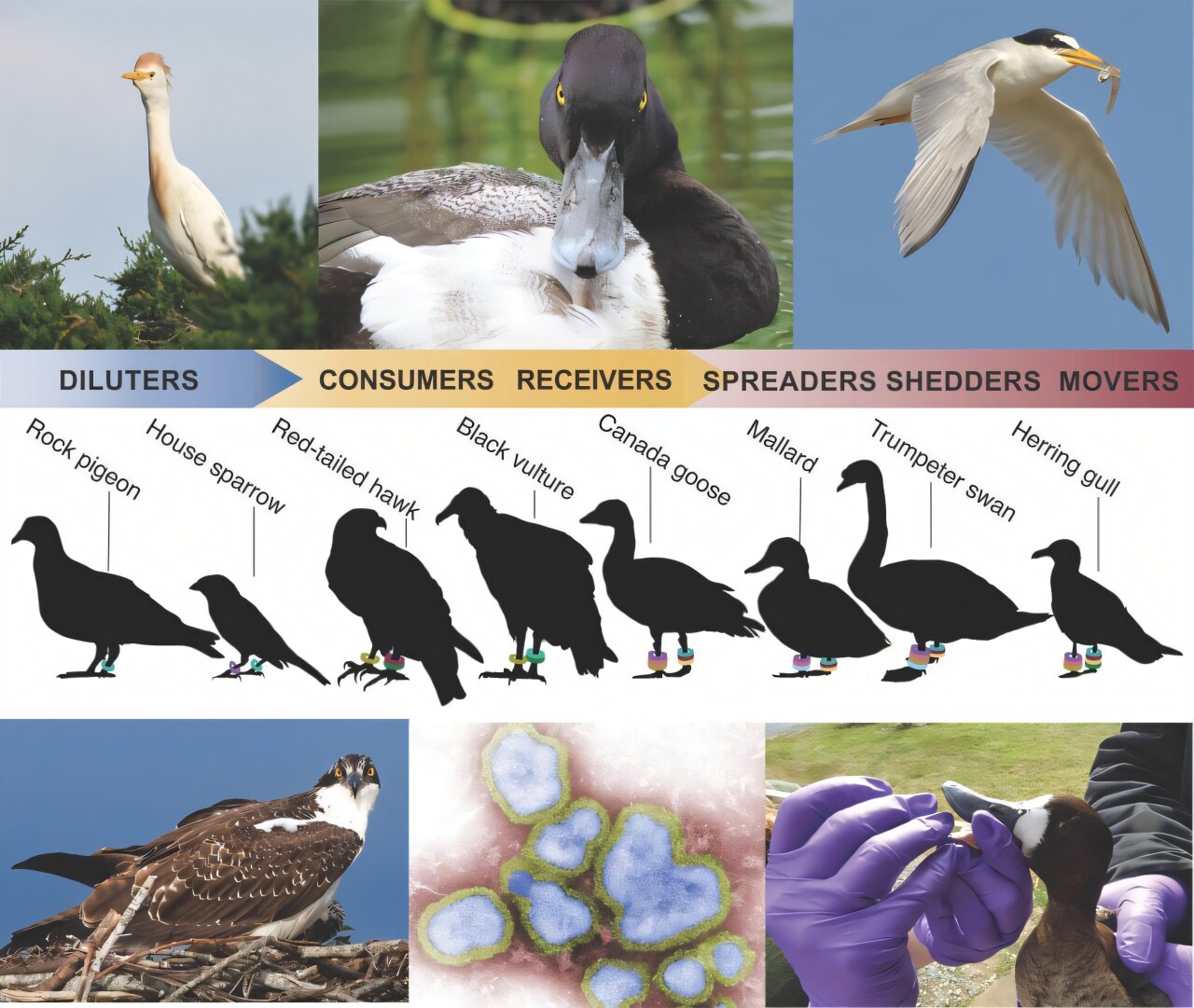
Johanna Harvey’s new paper in Wildlife Monographs describes how circulating avian influenza viruses show an expanded set of susceptible hosts and higher transmission rates. Credit: University of Rhode Island
Johanna Harvey, an assistant professor of wildlife disease ecology at the University of Rhode Island, has described bird flu in public presentations as a quiet virus with loud consequences. Now, she's published a new paper in Wildlife Monographs, describing how circulating avian influenza viruses (HPAIV) show an expanded set of susceptible hosts, including many migratory wild birds, and higher transmission rates. In the paper, Harvey examines data gaps in avian influenza host dynamics to prioritize wildlife conservation—and protect human health.
The flagship wildlife science journal publishes only a small number of papers annually, presenting a thorough, book-length analysis on a particular wildlife topic. The journal is now offering a foundational, go-to reference on avian flu with input from Harvey, an evolutionary ecologist, in collaboration with Jennifer Mullinax at the University of Maryland.
They are examining how risk factors relate to biological traits to begin disentangling their interactions.