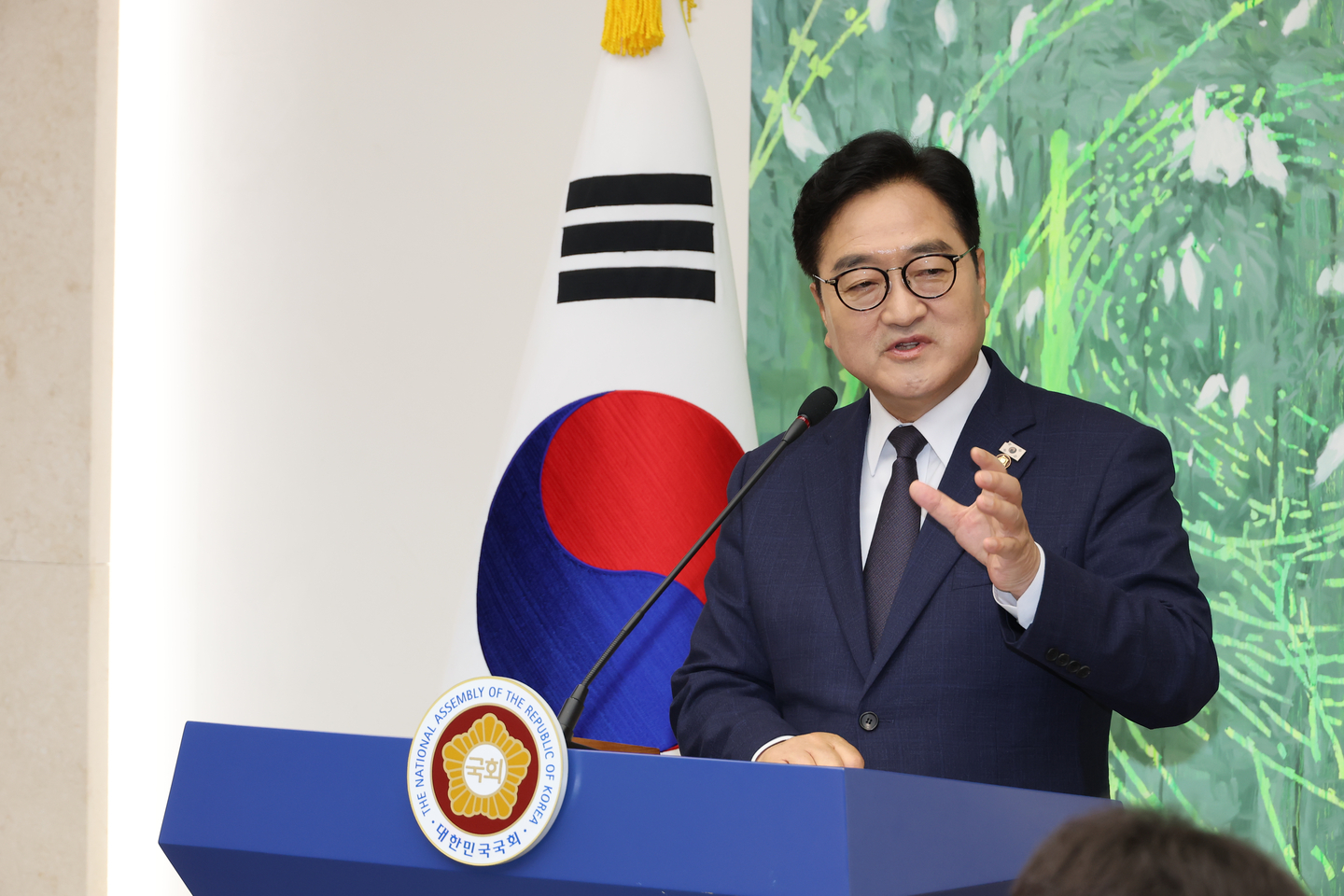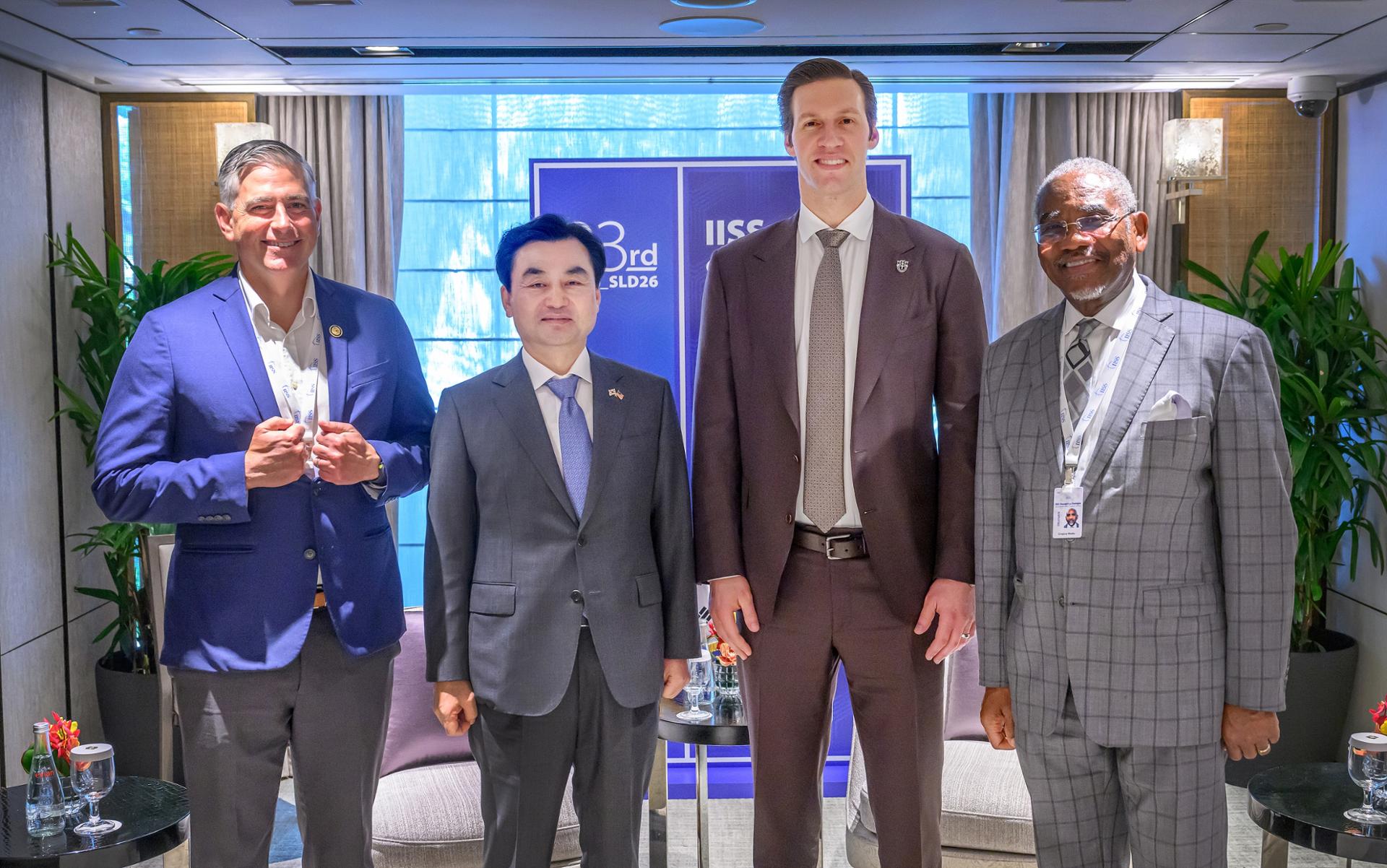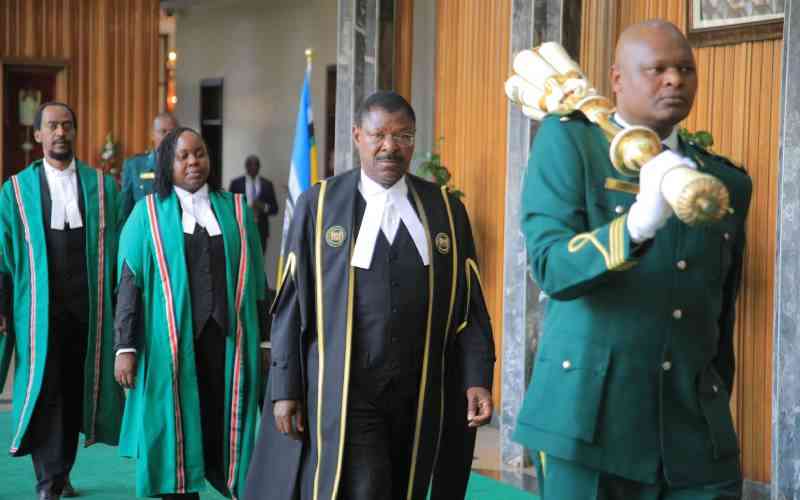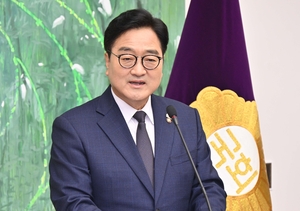
Rep. Woo Won-shik speaks during a press conference held at the National Assembly in Seoul on Thursday. (Lee Sang-sub/The Korea Herald) Rep. Woo Won-shik, speaker of the National Assembly whose two-year term is set to end Friday, called for consolidating lawmakers’ fragmented diplomatic activities to strengthen the parliament’s diplomatic capabilities.Stressing the South Korean parliament’s role in the country’s soft diplomacy, the five-term lawmaker said wat a press conference Thursday that there was greater room for the National Assembly to help augment state diplomacy."If (the parliament) manages to build trust with key figures in the diplomatic counterpart, this could help the government with diplomatic breakthroughs in times of need," Woo said. "So I believe it would be beneficial to further strengthen the parliament's diplomatic capacity."Under the current system, the speaker engages in diplomatic activities as the face of South Korea’s legislature. In addition, some South Korean lawmakers make individual efforts to cultivate friendships with other parliaments or join bipartisan caucuses dedicated to parliamentary diplomacy.As these activities are often fragmented, there have been calls for a new body to provide integrated support for lawmakers’ diplomatic efforts.In hopes of fostering a more organized approach to parliamentary diplomacy, Woo expressed hope that his successor, Rep. Cho Jeong-sik, would take on the role of launching such a body within the next two years."(The National Assembly Secretariat) is striving to increase the budget for parliamentary diplomacy and provide organized support, but it would ultimately be necessary to create an independent body for parliamentary diplomacy," Woo said.Woo, who hit the gavel at the National Assembly to nullify ex-President Yoon Suk Yeol’s martial law declaration on the chaotic night of Dec. 3, 2024, said he had placed particular emphasis on parliamentary diplomacy to mitigate the shock caused by the 2024 martial law crisis. Since then, he has visited 72 countries and formally met with 101 national leaders.He said his meetings with foreign leaders not only helped restore trust in South Korea but also helped South Korean companies operating overseas overcome challenges.For example, Woo’s recent meeting with Kenyan President William Ruto led to Nairobi’s commitment to shorten the processing period for work-related visas for South Korean workers from one year to two months. Woo’s meeting with Emir of Qatar Tamim bin Hamad Al Thani in November also helped South Korean builder Samsung Engineering and Construction mitigate legal trouble involving its cancellation of contracts for Doha Metro station construction."The government's diplomacy focuses on dealing with state affairs, whereas parliamentary diplomacy serves to support this," Woo said.Woo’s two-year term will end Friday, after which he is set to return to the ruling Democratic Party of Korea. His successor, six-term lawmaker Cho, was selected by ruling party members to lead the National Assembly.Cho will begin serving as the next National Assembly Speaker if a plenary session scheduled for June 5 votes in favor of the motion. The motion requires a majority of votes in the National Assembly, where the Democratic Party already holds a majority.
Outgoing Speaker calls for stronger parliamentary diplomacy
Rep. Woo Won-shik, speaker of the National Assembly whose two-year term is set to end Friday, called for consolidating lawmakers’ fragmented diplomatic activiti
494 words~2 min read