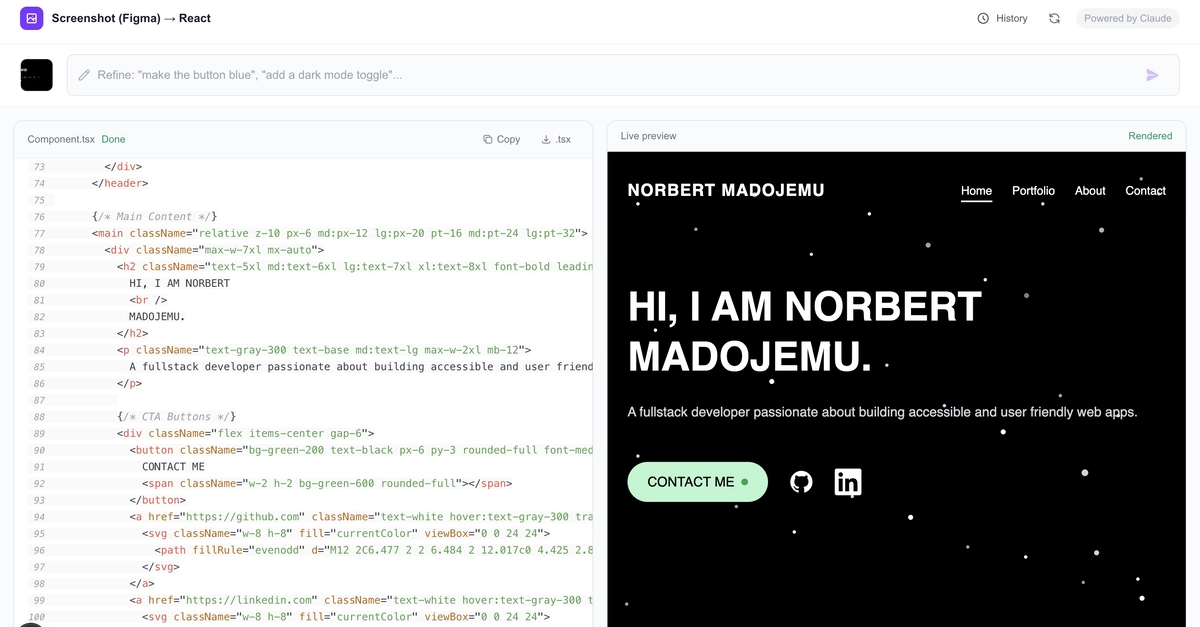
I spent a week generating 35 UI components with v0 by Vercel to understand where it fits in a real development workflow. The tool occupies a narrow but valuable niche: it does not write backend logic, manage state, or replace a frontend engineer. What it does — generating React components with Tailwind CSS and shadcn/ui from natural language prompts — it does well enough to change how I approach the early stages of UI work. Here is what 35 generations taught me about where v0 shines and where the output still needs a human to finish the job.
The Generation Pipeline Is Fast Enough to Change Behavior
The speed of v0's generation is what makes it useful in a way that slower AI tools are not. When I typed "a pricing page with three tiers, a monthly versus annual billing toggle, and a testimonial section at the bottom," v0 produced a rendered React component in a browser preview within 8 seconds. I refined it through four follow-up prompts — "highlight the middle tier as recommended," "add an enterprise contact link below the tiers," "reduce the vertical spacing between the testimonial cards" — and had something presentation-ready in under three minutes.
This speed matters because it changes the cost-benefit calculation for visual exploration. Before v0, if I wanted to compare two layout options for a dashboard, I would sketch both on paper or in Figma, pick one, and implement it. With v0, I generated both options as rendered components in under 30 seconds each, compared them side by side, and picked the better one after seeing it in an actual browser rather than a mockup. I did this seven times across different component types — dashboards, settings pages, landing pages, modal dialogs — and the visual comparison consistently revealed issues I would not have caught in a static mockup.