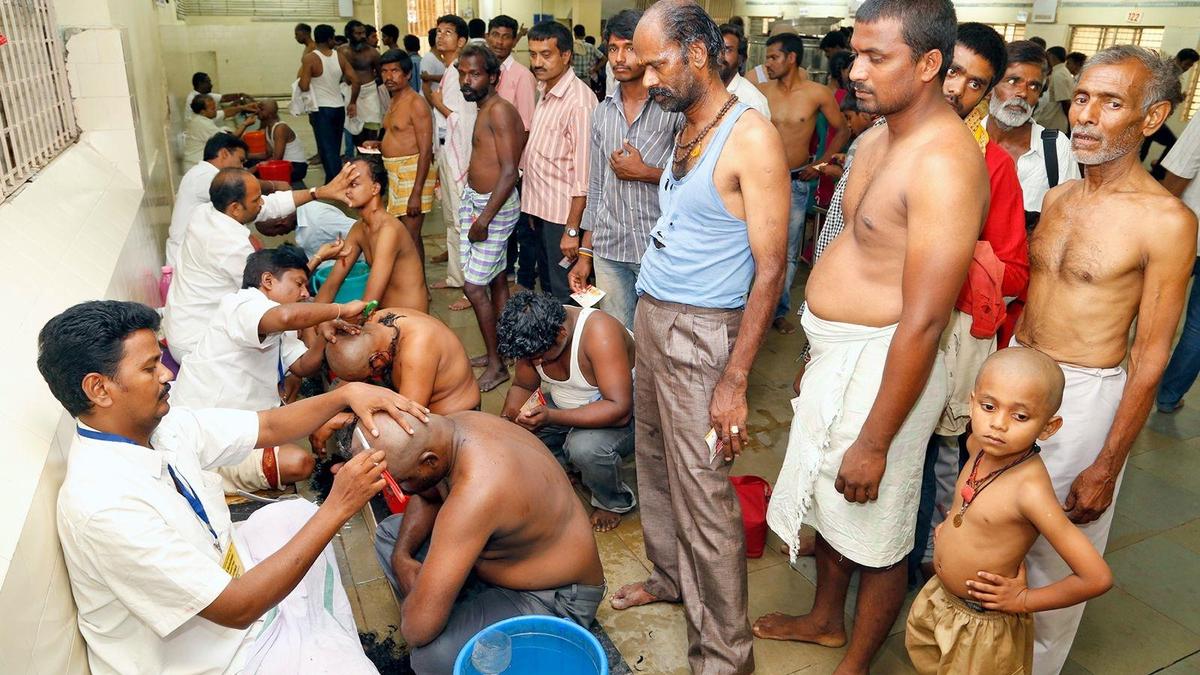
Licence fee for collecting human hair in a temple will attract GST at 18 per cent, the Authority for Advance Ruling in Tamil Nadu (TNAAR) has ruled. It also held that human hair as a good will not attract GST.“The temple is issuing a licence for a consideration in the course or furtherance of business. From the definition of Service as per Section 2(102) of the CGST Act, 2017, Services means anything other than goods. All forms of supply including licence is a supply of service. The temple authority is transferring the right to provide certain services for a consideration and is not itself providing the services. These are supply of services and are liable to tax at the rate of 18 per cent (CGST – 9 per cent + SGST – 9 per cent),” TNAAR said while disposing of an application filed by one Chelliah Rangaraj.The applicant said he has taken a contract for collection of human hair from Arulmigu Mariamman Temple, Samayapuram, Tiruchirappalli. The temple is administered by Tamil Nadu State Government’s Hindu Religious and Charitable Endowments Department (HR & CE Department. The temple authorities conduct an auction for the sale of human hair. The applicant participates in auction for such activity within the temple premises and pays the auction amount to temple authorities.“Temple is not doing any business activity, and the sale of human hair is exempted from GST tax liabilities; however, the temple authorities are collecting GST on the auction amount on the ground that, the said activity falls within the ambit of GST Taxation for collection of human hair’,” the applicant said while adding that temple is not providing any service or business for any consideration. This is mainly for furtherance of public interest and not in furtherance of any business, the applicant said.After going through all the facts presented and arguments made, TNAAR rejected Applicant’s contention that since the temple is a place of worship, any activity in connection with facilitating worship in public interest cannot be subjected to GST, by drawing a parallel between ‘temple as a place of worship’ and ‘temple undertaking commercial activities’. Accordingly, it clarified, “commercial activities undertaken by any place of worship are liable to be taxed.”According to Ikesh Nagpal, Lead- Indirect Tax at AKM Global The ruling emphasises how far GST can travel into institutional monetisation. The Authority has effectively said that once a religious institution steps into structured commercial arrangements, tenders, licences, consideration and exclusive rights, the transaction may lose the protective colour of religion and start looking like a taxable business model.What makes the decision interesting is the distinction it draws between the hair donated by devotees and the right to commercially access it. “While the sale of human hair may continue to enjoy exemption, the licence granted by the temple to collect and monetise that hair has been treated as a separate taxable service. In a way, the ruling suggests that GST is not targeting the offering made by devotees, but the commercial ecosystem that develops around it,” he said.Published on May 28, 2026
Licence fees for collecting devotees hair in temple to attract 18% GST, says AAR
Tamil Nadu AAR rules that temple licence fees for collecting human hair are subject to 18% GST, clarifying tax implications.
509 words~2 min read