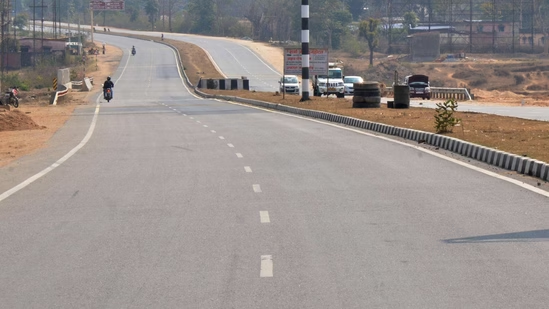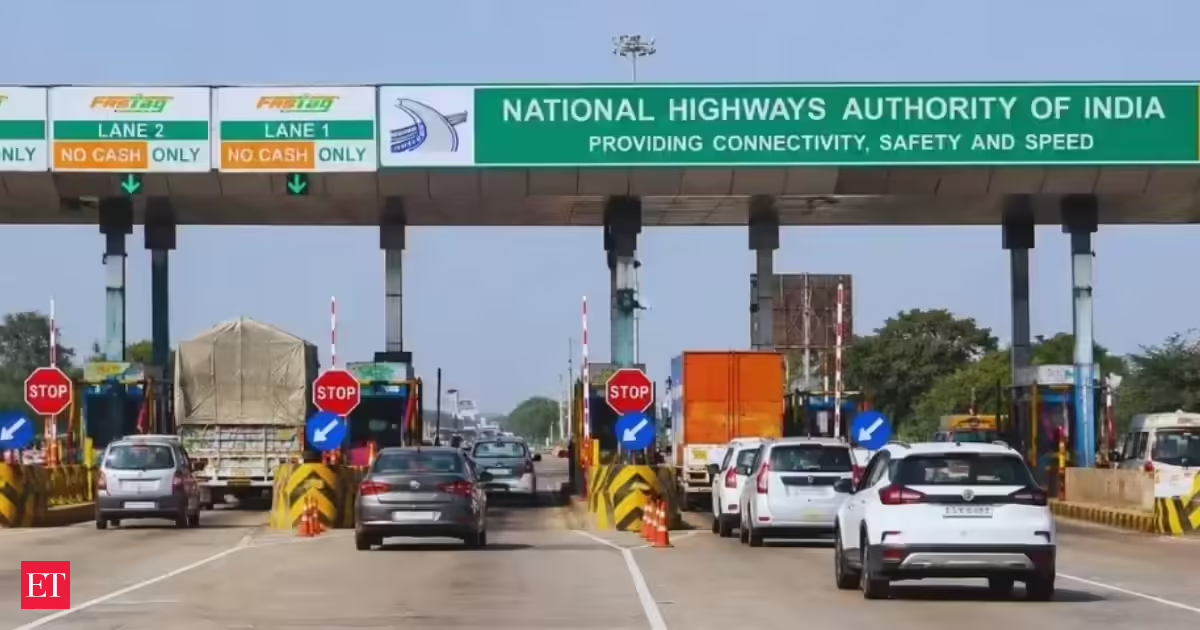
Mumbai: The Rajasthan High Court held that toll collection rights granted under a highway concession agreement constitute taxable consideration for construction services provided to the National Highways Authority of India (NHAI) and are not exempt from goods and services tax (GST) merely because toll collection is exempt. The May 22 ruling by a division bench, dismissing a writ petition filed by CG Tollway Ltd, could have significant implications for public-private partnership infrastructure projects, said tax experts.The bench of Justices Arun Monga and Sandeep Shah confirmed tax authorities' demand for GST, interest and a 10% penalty from the company, a special purpose vehicle now part of IRB Infrastructure Trust. The dispute stemmed from a 2016 design, build, finance, operate and transfer concession agreement under which CG Tollway was to six-lane a stretch of NH-79 in Rajasthan. In return, the company received rights to collect tolls during the concession period along with access and licence rights over the project site.The company argued that it had not supplied any taxable service to NHAI and that toll collections were exempt from GST rules. It also contended that imposing GST on the concessionaire would result in double taxation as its EPC contractor had already paid GST on the construction work.Rejecting these submissions, the court held that the arrangement amounted to a taxable works contract service. It observed that GST law recognises consideration received "in money or otherwise" and that the right to collect tolls represented reciprocal consideration for construction and maintenance of the highway.
HC says toll collection against construction services provided to NHAI taxable
The Rajasthan High Court has ruled that toll collection rights are taxable. These rights are considered payment for highway construction services provided to the National Highways Authority of India. The court rejected arguments that toll collection is exempt from GST. This decision could impact public-private infrastructure projects. Tax authorities can now demand GST, interest, and penalties.
249 words~1 min read