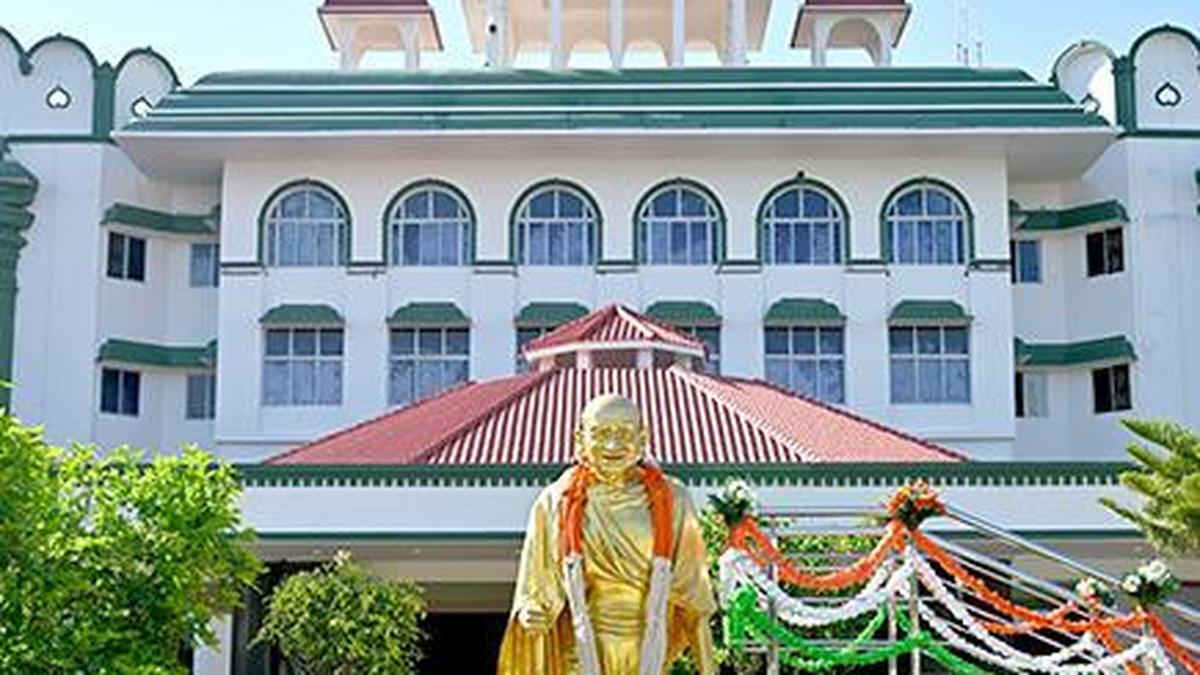
These lands were previously blocked (in 2008 and 2015) to prevent unlawful alienation, the petitioner told the Madurai Bench.
The Madurai Bench of the Madras High Court on Tuesday directed the State government to file a counter-affidavit to a public interest litigation petition that challenged the decision to lift the ban on registration of 3,085 acres of ‘temple land’ in Karur district.A Division Bench of Justices C.V. Karthikeyan and R. Sakthivel was hearing the petition filed by A. Radhakrishnan of Salem, who said he was a devotee of Balasubramaniya Swamy, Kalyana Pasupatheeswarar Swamy, Ravishwarar Swamy, and Vikrutheswarar Swamy in Karur district.The petitioner said the authorities had directed the Registration Department to ‘unblock’ (de-freeze) the prohibitory module for lands measuring 3,084.95 acres across 15 villages in Karur district. These lands were previously blocked (in 2008 and 2015) to prevent unlawful alienation.By unblocking them, the authorities had facilitated the registration of temple lands without prior sanction from the HR&CE Commissioner and the government, as mandated under Sections 34 and 41 of the HR and CE Act, he said, and sought the quashing of the orders passed by the authorities in this regard.During the hearing, the State submitted that in pre-Independence days and sometime in the late 18th Century, inams were granted by the then rulers to various people, and some inam lands were also granted to temples. The temples, in turn, let out the lands to farmers.When the Tamil Nadu Minor Inam (Abolition and Conversion into Ryotwari) Act, 1963, came into effect, all the inams were abolished, and the lands were vested with the farmers who had been occupying them for a period of 60 years.The settlement tahsildar conducted an inquiry into each of the lands and, between 1965 and 1967, passed individual orders granting ryotwari patta to the occupants of the land. They, in turn, sold it, and 10 to 15 such transactions had taken place over the last 60 years.After Section 22 A was introduced in the Registration Act, which gave temples the right to object to the registration, some temples wrote to the Registration Department, stating that these lands belonged to them, and some filed suits. The temples urged the department not to permit registration of these lands.The State said an inquiry found that in each of these cases, orders were passed by the settlement tahsildar. The people had been in possession of the land as absolute owners for over 60 years. A number of transactions had taken place. Orders were passed through which the authorities had unblocked those lands from the ban on registration. All those people had documents of title.To a query raised by the court as to whether the temples were given a hearing, the State said they were. A committee had been formed to examine the cases, and the temples were part of the committee and participated in the decision-making process. Thereafter the orders were passed, it said, and sought time to file a detailed counter-affidavit in the case.The court directed the State government to file a detailed counter affidavit by July 29 and said the matter would be taken up for hearing on August 11. Published - July 14, 2026 09:56 pm IST