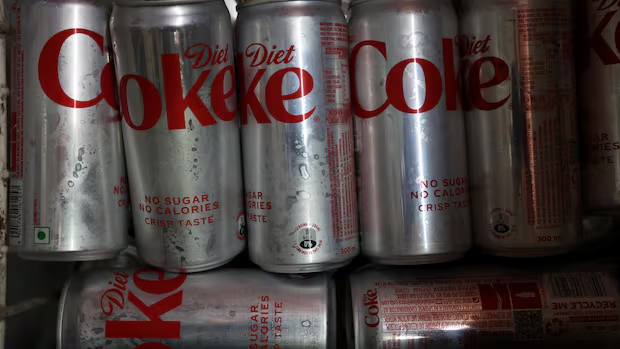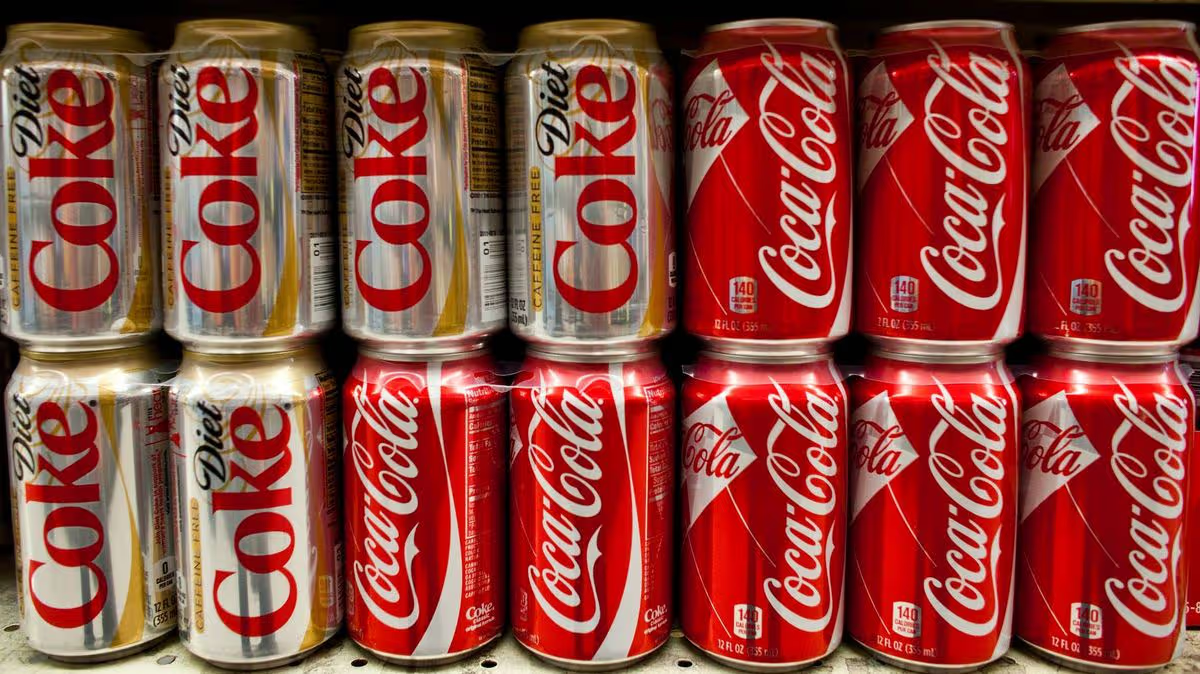
New Delhi: Imported cans of Diet Coke, Coke Zero, 7 Up Zero Sugar and other aerated drinks have flooded quick commerce platforms, selling at almost five times the price of their local variants, amid an ongoing shortage of canned beverages.Blinkit, for example, is selling imported 330 ml Diet Coke cans at Rs 199 apiece, while locally manufactured versions are priced at Rs 40 each. Cans of Coke Zero Sugar and Pepsi Zero Sugar Lemon are listed on various platforms priced between Rs 199 and Rs 209 for 320-300 ml. On Zepto, a 330 ml can of 7 Up Zero Sugar is selling at Rs 205, signifying a steep premium to the Rs 39 charged for the Indian-made variant.The imports are not routed through the domestic units of the global beverage makers and are being organised independently by the importers, all of which, including Delhi-based Canopus Global Ventures and Snackstar, claim Food Safety and Standards Authority of India (FSSAI) certifications on their labels. Industry executives, however, said that even as all food imports are regulated by the FSSAI, there are concerns about quality control and best-before dates, which are the responsibility of the importers in the absence of the other stakeholders assuming direct accountability for any lapses.ALSO READ | Indian companies take guard against Rupee’s strikesET Bureau ET Bureau“The consumer needs to be protected, should anything go wrong. In this case, the responsibility is on the brand owners and the online platforms selling these products. Compare this with, for example, phones, most of which come with global warranties irrespective of which country you buy the phone from,” said Shiv Shivakumar, operating partner, Advent International, and former chief executive of PepsiCo India Holdings and Nokia.Queries emailed to Coca-Cola, Blinkit, Swiggy Instamart, Zepto, Canopus Global and Snackstar remained unanswered till press time.While some supplies of locally made Diet Coke cans have resumed over the past 10 days, shortages continue in parts of Mumbai, Delhi, Pune and Bengaluru across retail and online platforms. Supplies of canned Diet Coke, in particular, dried up in the middle of April, owing to the shortage of aluminium cans. Unlike most other soft drinks, which are also sold in polyethylene terephthalate (PET) or glass bottles, Diet Coke is bottled only in cans.Some independent bottlers temporarily started selling Diet Coke in glass bottles, with bundled packs of 200 ml glass bottles priced at Rs 480-Rs 600 for packs of six.Imported foods are gradually becoming available on quick commerce channels, although they have been a routine offering in modern retail for years.Indian companies rely heavily on importing aluminium cans from the UAE, Southeast Asia and Sri Lanka. These countries have large-scale, low-cost can manufacturing, which makes their cans about 30% cheaper than those produced in India.In addition to supply disruptions from West Asia, prices of can-grade aluminium have shot up about 50% year-on-year to $3,600 per tonne.Beer makers, too, rely on cans, but the shortages are being felt more by soft drinks firms. “Beer is the primary user of aluminium cans in India, but most beer cans come in 500-ml cans and nearly 80% are produced domestically. In contrast, supplies of 300-ml cans, used by the soft drink industry, are heavily dependent on imports from the Middle East, hence supplies haven’t been able to recover as much,” said Vinod Giri, director general of the Brewers Association of India, which counts United Breweries, AB-InBev and Carlsberg as key members.Two of the biggest aluminium can makers in India – Ball Beverage Packaging and Canpack – are short of the required capacities.Inflation TooUnlike most other soft drinks, which are also sold in polyethylene terephthalate (PET) or glass bottles, Diet Coke is bottled only in cans. Some independent bottlers temporarily started selling Diet Coke in glass bottles, with bundled packs of 200 ml glass bottles priced at ₹480-600 for packs of six. Imported foods are gradually becoming available on quick commerce channels, although they have been a routine offering in modern retail for years.Indian companies rely heavily on importing aluminium cans from the UAE, Southeast Asia and Sri Lanka. These countries have large-scale, low-cost can manufacturing, which makes their cans about 30% cheaper than those produced in India.In addition to supply disruptions from West Asia, prices of can-grade aluminium have shot up about 50% year-on-year to $3,600 per tonne.
Rs 199 for a diet coke: How Q-commerce is capitalizing on India's canned drink deficit
Imported cans of Diet Coke, Coke Zero, 7 Up Zero Sugar and other soft drinks are being sold on quick commerce platforms at nearly five times the price of locally made versions amid a shortage of aluminium cans in India. Platforms like Blinkit and Zepto are listing imported cans for around Rs 199-Rs 205 compared with Rs 39-Rs 40 for Indian variants.
714 words~3 min read