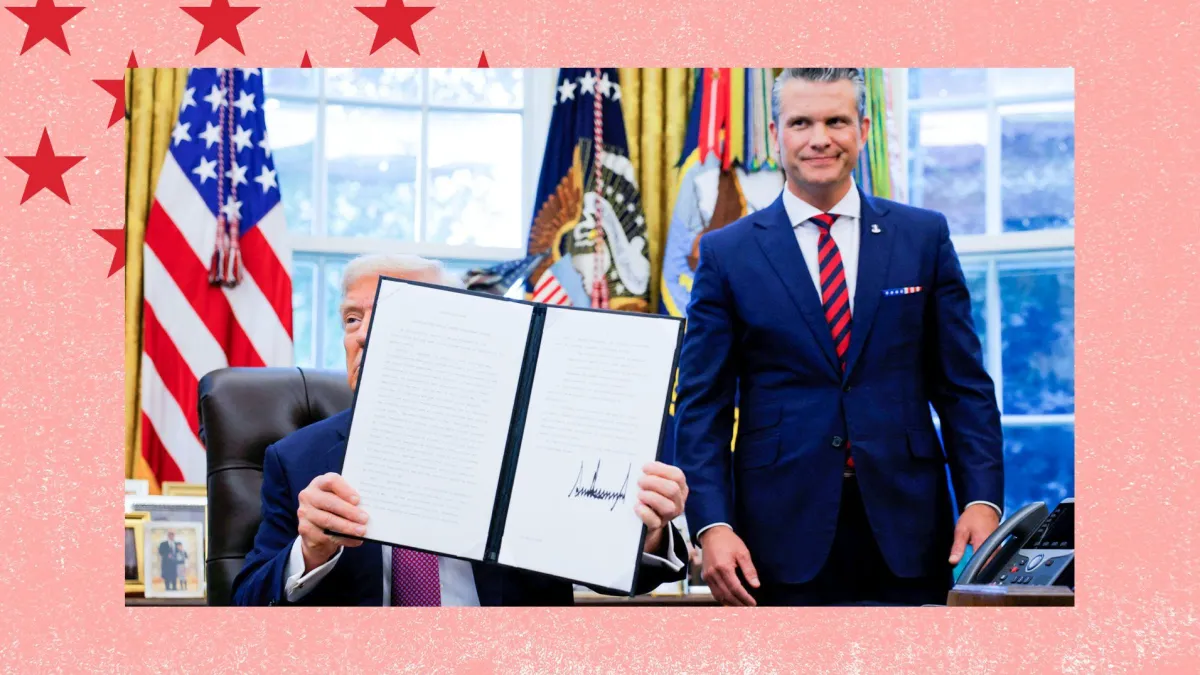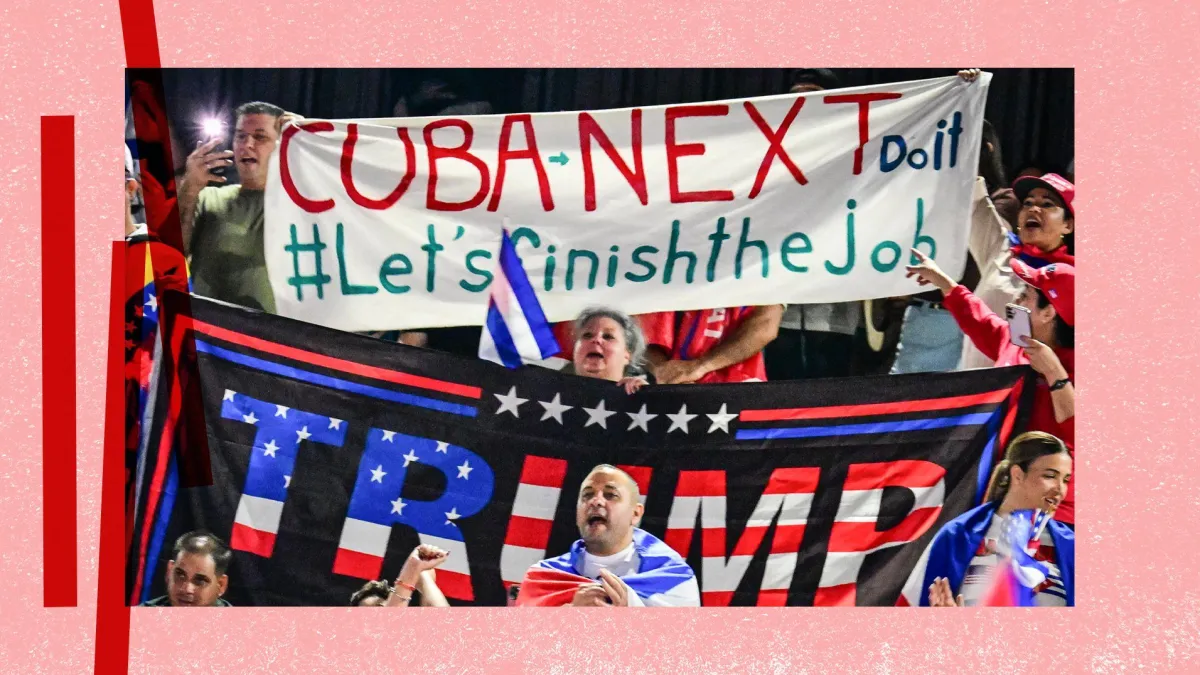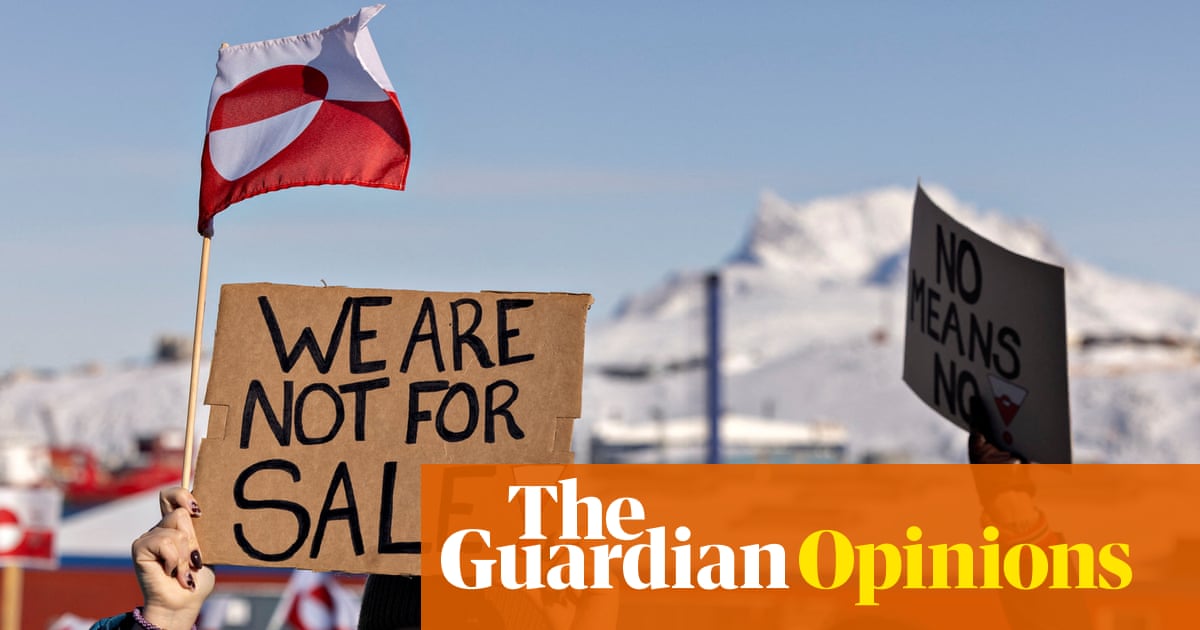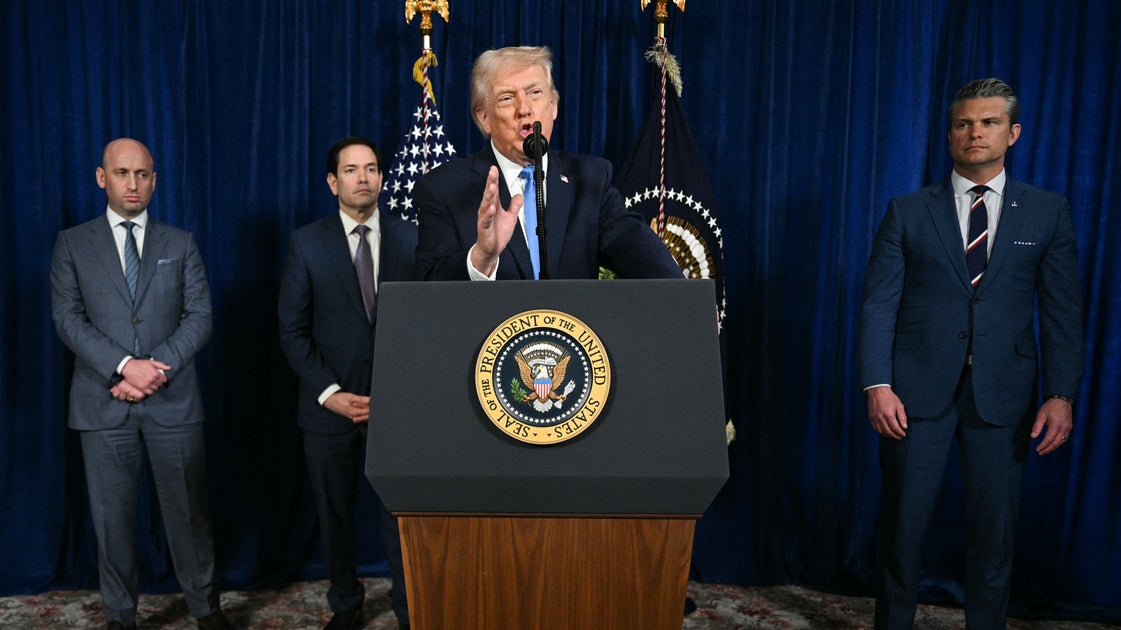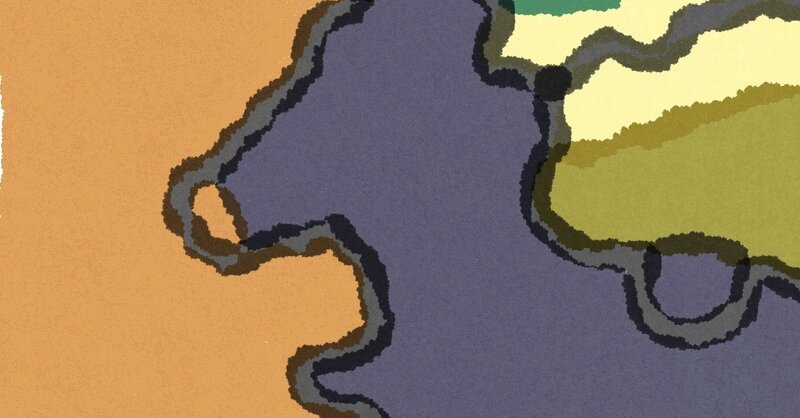
AdvertisementSKIP ADVERTISEMENTYou have a preview view of this article while we are checking your access. When we have confirmed access, the full article content will load.Guest EssayMay 27, 2026, 5:02 a.m. ETVideoCreditCredit...Orysia ZabeidaListen · 7:56 min By Stephen E. Hanson and Jeffrey S. KopsteinMr. Hanson and Mr. Kopstein are the authors of “The Assault on the State: How the Global Attack on Modern Government Endangers Our Future.”A week after launching the war with Iran, President Trump was asked whether the map of the country would still look the same after the end of hostilities. His response was striking: “That I can’t tell you. Probably not.”In an administration that frequently confuses swagger with strategy, this remark was nonetheless extraordinary. Iran is one of the largest countries in the world. Redrawing its borders might unleash political, ethnic and religious conflict that could destabilize the entire region. This is only one example of a much larger pattern: Mr. Trump’s notion of international borders is, in a word, fuzzy.Mr. Trump has threatened to use the U.S. military in Colombia and Mexico and promised to “take back” the Panama Canal. His administration claims to be in armed conflict with drug cartels while U.S. forces attack boats across the Caribbean and Pacific, killing almost 200 people. His long-running obsession with acquiring Greenland — backed by escalating diplomatic, economic and military pressure on Denmark and other NATO allies — has almost brought down the already-tottering Western alliance. After repeatedly musing aloud about turning Canada into the “51st state,” Mr. Trump now indulges in social media posts depicting Venezuela covered with the American flag.Where is all this going? The president has embraced an openly imperial approach to foreign policy, one that regards treaties as provisional, allies as obstacles and military power as a personal instrument of rule. While commentators have noted the “neo-royalist” cast of Mr. Trump’s worldview, his patrimonial understanding of geopolitics threatens something even more basic: the clearly defined international boundaries that are the very foundation of state sovereignty in the modern world. For someone who talks endlessly about borders, Mr. Trump has a porous idea of what they are. The result of this thinking will be a world of fuzzy borders, leading to a cacophony of territorial claims by rival states across the globe.Today, international borders feel natural, even inevitable. Look at any standard map of the world, and the planet appears to be neatly parceled out, each country cleanly ending where another begins, rendered in distinct colors and locked in place by default settings. Disputes still exist — over Taiwan, Israel, Kashmir, Western Sahara — and they force awkward political compromises among mapmakers and in corporate boardrooms, where a misplaced line can trigger diplomatic backlash or regulatory punishment. Russian President Vladimir Putin’s effort to redraw the map unilaterally and erase Ukraine’s sovereignty over its legally defined territory is shocking precisely because it violates these taken-for-granted conventions. Still, for most of the world, borders appear to be fixed, legible and uncontroversial.That stability is a historical anomaly. Before the 20th century, international borders were vague, shifting and endlessly contested. The very notion of a crisp line dividing one state from another is a modern invention. Empires continually expanded and contracted through war, marriage, purchase and inheritance. Sovereignty was personal rather than defined by clear jurisdictions, tied to dynasties rather than fixed land. Territory was treasure, to be acquired and exploited.Thank you for your patience while we verify access. If you are in Reader mode please exit and log into your Times account, or subscribe for all of The Times.Thank you for your patience while we verify access.Already a subscriber? Log in.Want all of The Times? Subscribe.AdvertisementSKIP ADVERTISEMENT
Opinion | Trump Is Remaking the World Map. What Could Go Wrong?
A system of fuzzy borders, in which powerful states treat territory as negotiable and sovereignty as conditional, is not a viable alternative to the liberal world order.
611 words~3 min read