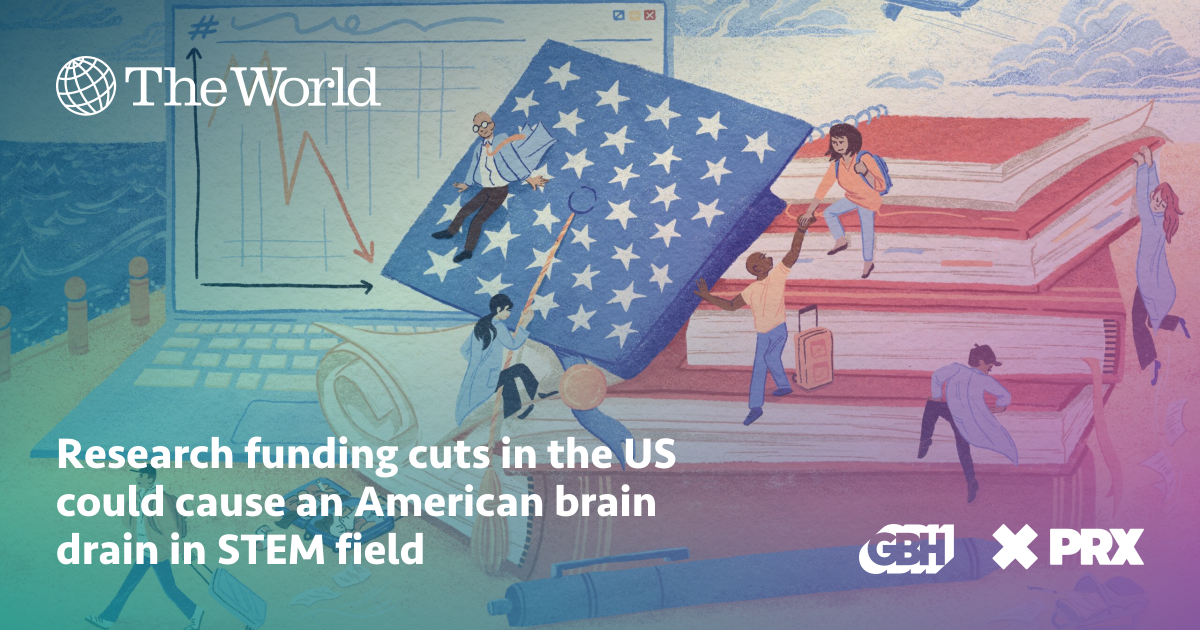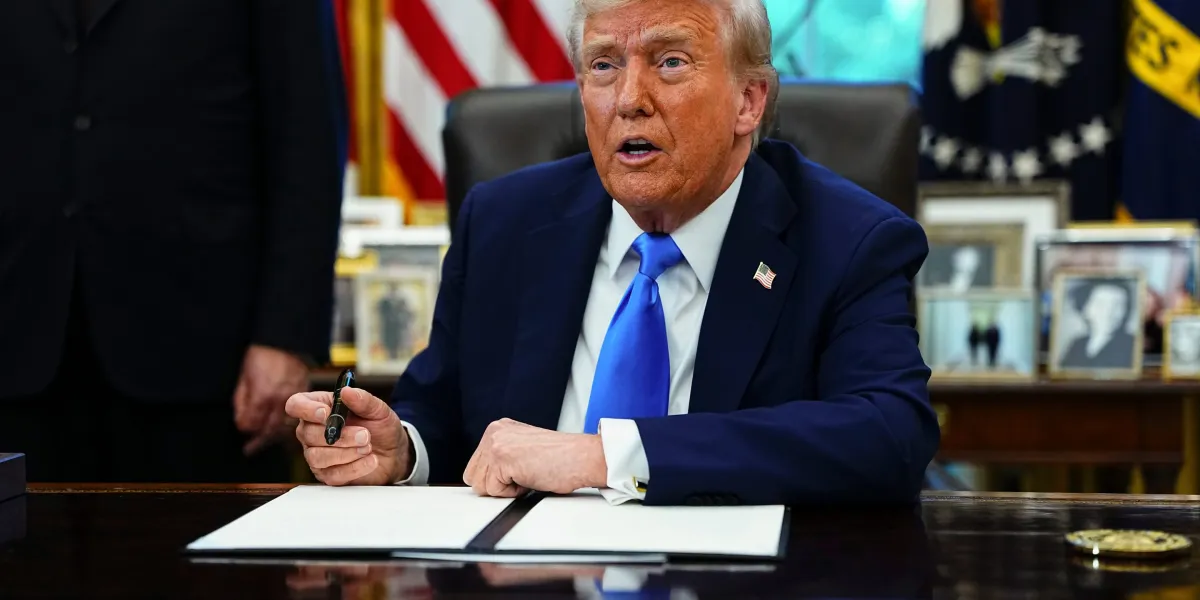
The Business for Federal Research Funding Coalition, a network of Chambers of Commerce dedicated to advocating for increased R&D funding, has raised the alarm on the loss of STEM talent to foreign countries amidst proposed budget cuts and funding uncertainty.Getty ImagesFor the second year in a row, the Trump administration has proposed substantial cuts to federal research funding at science agencies. The funding uncertainty is not only a budget challenge for students, professors, and scientists at universities. It is also challenge for businesses seeking competitive advantage and top-flight talent. According to a recent report from the Business for Federal Research Funding Coalition, an alliance of more than 80 Chambers of Commerce from 36 states advocating for increased federal research funding, the United States is losing ground on STEM talent due to funding loss and uncertainty, Over the past year, universities, community colleges, national security experts, and economists have been united in warning against the consequences of federal research cuts on economic mobility, national defense, and the national GDP. But businesses are increasingly stepping up to make their voice heard in national science policy debates.Originally formed in 2017, the Business for Federal Research Funding Coalition was relaunched in 2025 by the Greater Boston Chamber of Commerce, following a period of dormancy during the Biden administration when science funding was stable. The coalition emphasizes advocacy for a range of federal agencies, including the National Institutes of Health, the Department of Energy, and the Department of Defense.The position of the coalition mirrors the viewpoint of the national U.S. Chamber of Commerce in Washington, DC. Earlier this year, Suzanne Clark, President and CEO, of the U.S. Chamber of Commerce Foundation, also called for the "prioritization of R&D investments" during her annual State of American Business address.Launched in 2017, the Business for Federal Research Funding Coalition represents more than 80 chambers of commerce across 36 states. It advocates for federal investments in R&D and STEM talent.Business for Federal Research Funding CoalitionMORE FOR YOUWhile Congress has largely rebuffed the administration’s calls to cut the federal science budget, the funding uncertainty, mass layoffs at federal science agencies, cancelled grants, and slowed grantmaking across the federal government is leading to an exodus of students, faculty, scientists, and engineers to other countries, including in fields the administration has prioritized for domestic growth such as AI and quantum computing. Foreign Nations Lure Away U.S. Researchers Amidst Funding UncertaintyAccording to the coalition, since March 2025, 21 countries, including China, India, Canada, France, and the European Union, have launched or expanded programs to recruit U.S.-based researchers as job prospects dry up domestically. More than half of U.S. states have already lost early-career and experienced scientists to these initiatives, from Pennsylvania to Wisconsin to Texas to Ohio.These STEM talent recruitment programs are aggressive and well-resourced, targeting senior scientists and early career researchers alike. Canada committed $1.2 billion to recruit over 1,000 international researchers, including an accelerated residency pathway for H-1B visa holders. Japan launched a $628 million initiative targeting early-career researchers under 45. France, Germany, Australia, Spain, and the UK have each stood up dedicated funds, some with bonuses specifically for American applicants. The European Commission’s “Choose Europe for Science” program alone offers €500 million in grants through 2027.In 2025, China expanded its Thousand Talents Plan, which provides millions in funding and housing support for researchers as well as large gifts to recruit new talent. China launched the "K visa," a new category designed to attract young researchers. In contrast, many U.S. graduate science programs cut admissions by as much as 60% to 70%, rescinded offers, or paused admissions entirely, and the lack of talent has slowed the pace of scientific research. 58% of scientists are reporting delays in hiring in their labs. Since March 2025, 21 countries, including China, India, Canada, France, and the European Union, have launched or expanded programs to recruit U.S.-based researchers.Business for Federal Research Funding CoalitionChambers Urge Congress to Act on Federal R&D FundingThis April, the business coalition sent a letter addressed to Senators Ted Cruz (R-TX) and Maria Cantwell (D-WA) and Reps. Brian Babin (R-TX) and Zoe Lofgren (D-CA), who collectively lead the congressional committees with jurisdiction over the federal research budget. Chamber leaders thanked congressional leaders for maintaining research funding in the 2026 fiscal year budget, but reiterated concerns about ongoing funding uncertainty across federal research agencies, the timely release of research grants, the cancellation of already-funded projects, and the delayed review of submitted grant applications.So far, Congress has shown a reluctance to fully embracing the administration’s proposed budget cuts.However, in a contested election year, businesses leaders are joining the choir of advocates hoping that republican lawmakers will hold the line just as communities across the nation begin to feel the squeeze on the federal research funding pipeline – and other nations take notice.
80+ Chambers Of Commerce Sound Alarm On STEM Talent Exodus, R&D Funding
The Business for Federal Research Funding Coalition, is raising alarms on federal research funding uncertainty and its impact on STEM talent in the United States.
798 words~4 min read