How five vendors, two batteries, an EV, and a careful policy engine became one operating system for my house.
There is a moment when a solar installation stops feeling like a set of appliances and starts feeling like a distributed control system.
The interesting problem is no longer generation or storage alone. It is orchestration across partially trusted, independently operated control planes. For me, that realization came on a quiet afternoon when the house decided to charge the Rivian.
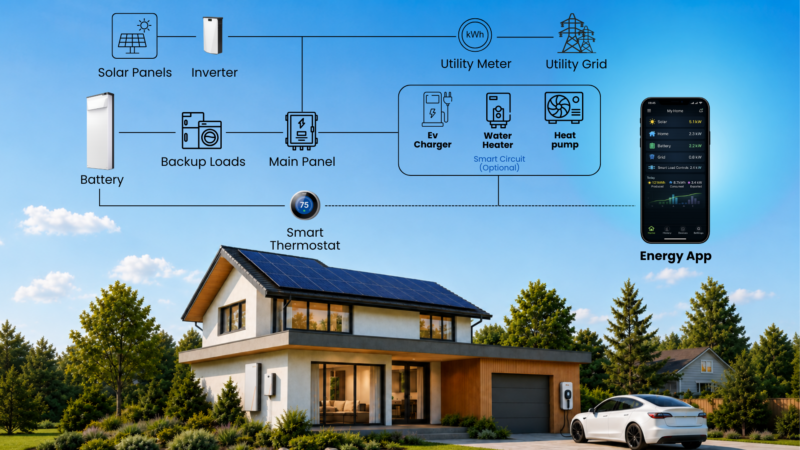
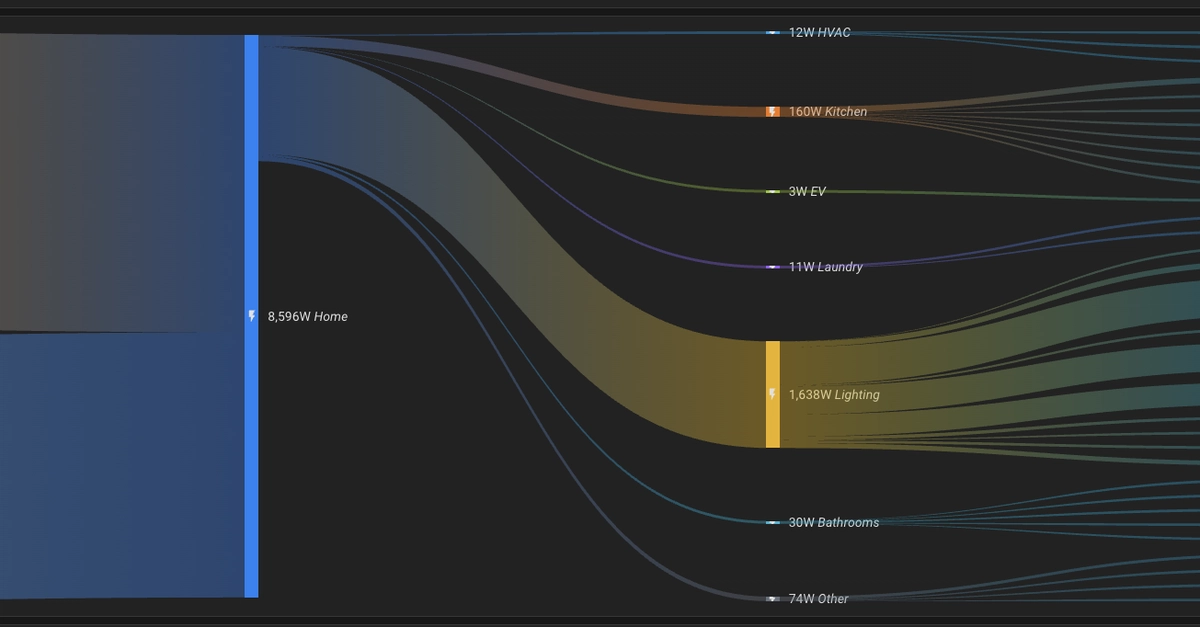
The battery was full enough. The grid was still exporting. The car was home, plugged in, and below its target state of charge. The forecast and the optimizer both agreed it was a good charging window. Node-RED waited long enough to be sure it wasn't a passing cloud-edge artifact, then pressed the ChargePoint start button through an allowlisted Home Assistant executor. A few seconds later, SPAN showed the EV circuit come alive.
Charge the car when the sun is out. It sounds trivial. The interesting part is everything the system refuses to do. It will not start charging the car if the FranklinWH battery is near reserve. It will not keep charging if the house starts importing too much from the grid, or if the battery begins supporting the EV. It will not call arbitrary Home Assistant services. It will not trust a single integration when SPAN's circuit telemetry can verify the physical result.