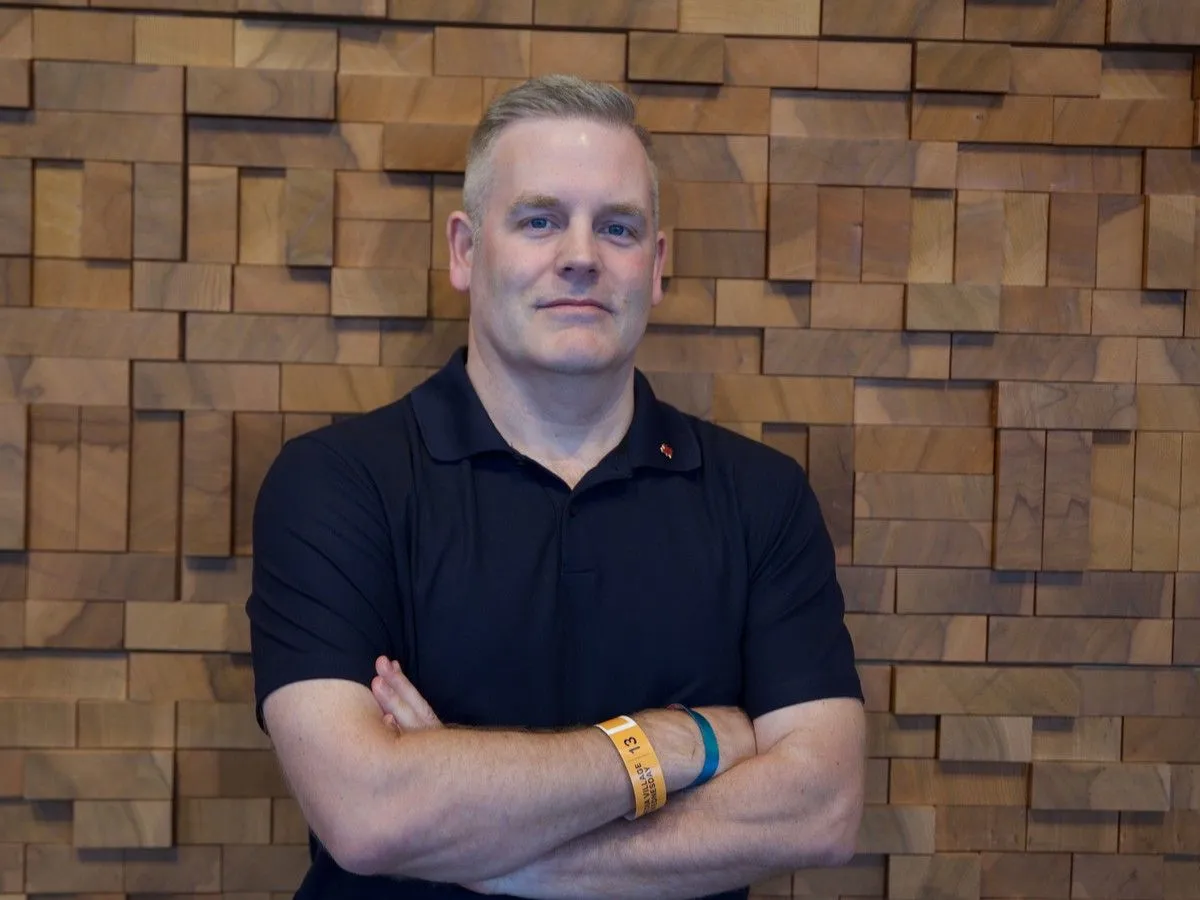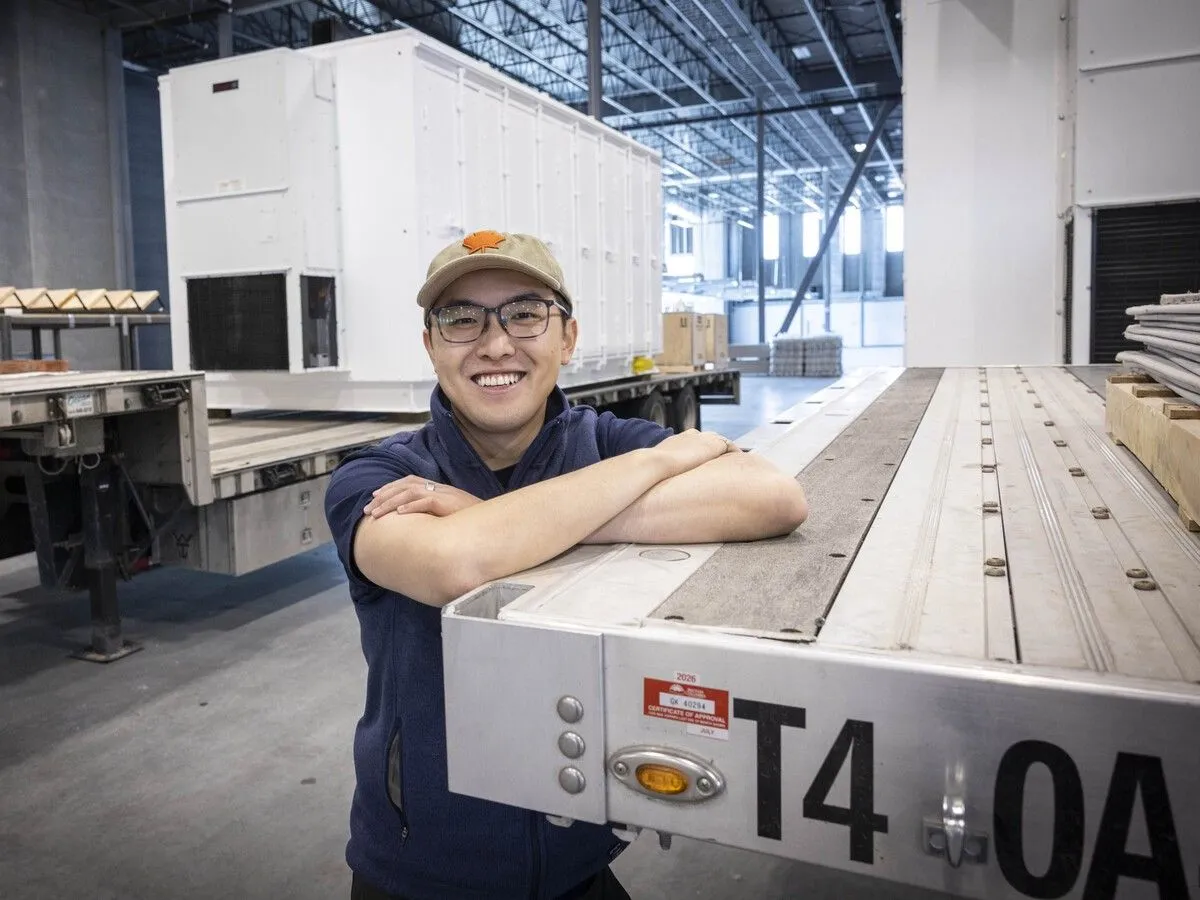
Skip to Content News Archives Economy Energy Oil & Gas Renewables Electric Vehicles Mining Commodities Agriculture Real Estate Mortgages Mortgage Rates Finance Banking Insurance Fintech Cryptocurrency Work Wealth Smart Money Wealth Management Investor Personal Finance Family Finance Retirement Taxes High Net Worth FP Comment Executive Women Puzzmo Newsletters Financial Times Business Essentials More Innovation Information Technology FP500 Podcasts Small Business Lives Told Tails Told Shopping Financial Post Store Obituaries Place a Notice Advertising Advertising With Us Advertising Solutions Postmedia Ad Manager Sponsorship Requests Classifieds Place a Classifieds ad Working Profile Settings My Subscriptions Saved Articles My Offers Newsletters Customer Service FAQ News Economy Energy Mining Real Estate Finance Work Wealth Investor FP Comment Executive Women Puzzmo Newsletters Financial Times Business Essentials HomeEnergyNewsVancouver startup is turning used EV batteries into units capable of powering 50 homesMoment Energy working with B.C. Hydro to boost grid during peak demandLast updated 16 hours ago You can save this article by registering for free here. Or sign-in if you have an account.Edward Chiang is the CEO and co-founder of Moment Energy, a Surrey company that recycles and repurposes lithium-ion batteries, mostly from electric cars, and builds new stationary power-storage units. Photo by Jason Payne /PNGManufacturing new lithium-ion batteries in B.C. has turned out to be a bust, but a Metro Vancouver startup company has found a niche in repurposing used electric vehicle batteries for use in backup power and energy storage.Subscribe now to read the latest news in your city and across Canada.Exclusive articles from Barbara Shecter, Joe O'Connor, Gabriel Friedman, and others.Daily content from Financial Times, the world's leading global business publication.Unlimited online access to read articles from Financial Post, National Post and 15 news sites across Canada with one account.National Post ePaper, an electronic replica of the print edition to view on any device, share and comment on.Daily puzzles, including the New York Times Crossword.Subscribe now to read the latest news in your city and across Canada.Exclusive articles from Barbara Shecter, Joe O'Connor, Gabriel Friedman and others.Daily content from Financial Times, the world's leading global business publication.Unlimited online access to read articles from Financial Post, National Post and 15 news sites across Canada with one account.National Post ePaper, an electronic replica of the print edition to view on any device, share and comment on.Daily puzzles, including the New York Times Crossword.Create an account or sign in to continue with your reading experience.Access articles from across Canada with one account.Share your thoughts and join the conversation in the comments.Enjoy additional articles per month.Get email updates from your favourite authors.Create an account or sign in to continue with your reading experience.Access articles from across Canada with one accountShare your thoughts and join the conversation in the commentsEnjoy additional articles per monthGet email updates from your favourite authorsSign In or Create an AccountorCoquitlam-based Moment Energy is in the process of building a production facility in Surrey to take used batteries, test and recondition them, then reassemble them as Lego-like components for 500 kilowatt-hour stationary power units, enough electricity to power the basic needs for up to 50 homes.Those power units can then be plugged into utility grids to serve as backup power during outages, to store electricity generated by solar panels to be used at night, or shore up the overall electricity grid.Breaking business news, incisive views, must-reads and market signals. Weekdays by 9 a.m.By signing up you consent to receive the above newsletter from Postmedia Network Inc.A welcome email is on its way. If you don't see it, please check your junk folder.The next issue of Posthaste will soon be in your inbox.We encountered an issue signing you up. Please try again“This is about building the infrastructure needed to support the next generation of energy demand,” Moment Energy CEO Edward Chiang said.The company is already working with customers ranging from YVR, which is using one of Moment’s shipping-container-sized units to help backup the airport’s EV charging network, to B.C. Hydro, which sees them as an option to give the grid a power boost at times of peak demand.“We think their product can work for our customers,” said Kari Montrichard, a senior manager at B.C. Hydro. “We think what they’re doing is pretty cool.”Moment isn’t alone in working on grid-scale battery systems. Vancouver-headquartered Invinity Energy Systems is doing so with a different battery technology called vanadium flow.Moment, however, is using the previously untapped resource of used EV batteries taken out of vehicles for warranty issues, which actually still have a lot of life left in them.“When they need to be taken out, they still have more than 80 per cent capacity to them,” Chiang said. “So let’s not landfill them, let’s not prematurely recycle batteries, let’s actually repurpose them for another 20-plus years.”EV batteries are made up of hundreds of individual cells, and Chiang said there are often only a few with defects at the end of their life for EVs.With reconditioning, batteries have “closer to 90 to 95 per cent life left,” he added. In repurposing, he argues Moment can create more affordable backup power storage than trying to use brand new batteries.And with 100 million EVs on the road globally, Chiang reckons “there’s a massive amount of battery supply.”“We’re really trying to solve this massive environmental issue of what happens to end-of-life batteries,” he added.By comparison, while the company E-One Moli’s $1 billion proposal to make new batteries for commercial equipment at a factory in Maple Ridge stalled at the end of 2024, Moment expects to have its $10 million Surrey facility open and putting together their grid-scale batteries by the end of June.“That really shows that our model is significantly less capital-intensive,” he added.B.C. Hydro’s Montrichard said Moment’s system is a creative way of dealing with used batteries, which creates the grid-scale power they need for a lot of customers.Hospitals, for example, which are required to have backup power, could use such battery systems during power outages before having to turn on diesel generators, Montrichard said.“That helps with their greenhouse gas emission targets as well.”Moment, which has been operating out of a smaller facility in Coquitlam, employs 75 people now, which Chiang said will grow to 84 within a week and to more than 100 by the end of the year as production ramps up in Surrey.The B.C. plant will be modest in size, relative to the biggest factories churning out new batteries, the so-called giga factories.By contrast, Chiang is calling Moment’s B.C. facility a mega factory, which will build systems that add up to 200 megawatt hours of production per year.With $26 million US of the $100 million US in financing Moment has raised coming from the U.S. government, Chiang said the company is also working toward opening its own giga factory in Austin, TX.“We’ve already broken ground on that one,” Chiang said. “But the goal is trying to work with the Canadian government to see if we can build something either equal to or bigger here in Vancouver.” Join the Conversation This website uses cookies to personalize your content (including ads), and allows us to analyze our traffic. Read more about cookies here. By continuing to use our site, you agree to our Terms of Use and Privacy Policy.
Vancouver startup is turning used EV batteries into units capable of powering 50 homes
'This is about building the infrastructure needed to support the next generation of energy demand,' Moment Energy CEO Edward Chiang said
1,198 words~5 min read