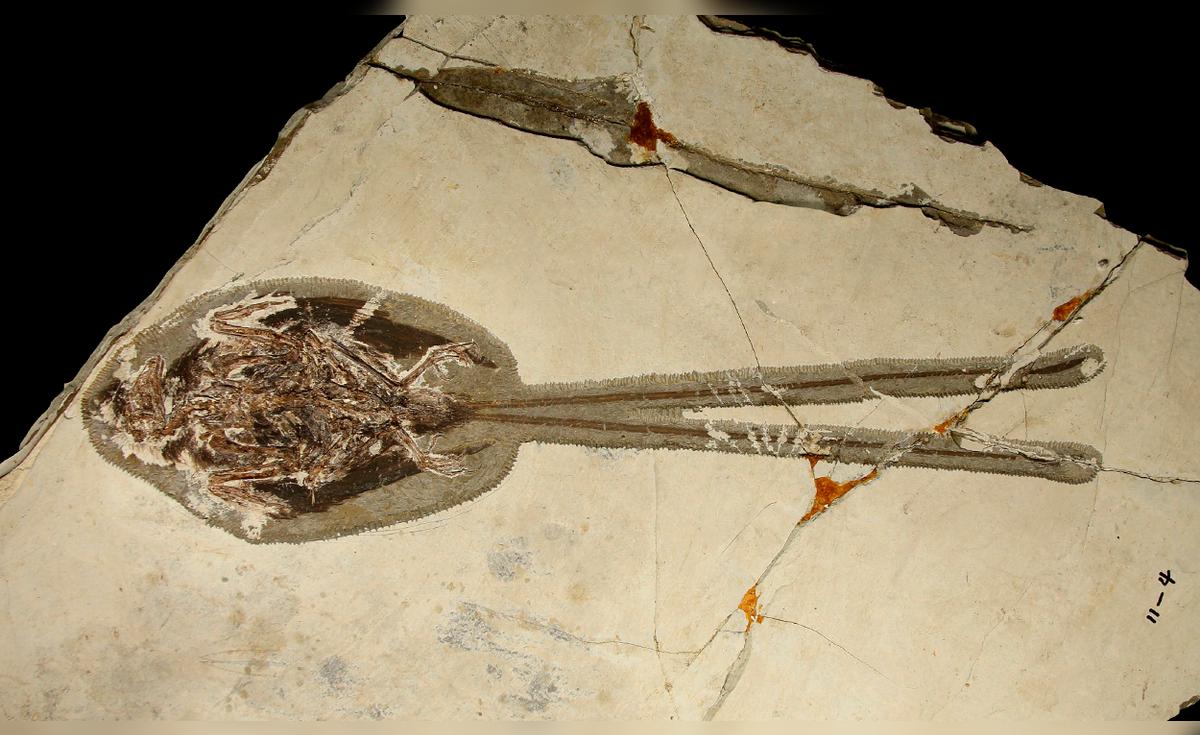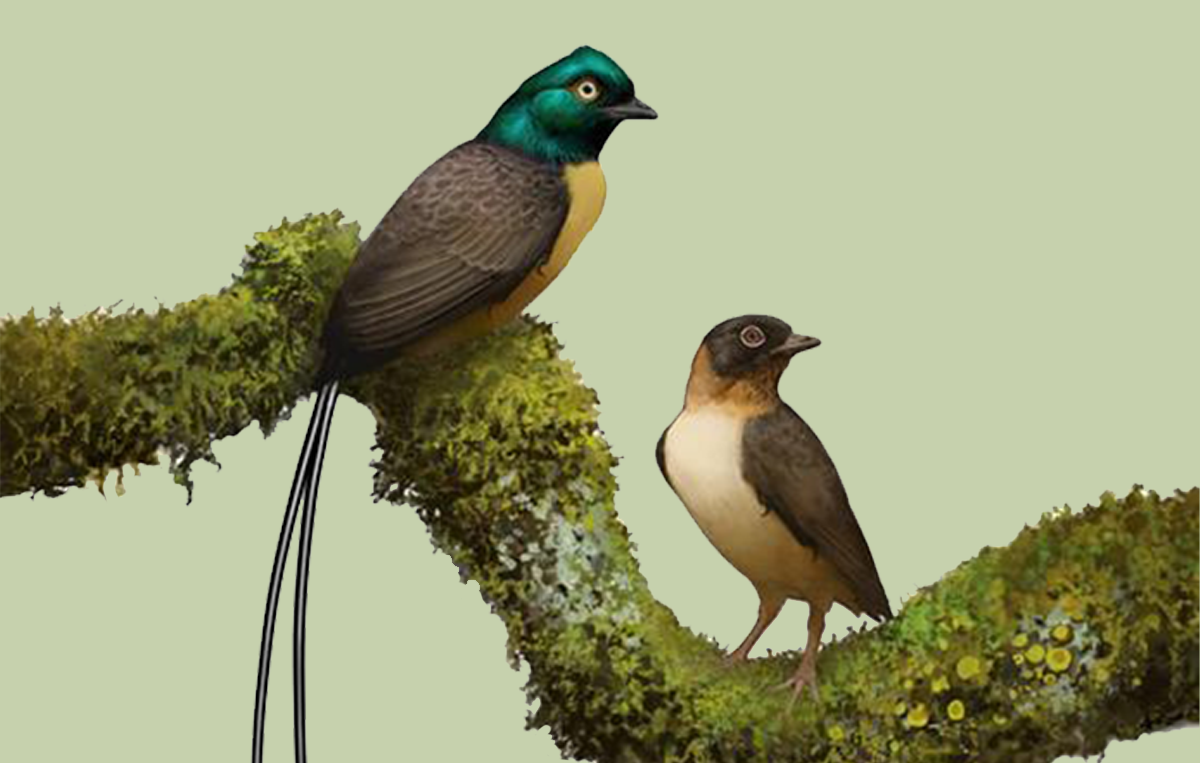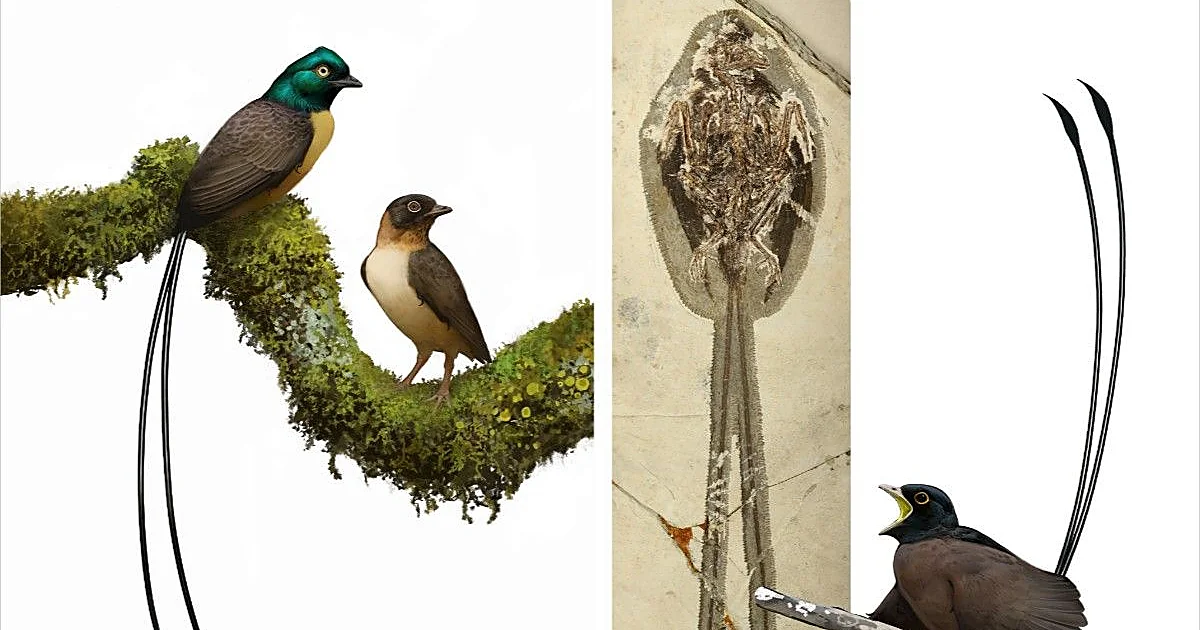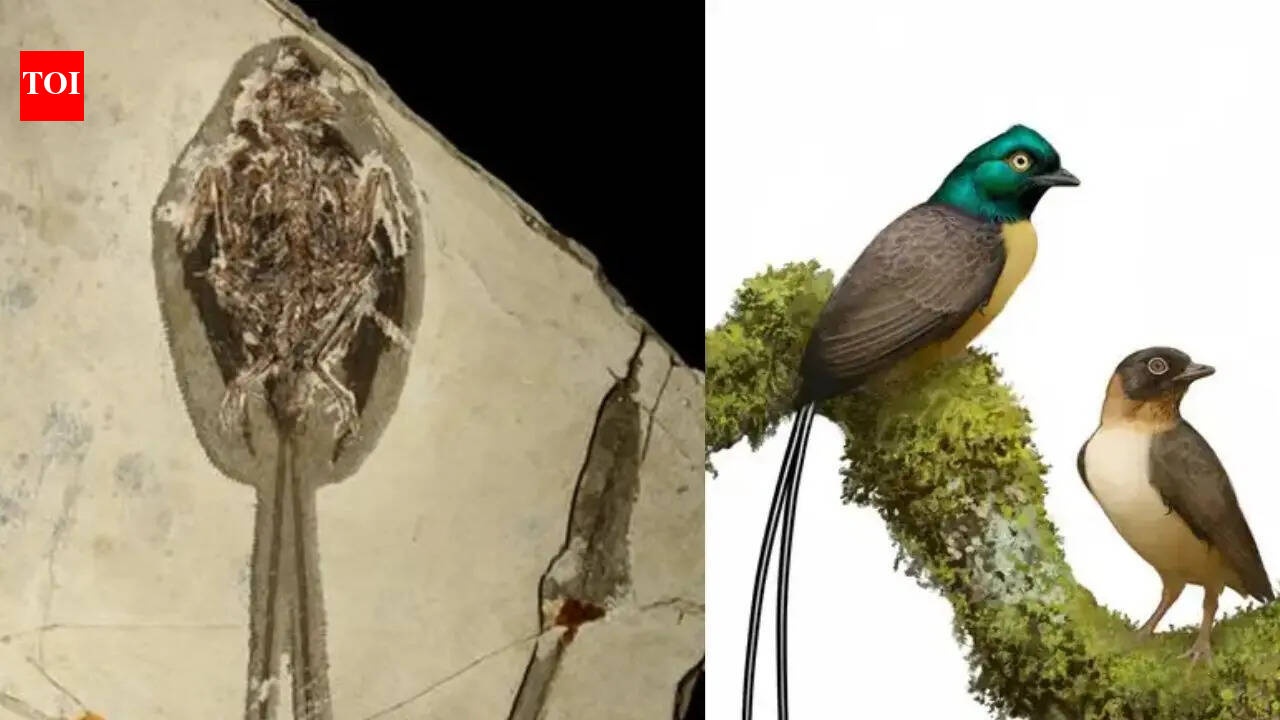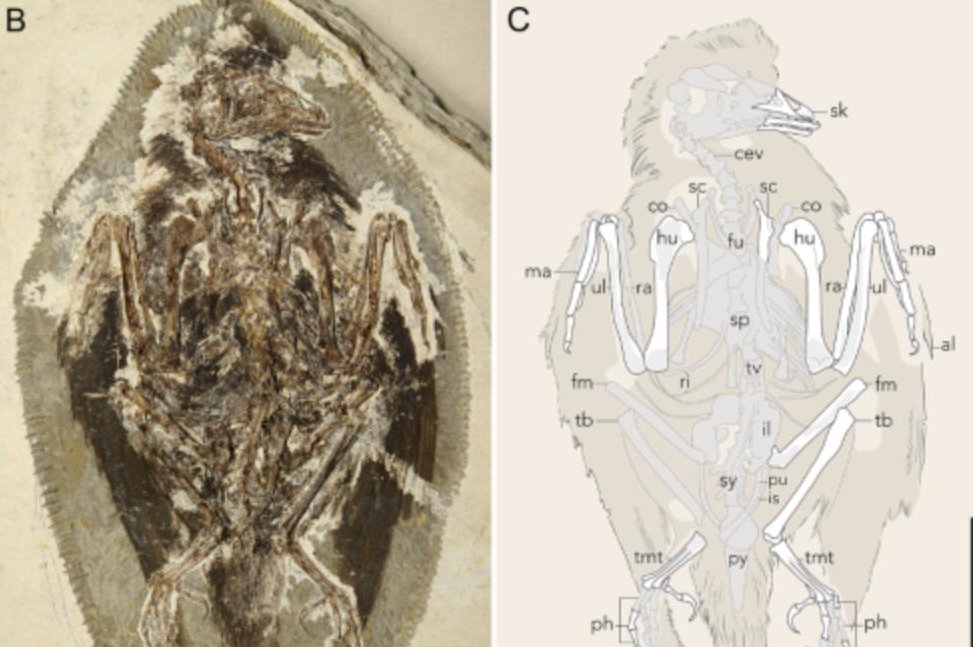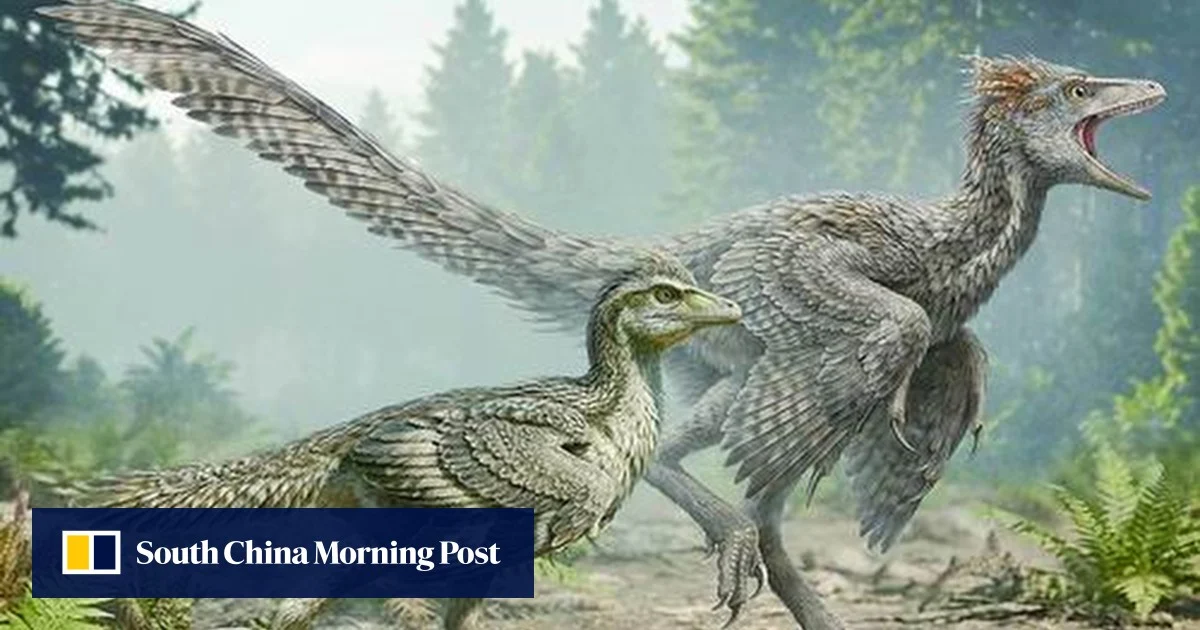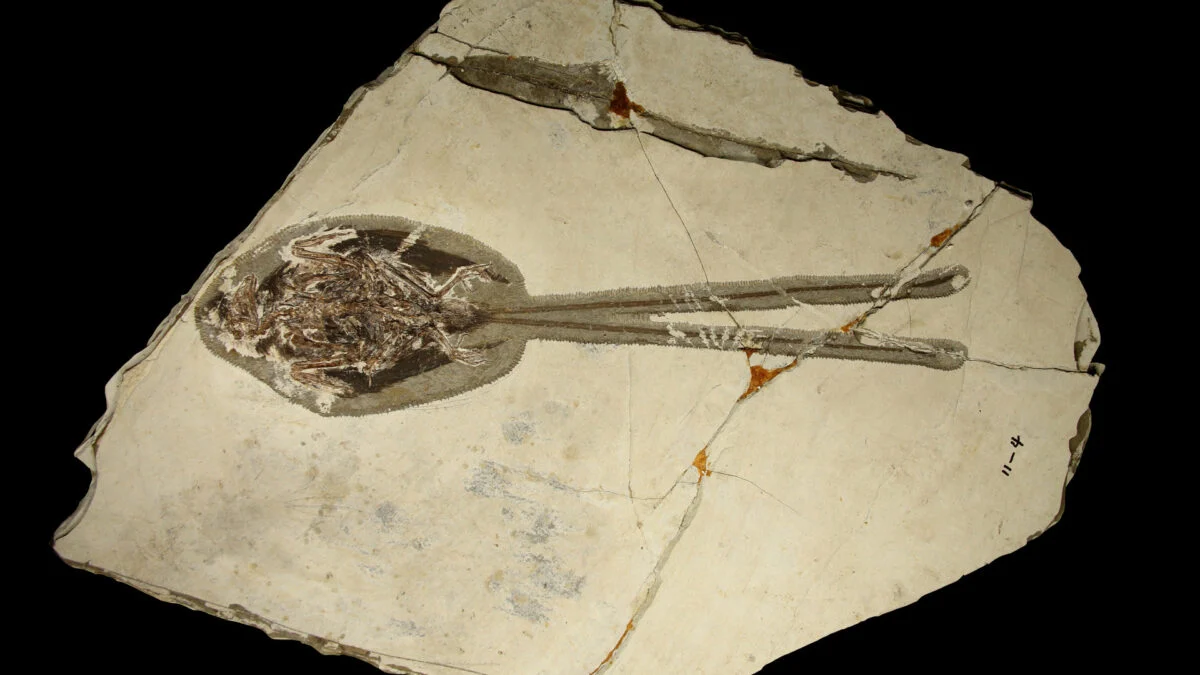
How feathers evolved is somewhat of an enigma for scientists. But these typically soft, occasionally colorful appendages keep showing up in fossil records, and some of them are more impressive than others—like the twin tail feathers of a newly discovered bird from the distant past. The new species, named Plumadraco bankoorum, or “Banko’s feather dragon,” flaunts two long, spindly tail feathers that are nearly twice the size of its entire body. Specifically, the bird measures about 6 inches (15 centimeters) from beak to tail, whereas the feathers are around 12 inches (30 centimeters). The Cretaceous bird dates to roughly 121 million years ago and was discovered in Liaoning, China. The feathers were probably ornamental and meant for flashy displays to attract mates, according to a study describing the new bird, published today in PLOS One. Illustration showing researchers’ hypothesis of what a male and female Plumadraco would have looked like. Credit: Ville Sinkkonen/Field Museum “The first thing we did was to determine if this specimen was indeed a new species—and it was,” Alex Clark, the study’s lead author and a PhD student at the University of Chicago, said in an interview with PLOS. “121 million years ago, this male Plumadraco was dragging along a train of tail feathers twice its body length, just to impress potential mates—something we see today in modern birds as well. Pretty cool, if you ask me!”
Paleontologists Just Found the Most Extra Bird of the Dinosaur Era
Dubbed the “Banko’s feather dragon,” the extinct bird’s tail feathers were twice the length of its entire body.
641 words~3 min read