view more
A new scientific study led by the Universidad Carlos III de Madrid (UC3M) describes the mechano-chemical mechanism by which the acidity of the cellular environment destabilizes microtubules, the "avenues" that organize internal cellular traffic. This finding is key to understanding pathologies such as cancer, diabetes, or certain infectious processes, where extracellular acidosis is a distinctive feature in tissues.
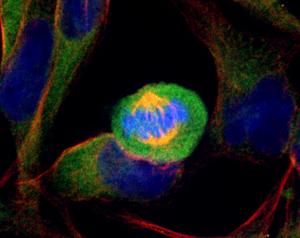
The cytoskeleton of cells is, essentially, like their framework and engine. It is composed of three main structures: intermediate filaments (which provide mechanical and stress resistance), actin filaments (which control cell shape and movement), and microtubules. “One could say that microtubules in cells are equivalent to avenues in a large city, as they serve as routes for practically all the transport that occurs inside them,” explains one of the study's authors, Armando del Río, a researcher at the Department of Neuroscience and Biomedical Sciences and the Rector's delegate for the development and implementation of the Faculty of Health Sciences at UC3M.
pH is of vital importance for cells, as it affects nearly all of their internal biochemical processes. Until now, studies on the effect of pH on microtubules were conducted in vitro using isolated structures from whole-cell lysates, which only allowed for the observation of the direct effect of internal pH changes. However, cells possess a highly sophisticated system that keeps their internal pH neutral and constant. It was unknown how external pH (the acidity of the environment surrounding the cell) could indirectly take control of this system.