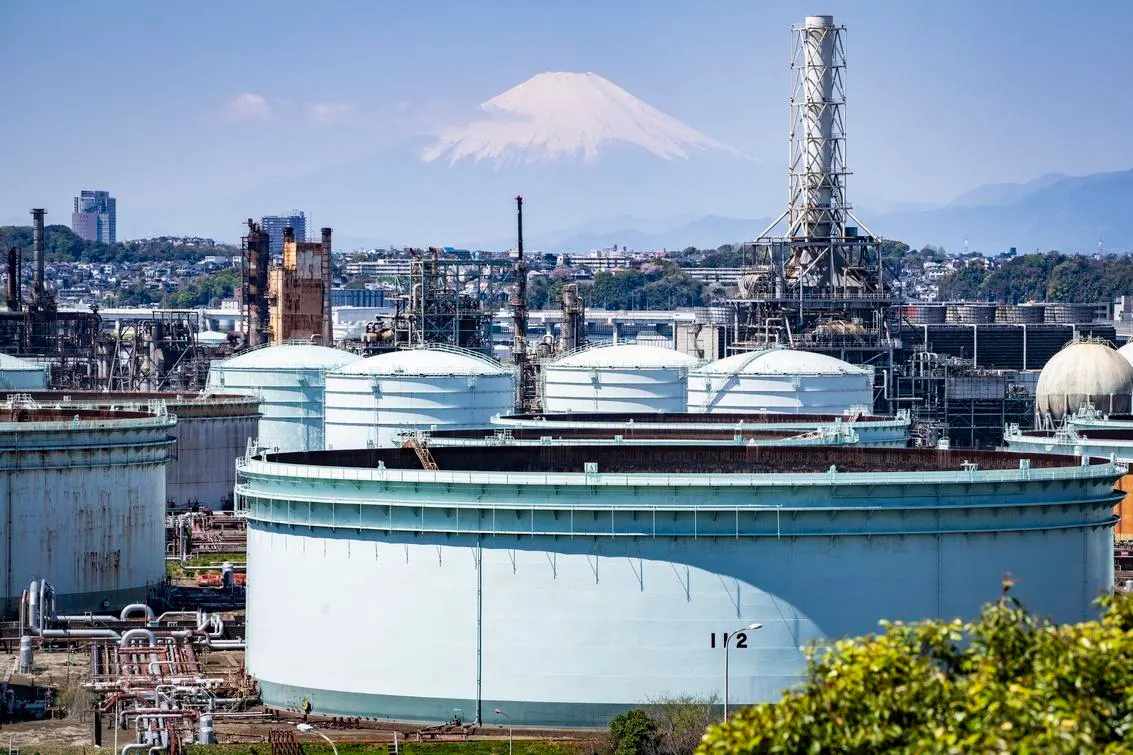
Storage tanks at an oil refinery in Yokohama, Kanagawa prefecture, Japan. (Photo: Yuichi Yamazaki)AFP via Getty ImagesOil prices slid early Wednesday as U.S. and Iranian officials signaled incremental progress in ceasefire negotiations, prompting traders to unwind some of the risk premium that has built up since the conflict began in late February. At 8:57 a.m. EDT, the Brent front-month futures contract traded at $92.63 per barrel, down 4.15% or $4.01, while the U.S. West Texas Intermediate front-month contract fell 5.39% or $5.08 to $88.84, extending losses that followed U.S. airstrikes earlier in the week on Iranian missile sites and naval assets near the Strait of Hormuz. The latest military exchange underscored how fragile the ceasefire remains, even as both governments publicly downplay the risk of renewed escalation.U.S. Central Command spokesperson Capt. Tim Hawkins said in a statement: “U.S. forces conducted self-defense strikes in southern Iran to protect our troops from threats posed by Iranian forces. We continue to defend our forces while using restraint during the ongoing ceasefire.”According to the BBC, the strikes focused on an area near Iran’s southern port city of Bandar Abbas, which also has a naval base on the strait.Iran condemned the U.S. action as a “gross violation” of the ongoing ceasefire and said it reserves the right to retaliate. However, officials on both sides also sought to downplay the latest incident. MORE FOR YOUSpeaking while on an official visit to India, U.S. Secretary of State Marco Rubio said a lasting peace deal was still possible: "We’ll see if we can make progress. I think it’s a lot of talking back and forth going on about specific language in the initial document. So, it’ll take a few days." A spokesperson for Iran’s Revolutionary Guard Corps said Wednesday that the possibility of a return to war with the U.S. was “low.”Emerging remarks from both sides, in tandem with ongoing negotiations via mediators in Pakistan and Qatar, pushed oil prices lower initially in Asia, followed by similar intraday bearish trends during European and U.S. crude trading.Talks Drag On As Market Volatility BuildsWhile Brent and WTI futures have risen by more than 30% and 35%, respectively, on a three-month comparison since the conflict began Feb. 28, both benchmarks are down more than 10% on the week and more than 17% on the month. However, the market appears stuck in what traders describe as a circular and seemingly endless loop of indirect talks between Washington and Tehran. The initial ceasefire, announced April 8, has largely held, but neither side appears close to bridging the remaining gaps. As a result, physical crude markets are increasingly detached from futures prices, with premiums as high as $20 per barrel reported in key supply hubs in Asia. Exporters Shift Strategy As Regional Risks RiseMiddle Eastern exporters continue to hedge against potential disruptions. Two of the region’s leading producers — Saudi Arabia’s Aramco and the United Arab Emirates’ ADNOC — are increasing exports through alternative routes and pipelines. The UAE also left the Organization of the Petroleum Exporting Countries on May 1 after nearly six decades of membership. It was OPEC’s fourth-largest producer. The UAE confirmed last week that it was accelerating its oil pipeline project aimed at adding export capacity via the port of Fujairah, bypassing the Strait of Hormuz. In the midst of seesawing oil prices, reports suggest the project — slated for completion in late 2027 — is well ahead of schedule and already around 50% complete.Disclaimer: The above commentary is meant to stimulate discussion based on the author’s opinion and analysis offered in a personal capacity. It is not solicitation, recommendation or investment advice to trade oil stocks, futures, options or products. Oil markets can be highly volatile and opinions in the sector may change instantaneously and without notice.
Oil Prices Fall As U.S. Iran Talks Ease Supply Fears
Oil prices fall as U.S. and Iranian officials signal progress in ceasefire talks, easing supply fears and prompting traders to unwind part of the recent risk premium.
628 words~3 min read