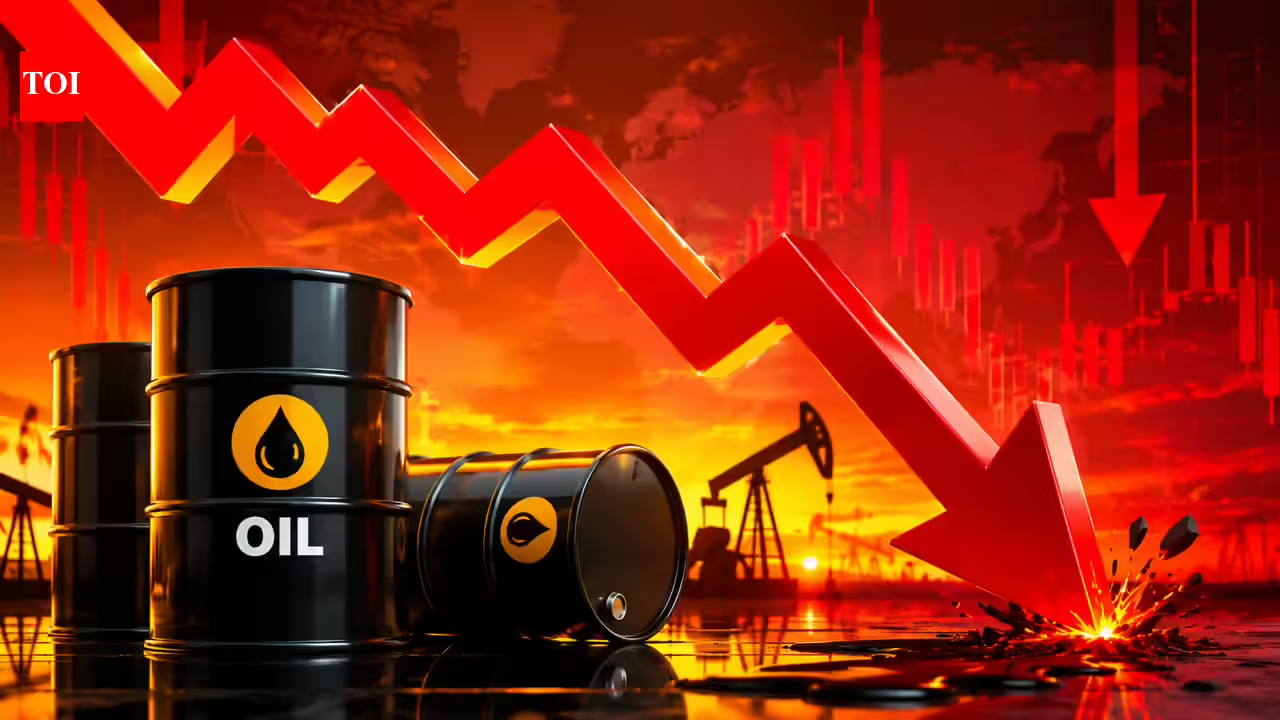
Crude oil prices tumbled sharply in Asian trading early Tuesday (May 26), with US benchmarks falling more than 6% as optimism grew over progress in negotiations to end the US-Iran conflict and restore flows through the critical Strait of Hormuz.West Texas Intermediate (WTI), the US benchmark crude for near-term delivery, was at $90.55 per barrel, down $6.061 or about 6.27%. Brent crude, the global benchmark, stood at $96.14, off $6.84 or roughly 6.61%, as per Trading Economics. Murban crude dropped even more sharply to $92.82, down over 9.19%. Louisiana Light crashed 11.96% to $102.20, down by $13.89 as of 7.47am Tokyo, on Tuesday.This develops as energy traders watch for further updates from Iran-US negotiations and any official confirmation of a breakthrough as the week progresses.Natural gas was little changed. The steep declines come a day after President Donald Trump signaled that a framework deal with Iran was "advancing", claiming further that US side is dealing with Iran negotiators, which he described as "more professional", "productive".Trading signalTraders take this as a potential signal leading to the reopening of the Strait of Hormuz — the narrow chokepoint through which about one-fifth of global oil supply normally passes. Markets had priced in prolonged disruptions from the conflict that began with US and Israeli strikes on Iranian nuclear sites in late February. Oil prices surged earlier in 2026 amid the Middle East tensions, with Brent briefly exceeding $110-$120 per barrel at peaks due to fears of extended supply disruptions and a naval blockade trapping Iranian oil. Recent sessions saw sharp pullbacks as diplomatic signals improved. cnbc.comKey drivers Monday include:Trump's weekend statements indicating negotiations were "orderly and constructive" and a deal could be announced soon, though he cautioned against rushing.Expectations that a resolution would allow Iranian oil exports to resume and ease shipping risks in the Gulf.Broader removal of the geopolitical "war risk premium" that had propped up prices, with traders shifting focus to potential oversupply as inventories rebuild. m.economictimes.comMain sticking pointAnalysts noted the moves reflect markets pricing in de-escalation, even as sticking points remain on issues like uranium stockpiles, nuclear curbs, sanctions relief and regional ceasefires. Any actual reopening of the Strait would likely take time, with full supply recovery extending months. Viral headline circulating on social media and news platforms: "Oil Crashes as Trump Signals Iran Deal: 'War Risk Premium' Evaporates Overnight" — capturing the swift market reaction to diplomatic headlines.
Oil prices plunge more than 6% on hopes for US-Iran deal, Hormuz reopening
WTI, Brent slide over 6% as ‘war risk premium’ fades on US-Iran talks
TL;DRAI
WTI fell 6.3% to $90.55/barrel and Brent 6.6% to $96.14 as Trump signaled a US-Iran nuclear deal framework is "advancing," raising expectations of Strait of Hormuz reopening and Iranian oil export resumption. For energy-exposed tech budgets and data center operators, a sustained reversal from the $110–120 peak removes a key inflationary input cost pressure, though full supply recovery and sanctions relief remain months away.
398 words~2 min read