Article
Open access
Nature
(2026) Cite this article
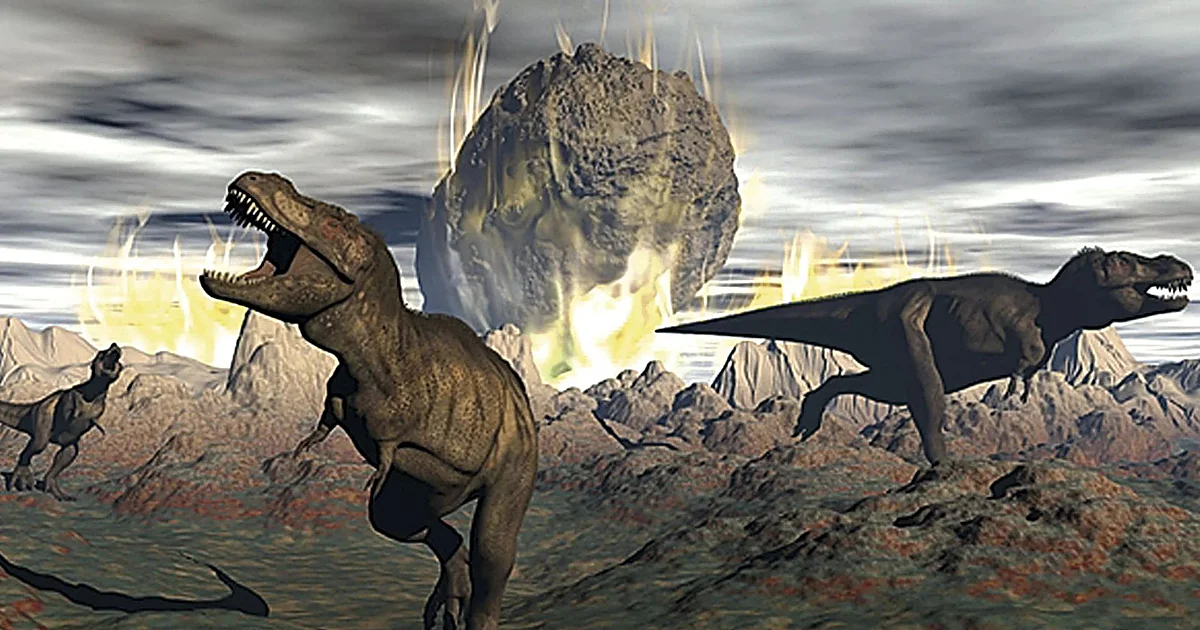
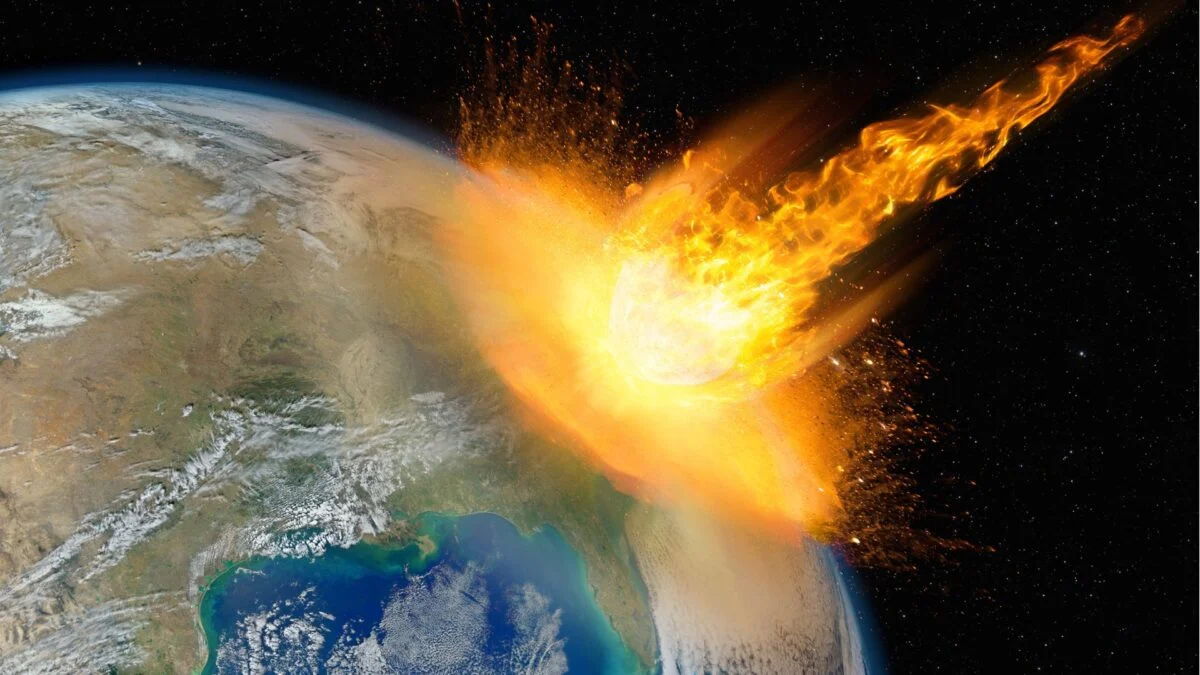
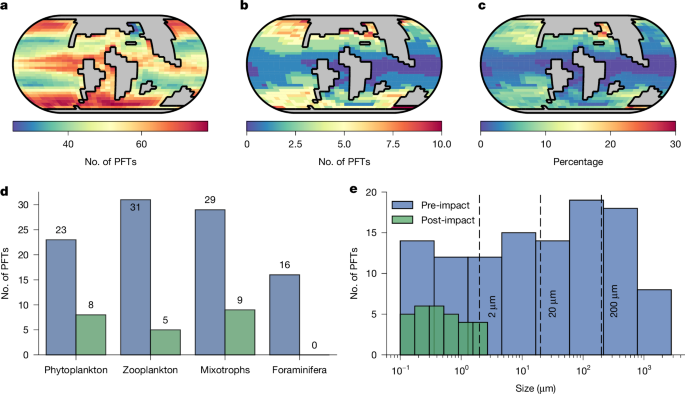
AbstractThe Chicxulub asteroid impact at the Cretaceous–Paleogene (K–Pg) boundary (66 Ma) is thought to have caused the extinction of around 75% of species in the fossil record by triggering catastrophic environmental changes1. However, despite decades of research, the mechanisms linking the environmental changes to the selective extinction patterns observed in the marine fossil record remain unresolved. Here we use a global trait-based ecosystem model2,3 to establish this causality for the marine plankton community beyond the fossilized groups. Our model simulates diversity dynamics during the initial 100 years after the K–Pg boundary and represents explicitly extinction based on biomass thresholds that scales with body size. Under K–Pg climatic forcings, the model reproduces successfully key observed extinction patterns, including the high vulnerability of planktic foraminifera and other zooplankton, the survival of small mixotrophs4 and phytoplankton5,6, and potential for reduced diversity loss in high-latitude settings7. Our analysis suggests that impact-driven darkness and body-size-dependent extinction thresholds drove most of the observed extinction patterns. These results suggest that plankton ecologies enhance survival through differences in energy demand and acquisition. Our study bridges the gap between fossil evidence of extinction patterns and the K–Pg impact winter hypothesis, highlighting the value of trait-based models for understanding past biodiversity crises.