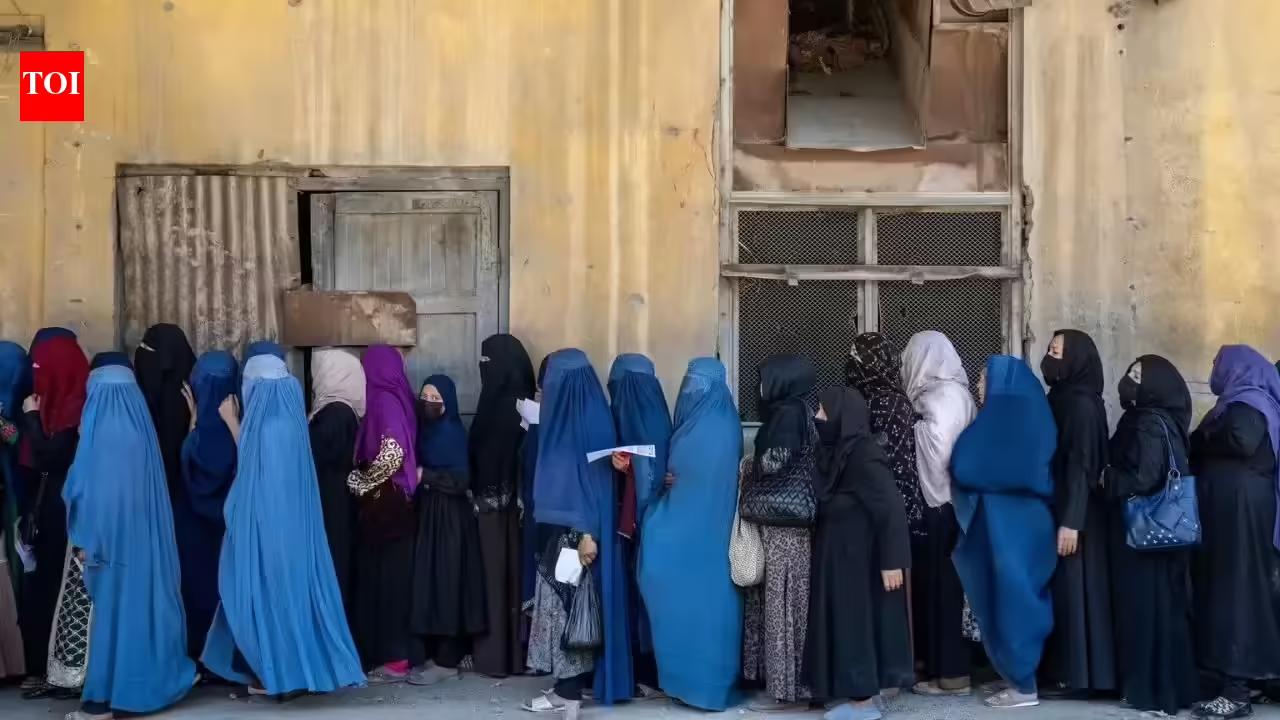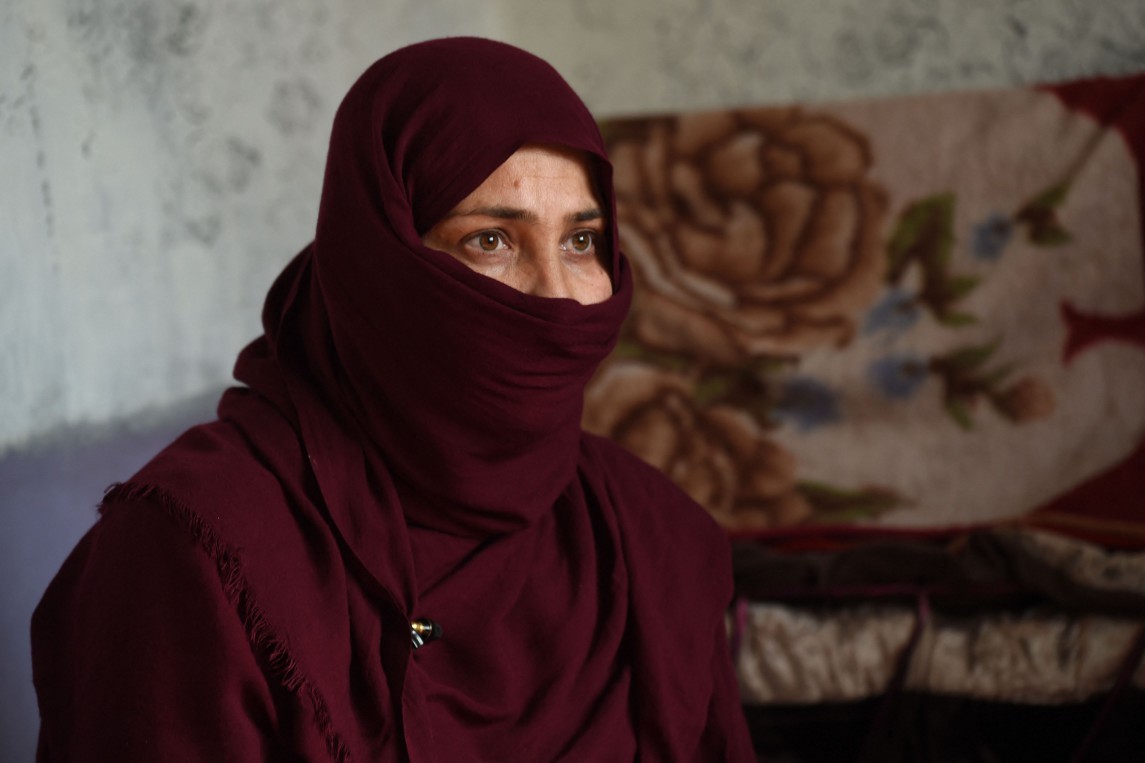
Neda was just 12 years old and a schoolgirl in Kabul when her parents married her off to a distant relative, a man she had never met.Her family was poor; his was better off. Neda believes money and her mother’s illiteracy sealed her fate. She was taken to her new 20-year-old husband’s home in the remote Darwaz district in northeastern Afghanistan, where her childhood ended abruptly.“I didn’t even have my first period yet. I had no idea what marital life or sex was,” she told RFE/RL. “My parents didn’t ask me if I wanted to get married.”Neda said her in-laws expected her to do all the household chores, and her husband would beat her if she was unable to clean or cook the way his family liked.“I was abused in every way possible,” said Neda, whose name has been changed for privacy reasons.Three years later, her father intervened. With his help, Neda sought a divorce through a Shari’a court, which applies Islamic law, in a process that took two years.Child marriages have always been commonplace in Afghanistan, but rights groups say the practice has intensified since the Taliban returned to power in 2021.On May 14, the Taliban issued a new law on divorce that for the first time implicitly acknowledges that child marriage is permitted in the country. The decree, titled On The Judicial Separation Of Spouses, sets out conditions for divorce in courts.“Upon reaching puberty, the minor has the option to dissolve the marriage,” Article 5 of the decree states, referring to marriages arranged by relatives. Until then, a girl has no right to seek divorce. The law also states that, if a girl does not formally object to her marriage upon reaching puberty, her silence is interpreted as consent.The typical age range for the onset of puberty in girls is between eight and 13, according to medical experts.Islamic scholars have differing interpretations of puberty, with some schools of thought placing it at 15 or 18, while several classical texts suggest that nine is the earliest age a girl can be considered to have reached puberty.
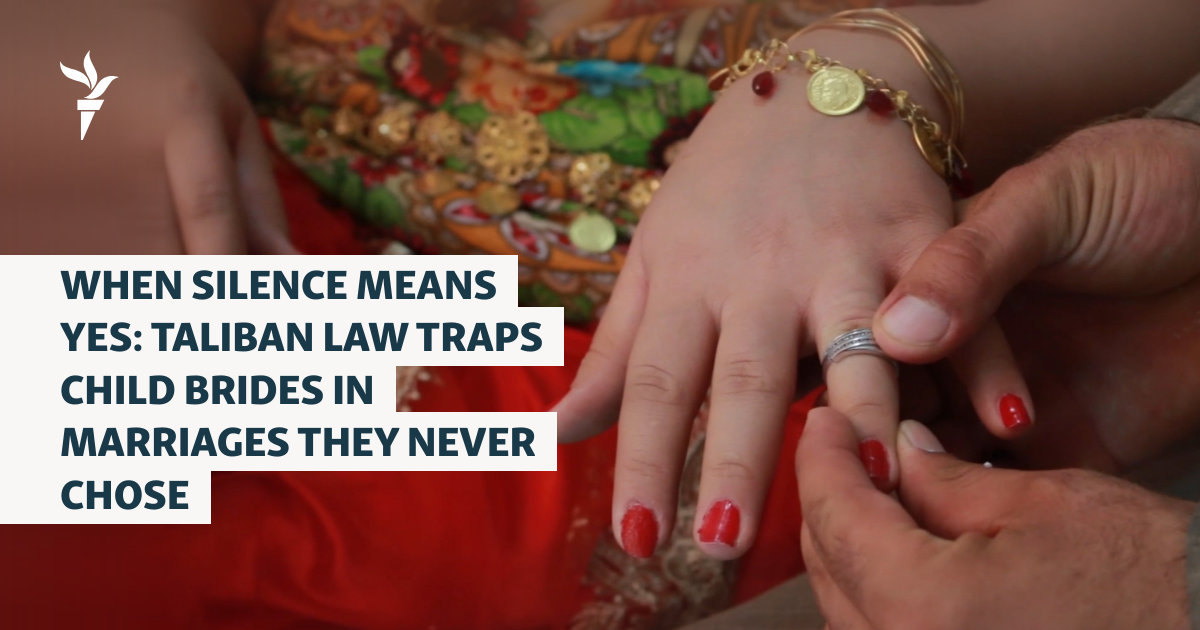
When Silence Means Yes: Taliban Law Traps Child Brides In Marriages They Never Chose
The Taliban has issued a new law on divorce that explicitly acknowledges child marriage is permitted in Afghanistan. Two former child brides told RFE/RL that the law formalizes a reality many Afghan girls are already living: forced marriage, delayed justice, and silence treated as agreement.
1,090 words~5 min read