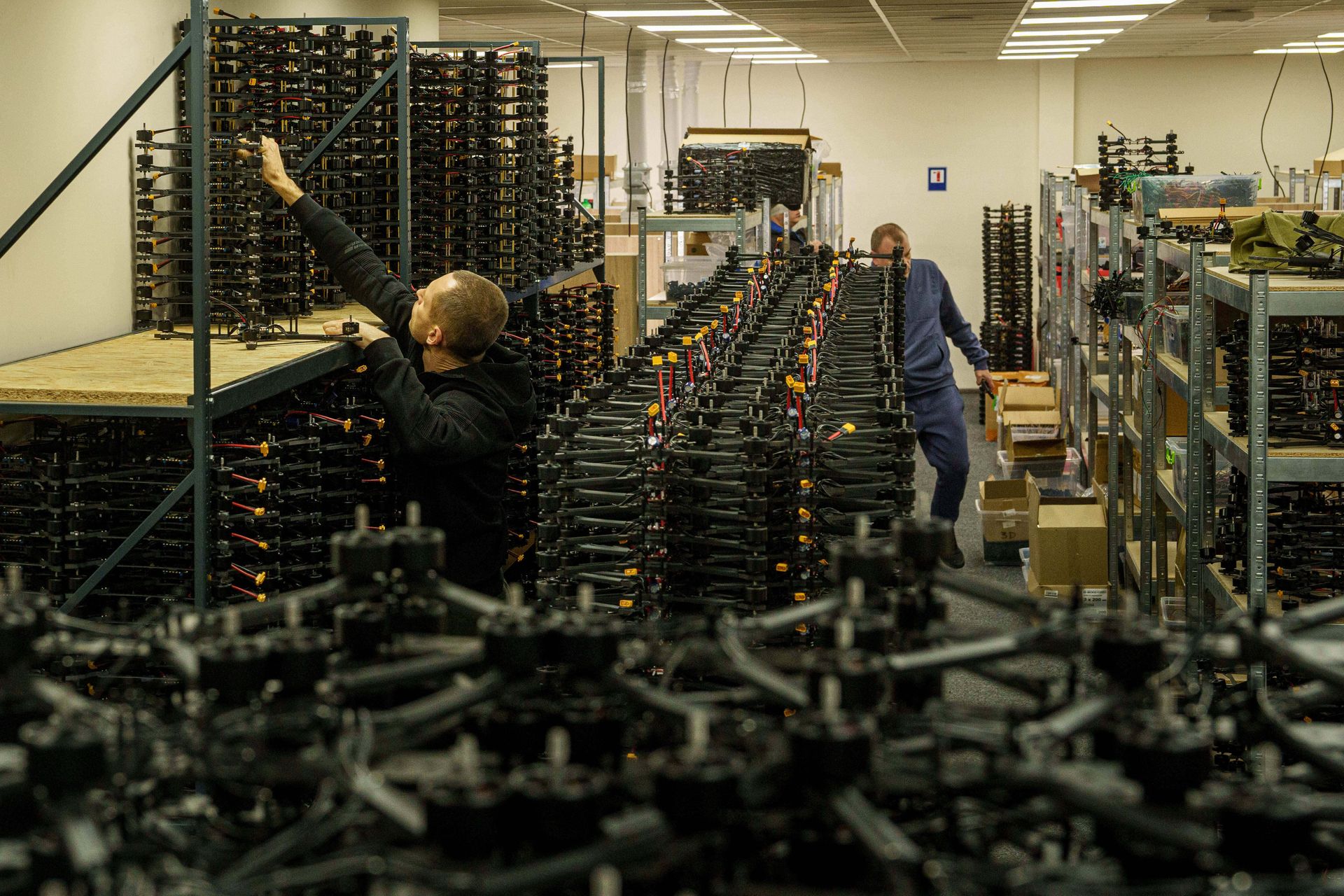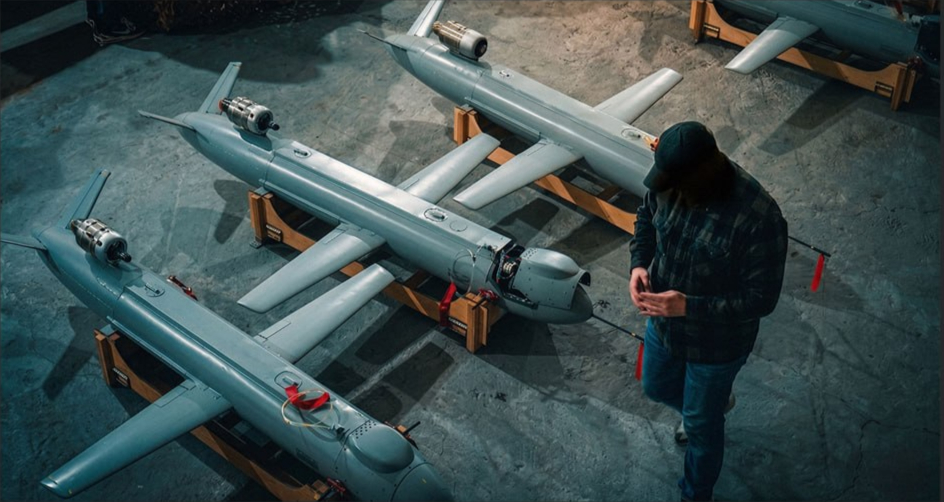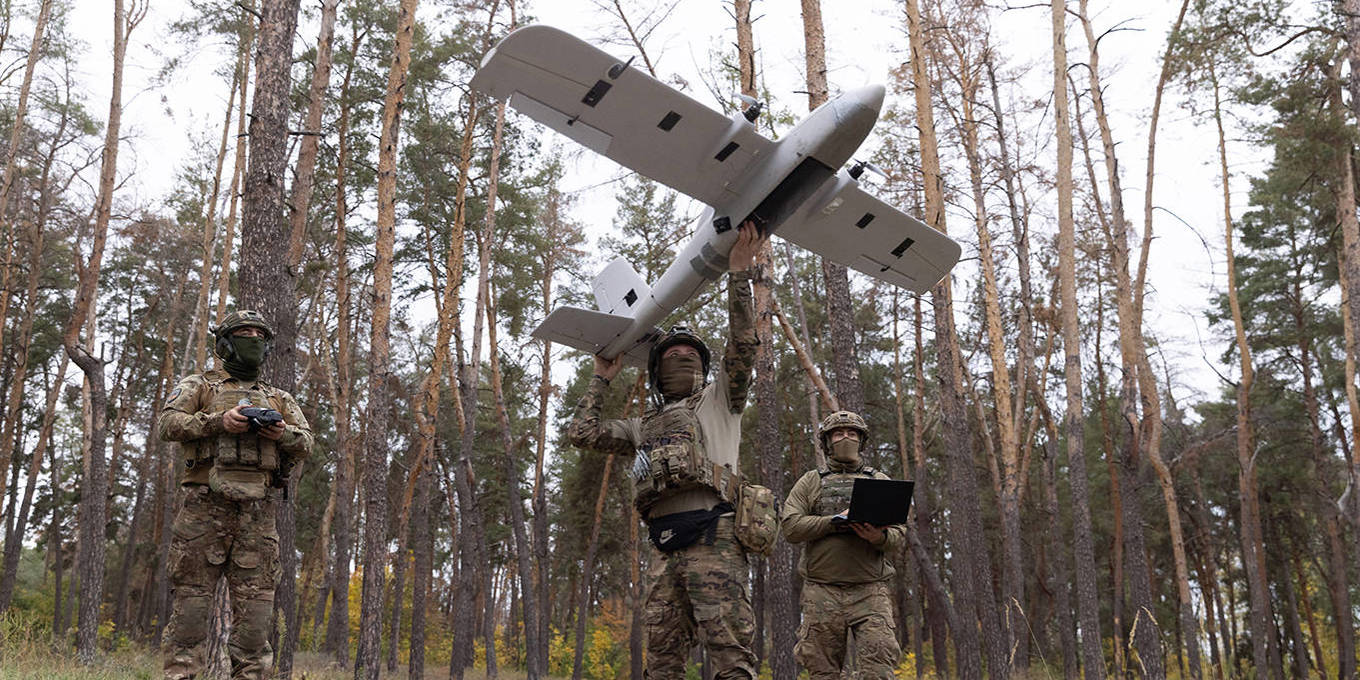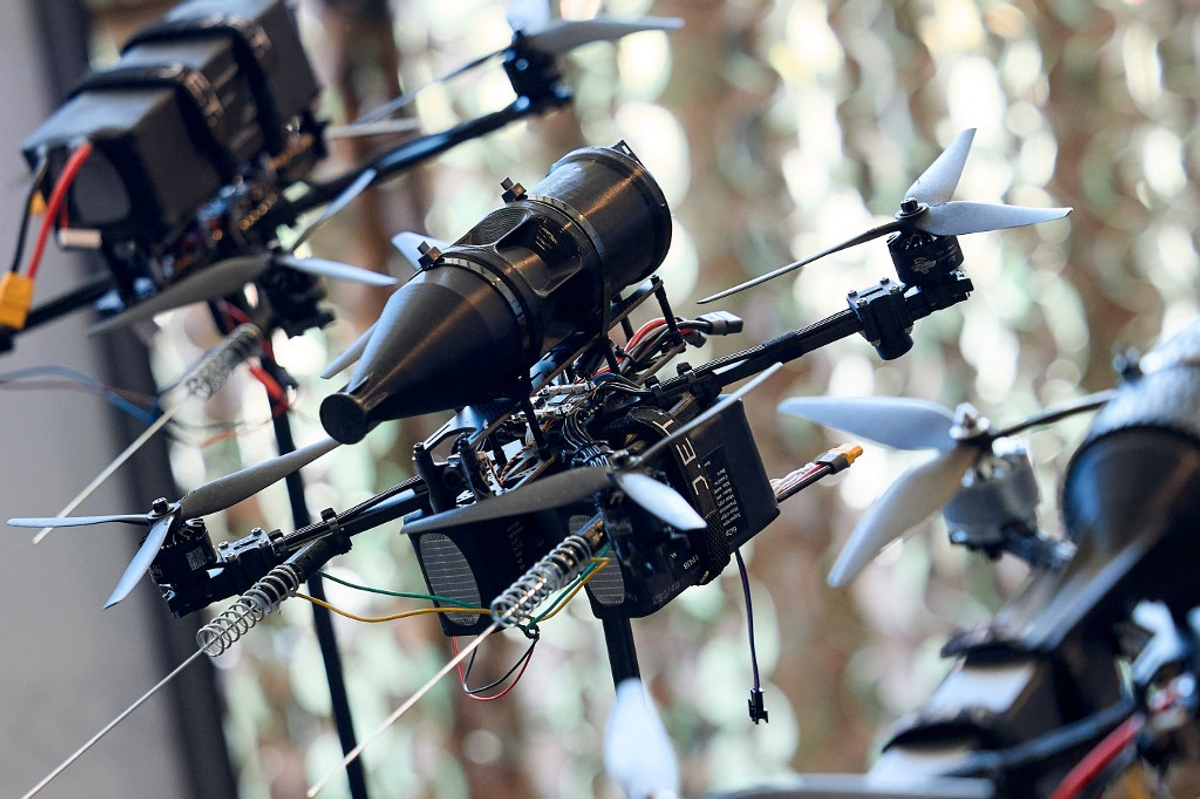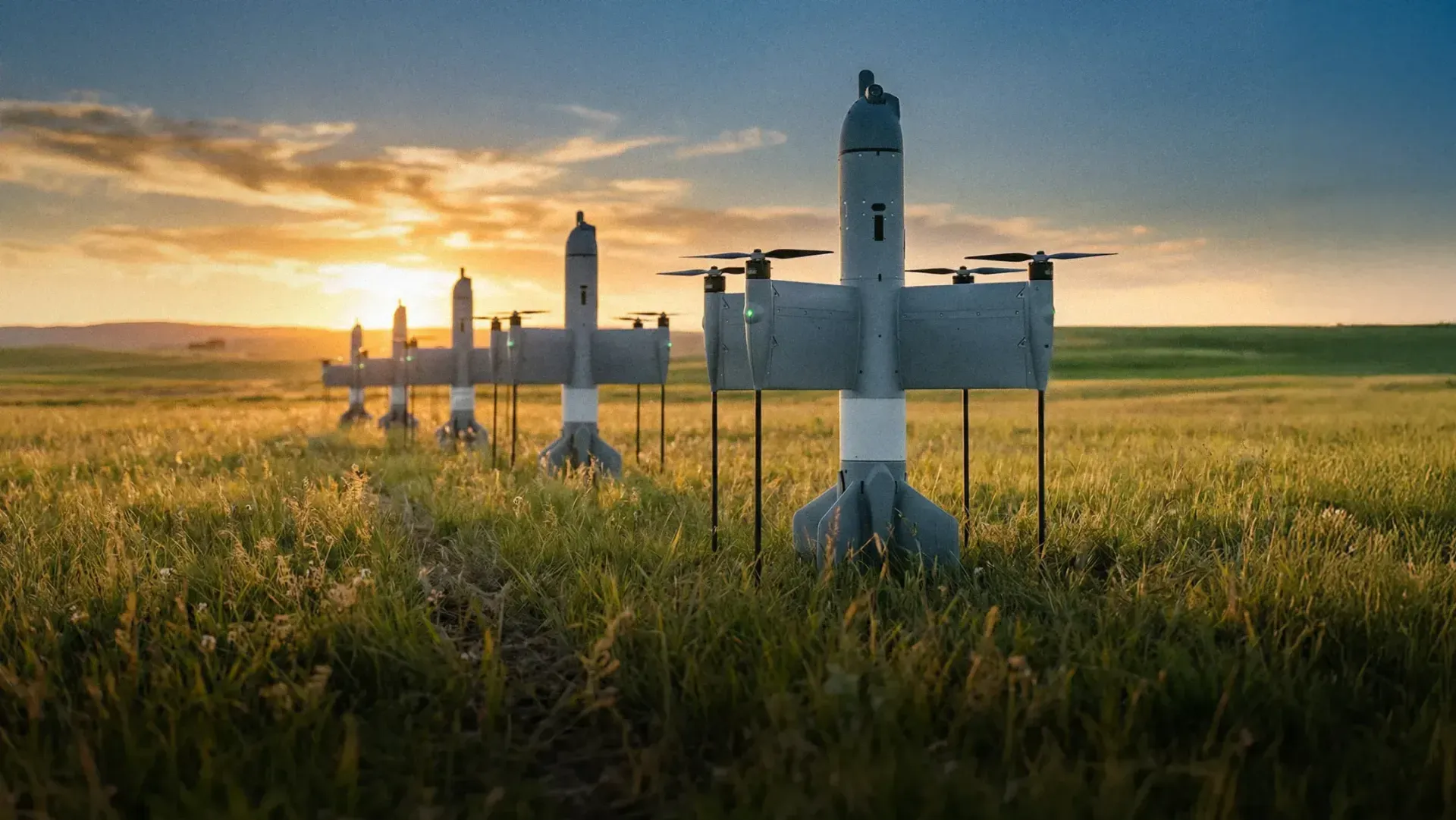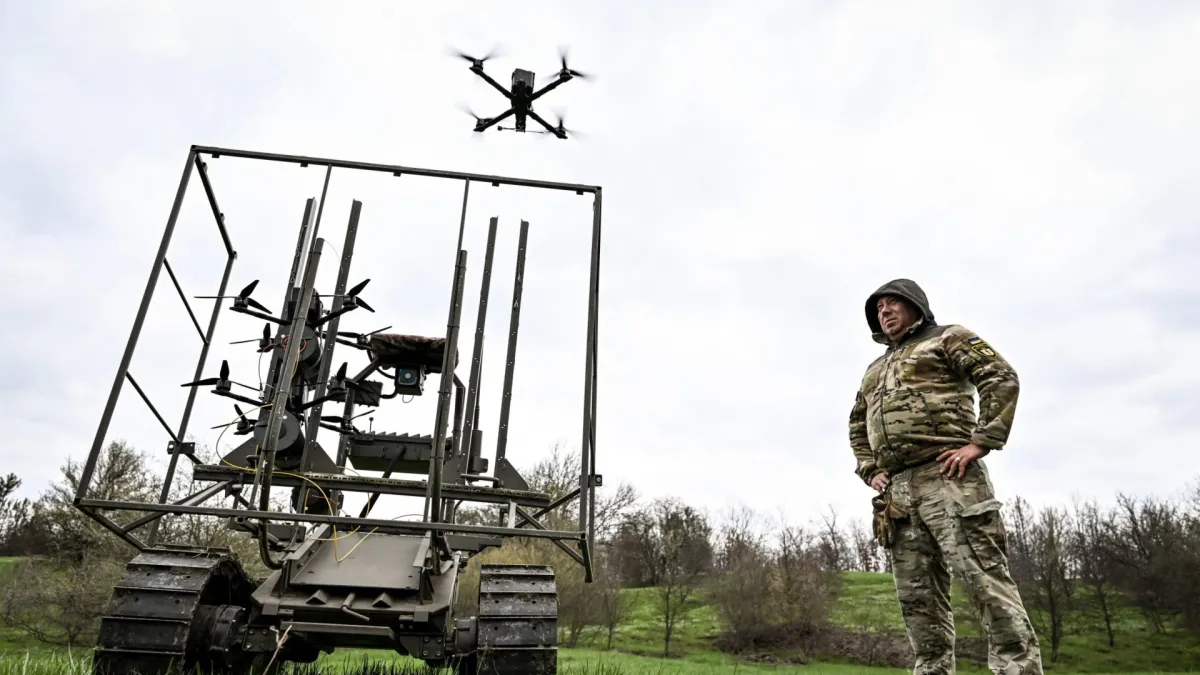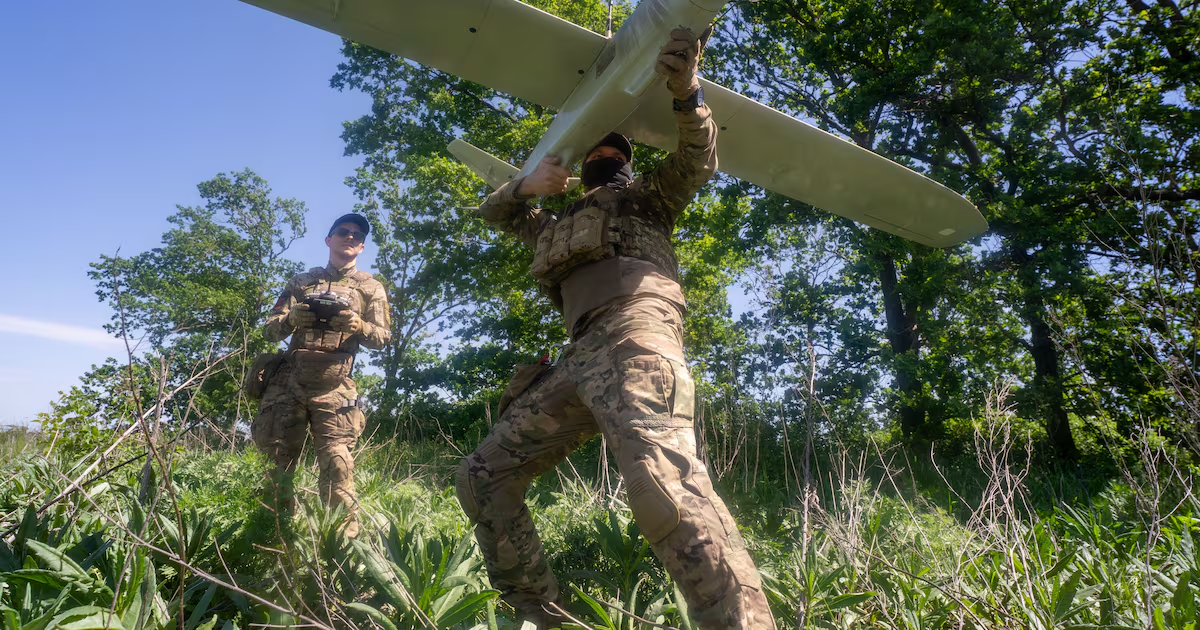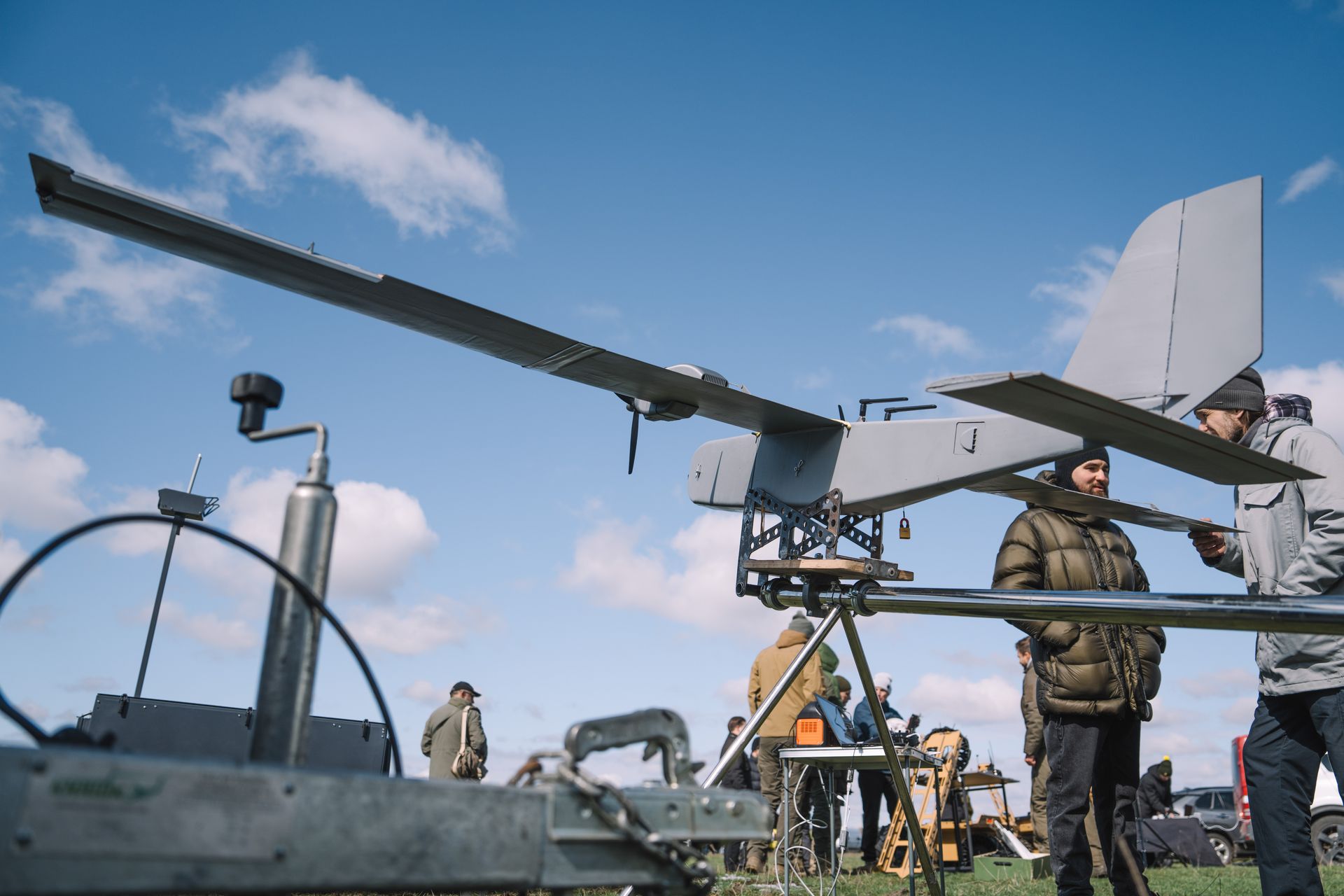
Brave1 Defense Tech exhibition in an unnamed location in Ukraine, on April 11, 2025. (Andrew Kravchenko / Bloomberg / Getty Images)In the battle of ideas for the economic future of Ukraine, talk of a fledgling military industry and the focus on the prowess of a handful of IT contractors is a diversion. Both storylines are presented largely in the absence of international competition and economic realities. And here is why.Investing in defense businesses, as I've done for years, is notoriously "lumpy" because it relies on national governments making payments that are not always timely. Those few, vital clients are also particularly incentivized to keep margins tight. To compare the gross margins of the two sectors in which I'm most heavily invested, aerospace and defense hover around 17%, while semiconductor manufacturing is at a lofty 50%.Few societies support robust commercial defense industries, and those that do often depend heavily on commercial overlap in aerospace to be profitable. Rheinmetall and Lockheed Martin (LMT) are arguably exceptions, but they're a small number in a large field and are dwarfed by household names in the corporate sector.LMT, the largest contractor to the nation with the largest military budget by far, isn't even in the top 100 U.S. corporations and is only about 2% the size of Nvidia. Even where defense is huge, it's tiny compared to the larger economy.Ukraine's cheap(er) production of quadcopters and cruise missiles is a function of wartime demand. If it were to become a meaningfully large export market, it would have to compete with more sophisticated industrial nations with much better supply chains and equally competitive low labor costs.Turkiye, Vietnam, and Morocco are a few quick examples. It's not like the tech for any of these products is new, either. Much of it was available on toy store shelves over two decades ago, and the capital costs to set up production are very low.There's no moat around a quadcopter manufacturing business, so if the demand volume and profit margins are healthy, meaningful competition will follow.As for Ukraine's much-heralded "tech" sector, it's really rather limited to small firms that work on a contractual basis for Western customers seeking low-value-added services. It works beautifully for clever Ukrainians who enjoy cost-of-living (CoL) arbitrage; $30 per hour goes much further in Lviv than in Austin.While the CoL arbitrage is not changing anytime soon, one thing is: the productivity of low-value-added services with generative AI. We're already seeing a reduction in the hours of the lowest-skilled IT workers in Ukraine, and they made up the lion's share of those employed in the sector.As for those who are genuinely competitive on a global scale and enjoy both an excellent salary and a high cost of living, those benefits do not carry over to the broader economy intact.Much of those healthy margins that those people live on go into foreign accounts, foreign tech products, foreign cars, and international holidays.The battle for Ukraine's economic future rests more in the foundational elements of development economics: population, consumption, credit and financial markets, and unlocking economies of scale.A Ukraine with 52 million people (as in 1993) is far more compelling (and defensible) than one with a 32-million population in it. Stabilizing and reversing this trend is paramount to a brighter future.This is borne out in the math of this simple example: 1 million returning Ukrainians, all consuming (on average) $5,000 per year. That's a $5-billion contribution to annual GDP just on the surface (and roughly a 3% rise), but add to that most of that spending is on local services and products, and you get a multiplier from the velocity of commerce in the domestic economy.An engineer collects FPV drones of the "General Cherry" company at the workshop in an undisclosed location in Ukraine, on Dec. 4, 2025. (AP Photo/Evgeniy Maloletka)Unfortunately, the question hangs over society: will we see more people returning than leaving in the future? And as simple as it might seem that when the invasion ends, Europe should send the millions back, we have to recognize that our partners have largely become dependent on them.It's not in Germany's, Poland's, or Brussels' economic interest to encourage the return of those Ukrainians who found greener pastures abroad, like the millions before them.Recognizing that our closest partners have a limit to how much they will likely help, Ukraine should demarcate the limit to which it is willing to oblige.I'd suggest that the policy pathway forward is a short-term focus on retention through implementing financial deterrents to emigration and aggressive incentives to attract and retain expats.Such programs would likely ring some fairness alarms among the public, which is why I'd recommend couching them as temporary measures to rebuild the economy's foundation and public coffers.The long-term solutions (all of which could and should have started yesterday) make a laundry list of more than a dozen items, but all revolve around a few central points.First, Ukraine should maximize the return on investment of public infrastructure and utilities by geographic concentration and economies of scale. A widely known and well-regarded example would be Deng Xiaoping's Special Economic Zones in 1970s and 80s China.Second, it is very important to reform credit and financial markets so that consumer and commercial credit is actually a force multiplier in Ukraine on one end, and so wealthy Ukrainians have more viable investment opportunities inside Ukraine than just real estate.And finally, Ukraine should avoid replicating the model that has Mario Draghi and legions of economists worried about Europe's deteriorating economic prominence in the world. Make private wealth creation the cultural norm, and don't punish ambition with regulation.Editor's note: The opinions expressed in the op-ed section are those of the authors and do not purport to reflect the views of the Kyiv Independent.
Let's stop pretending drones and IT will rebuild Ukraine's economy
In the battle of ideas for the economic future of Ukraine, talk of a fledgling military industry and the focus on the prowess of a handful of IT contractors is a diversion. Both storylines are presented largely in the absence of international competition and economic realities. And here is why. Investing in defense businesses, as I've done for years, is notoriously "lumpy" because it relies on national governments making payments that are not always timely. Those few, vital clients are also pa
951 words~4 min read