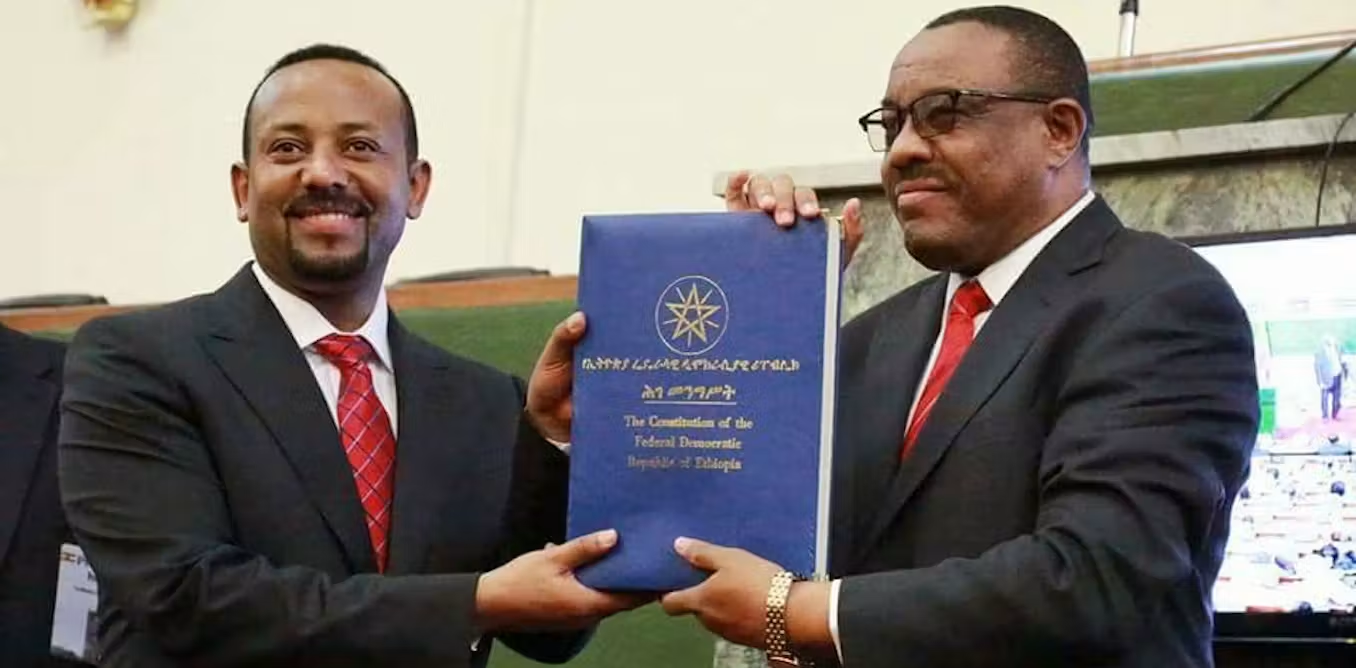
Ethiopian prime minister Abiy Ahmed has revived debate over whether the country should impose term limits on its head of government. Speaking before the National Dialogue Commission in May 2026 – just weeks before national elections – he said executive power should be “limited by law”. He suggested the issue could form part of wider constitutional reform that many Ethiopians have been calling for since 1995.
At first glance, the proposal seems straightforward. But Ethiopia operates under a parliamentary system, not a presidential one. Alemayehu Fentaw Weldemariam, who has studied Ethiopia’s constitutional design and law, explains why the real issue isn’t term limits, but the failure of the parliamentary mechanisms meant to constrain executive power.
Why don’t parliamentary systems usually impose term limits on prime ministers?
In parliamentary systems, prime ministers derive their authority from parliament. They remain in office for as long as a majority in parliament is willing to support them. There are no fixed term limits.
In presidential systems, leaders get their authority directly from voters and serve fixed terms set by the constitution.