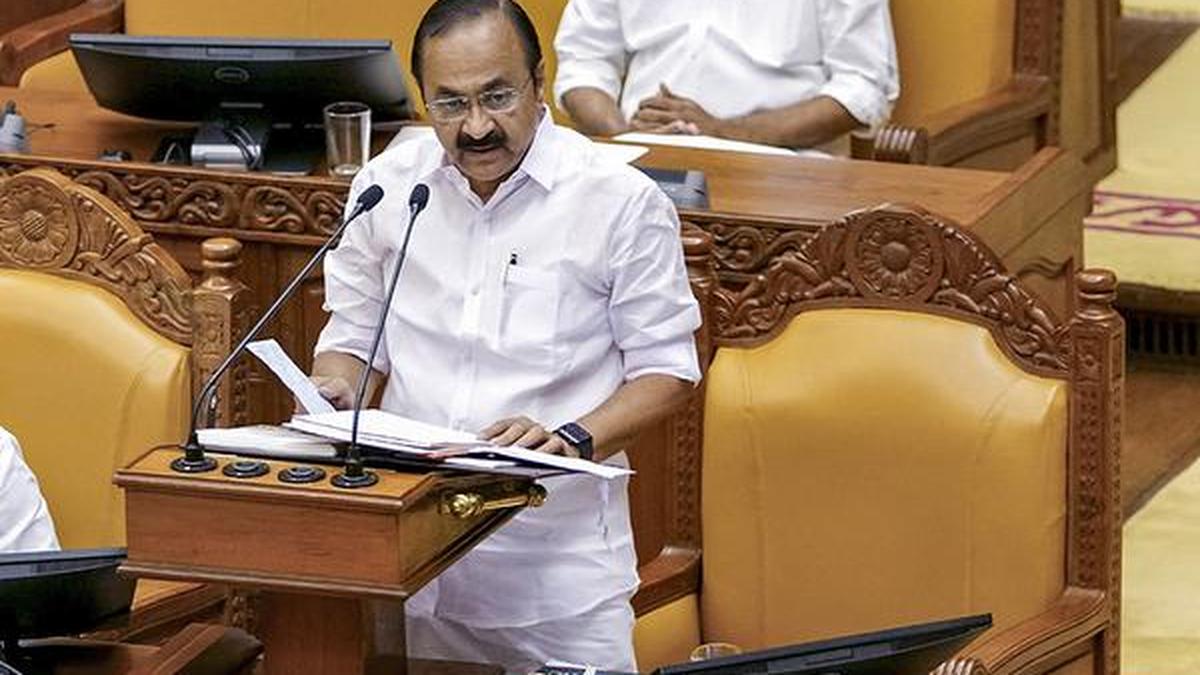
As Kerala awaits the UDF government’s white paper on State finances, a new study has suggested that the government should actively pursue measures designed to broaden the tax base, optimise non-tax revenue mobilisation and improve tax compliance while building on the State’s structural strengths to boost the economy.The study, ‘Kerala Fiscal Consensus Forum 2026-31 - a non-partisan academic initiative,’ prepared by the Department of Commerce, Sacred Heart College, Thevara, urges the government to explore avenues such as ‘Kerala Diaspora bonds,’ and - in the case of local bodies - municipal bonds. Further, the government should explore fee revision exercises across departments to increase non-tax revenues, user charges for higher-end government services and asset monetisation to up the State’s revenues.Observing that Kerala stands at a ‘critical fiscal inflection point,’ it states that “The most fundamental long-term remedy for Kerala’s fiscal deficit is substantially enhancing own revenue mobilisation. Kerala ranks among the lowest States in own-tax revenue as a percentage of GSDP, despite being one of the highest in per capita private consumption expenditure.” The study envisions ‘Kerala diaspora bonds’ as tax-efficient, RBI-compliant instruments through which NRIs can invest directly in specific infrastructure or social projects.The document was handed over to Chief Minister V.D. Satheesan recently, Tessa Mary Jose, Dean, Department of Commerce, said.The ‘single largest structural driver’ of Kerala’s fiscal deficit, according to the study, is the disproportionate share of committed expenditure, salaries, pensions and interest payments in its total revenue expenditure. “In 2024-25, Kerala’s committed expenditure amounted to ₹97,978 crore, which is approximately 71% of its estimated revenue receipts,” it notes.In revising fees to enhance non-tax revenues, the priority sectors can be ports and registration, building permits, mining levies and forest produce, the study suggests. Likewise, user charges can be levied for higher-end government services, such as Supplyco premium outlets, higher-grade hospital rooms and specialised skill training.In the case of debt management, the study observes that public debt, including on-balance-sheet borrowings and the off-balance-sheet exposure through Kerala Infrastructure Investment Fund Board (KIIFB), calls for a “coherent and transparent medium-term management strategy.” It recommends an independent review of KIIFB-funded projects and the formation of a State Debt Management Office within the Finance Department. Further, the Kerala Fiscal Responsibility Act should be amended to incorporate KIIFB and other off-budget vehicles within the definition of fiscal deficit for FRBM compliance purposes, in line with evolving national best practices, it says.The study also suggests measures for tapping the full potential of the MSME and manufacturing sectors, tourism, knowledge economy and digital services. Published - May 27, 2026 06:55 pm IST
New study urges Kerala govt. pursue measures to improve revenue mobilisation, expenditure efficiency
As Kerala awaits the UDF government’s white paper on State finances, a new study has suggested that the government should actively pursue measures designed to broaden the tax base, optimise non-tax revenue mobilisation and improve tax compliance while building on the State’s structural strengths to boost the economy.
426 words~2 min read