As AI video models become more powerful, YouTube is no longer solely relying on creators to label their AI videos — it will now automatically label videos on their behalf. The company announced on Wednesday that its internal systems will apply labels when it detects that “significant photorealistic AI” has been used.
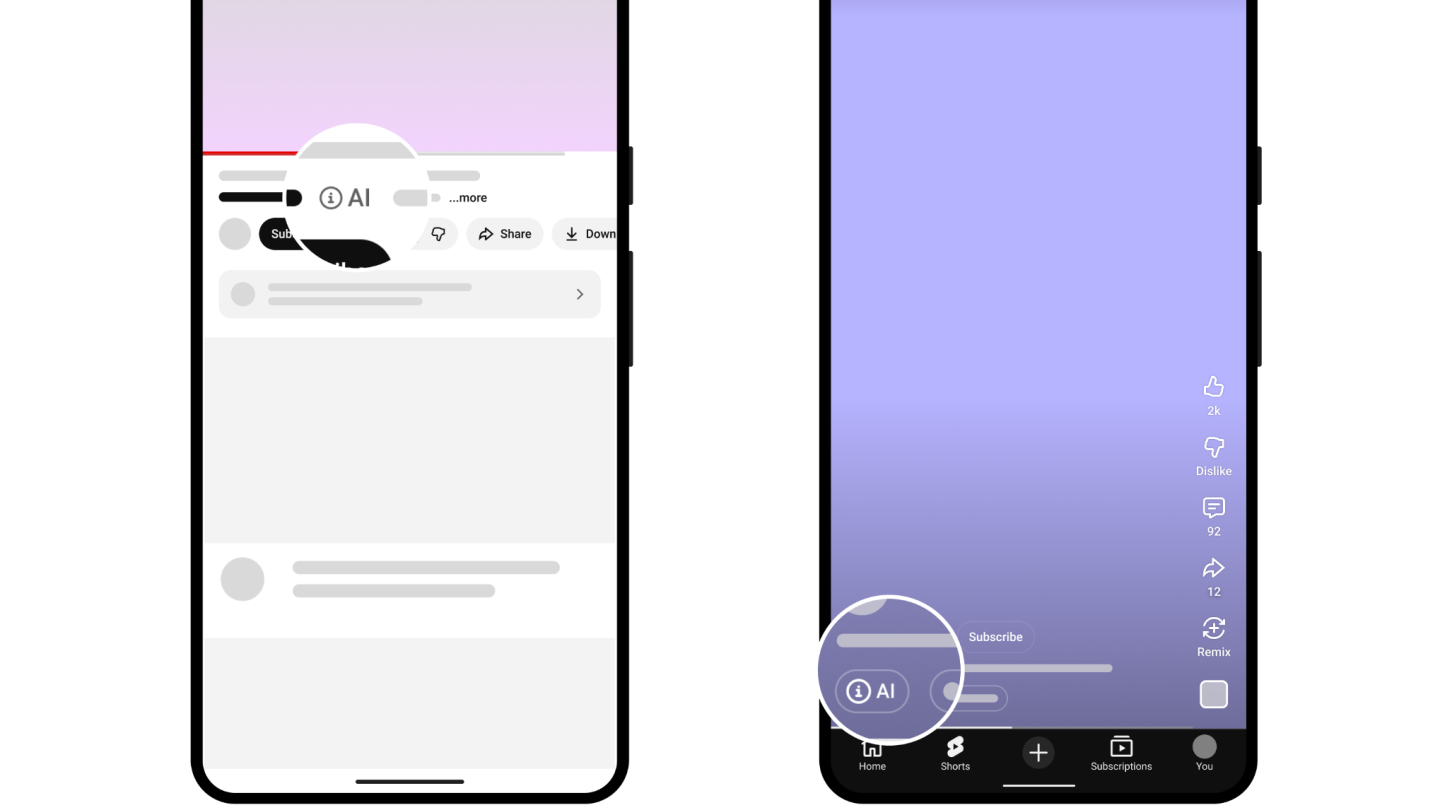
YouTube will also be making its AI labels more prominent, so they’re easier to spot across both long-form videos and YouTube Shorts.
AI labels on the video platform have been in use for over two years, after YouTube updated its AI policies and rolled out a tool in Creator Studio that required creators to disclose their videos included AI content that could be mistaken for a real person, place, or event. Videos that obviously depicted some sort of animated or imaginative scenario — like a unicorn prancing through a fantastical world — did not have to be labeled.
The company says its policy around AI labeling hasn’t changed, but it will take a more active role in policing the content on its platform. The move follows Google’s release of Gemini Omni, a new family of multimodal AI models at its Google I/O developer conference last week that can output high-quality videos that reflect an understanding of physics, culture, history, and science.