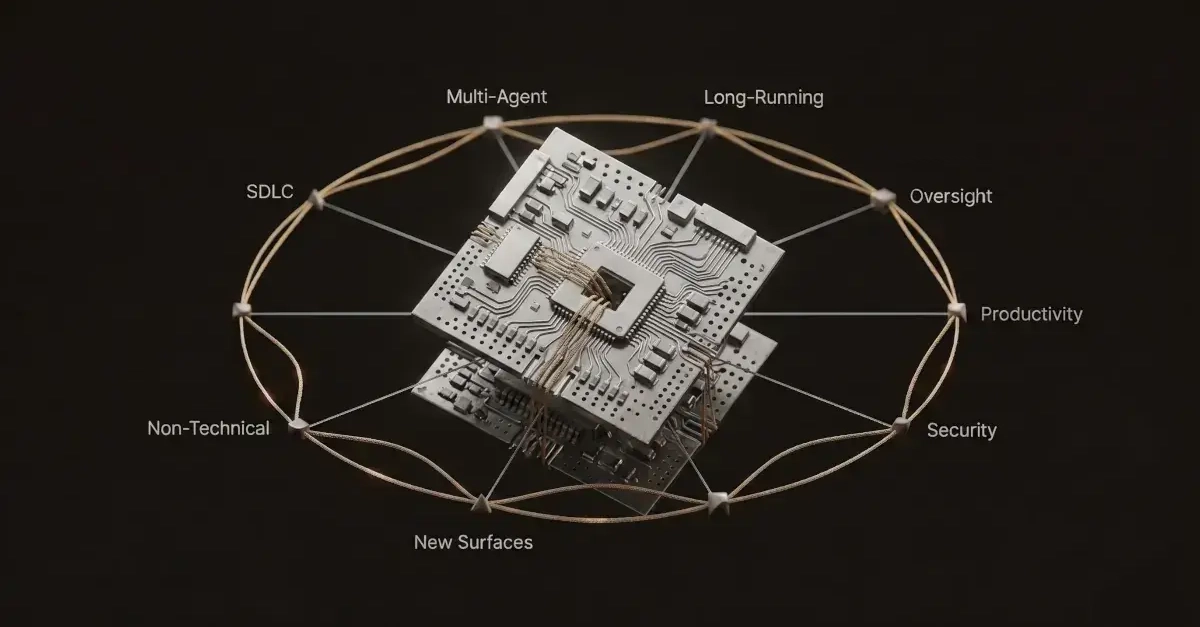
Anthropic's 2026 Agentic Coding Trends Report describes a year in which software engineering becomes the work of orchestrating agents rather than writing code - and every one of the eight trends it identifies increases the pressure on how teams manage context. The report is a forecast document, not a research paper. It identifies eight predicted trends organized into three categories - foundation, capability, and impact - and supports each with case studies drawn primarily from Anthropic's own customers. The headline finding, the one worth anchoring to, is this: the report is implicitly an argument that context engineering is the load-bearing skill of 2026. Anthropic doesn't say that directly. But read the eight trends in sequence and the pattern becomes hard to miss. Here's what they actually say - and how to think about what they mean for your team.
What the report actually is (and what it isn't)
Anthropic's 2026 Agentic Coding Trends Report is a forecast and framing document published by Anthropic in early 2026. It identifies eight trends they predict will define agentic AI coding this year, organized into three categories: foundation trends (structural changes to how development work happens), capability trends (what agents can now do that they couldn't before), and impact trends (what the business outcomes actually look like). It draws on case studies from Rakuten, CRED, TELUS, Zapier, Legora, Fountain, and Augment Code.