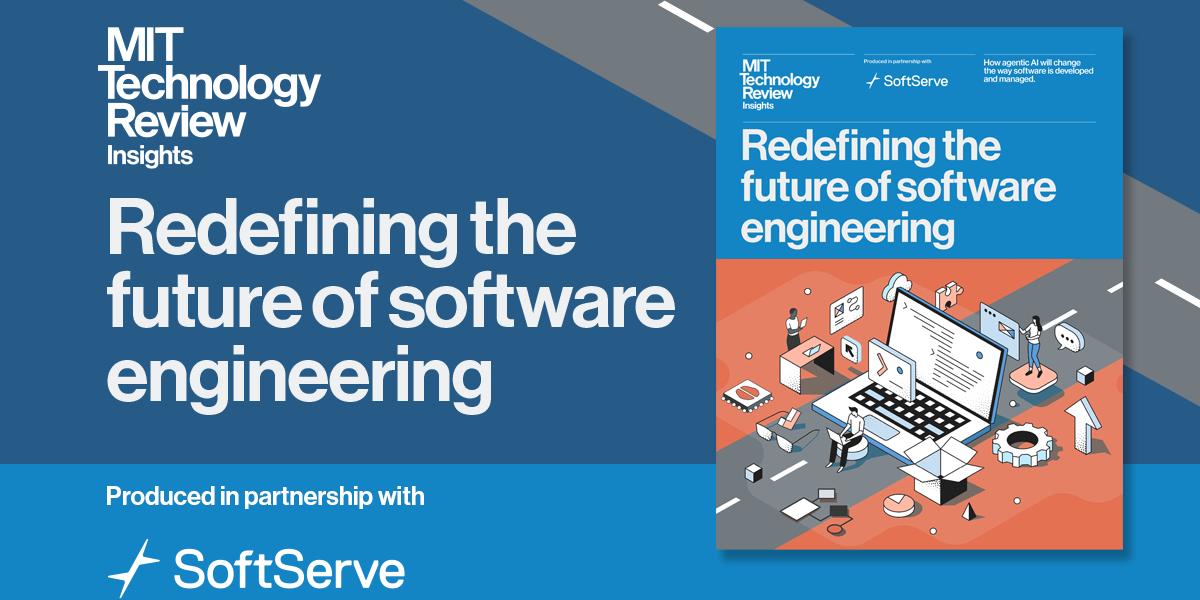
Software engineering has experienced two seismic shifts this century. First was the rise of the open source movement, which gradually made code accessible to developers and engineers everywhere. Second, the adoption of development operations (DevOps) and agile methodologies took software from siloed to collaborative development and from batch to continuous delivery. Now, a third such shift looks to be taking shape with the adoption of agentic AI in software engineering. Thus far, engineering teams have mainly used AI to assist with coding, testing, and other individual tasks, within tightly designed parameters. But with agentic capabilities, AI agents become reasoning, self-directing entities that can manage not just discrete tasks but entire software projects—and do so largely autonomously. If adopted and fully embraced by engineering teams, agentic AI will usher in end-to-end software process automation and, ultimately, agent-managed development and product lifecycle automation. This report, which is based on a survey of 300 engineering and technology executives, finds that software engineering teams are seeing the potential in agentic AI and are beginning to put it to use, but so far in a mainly limited fashion. Their ambitions for it are high, but most realize it will take time and effort to reduce the barriers to its full diffusion in software operations. As with DevOps and agile, reaping the full benefits of agentic AI in engineering will require sometimes difficult organizational and process change to accompany technology adoption. But the gains to be won in speed, efficiency, and quality promise to make any such pain well worthwhile. Key findings include the following:
Redefining the future of software engineering
How agentic AI will change the way software is developed and managed.
631 words~3 min read