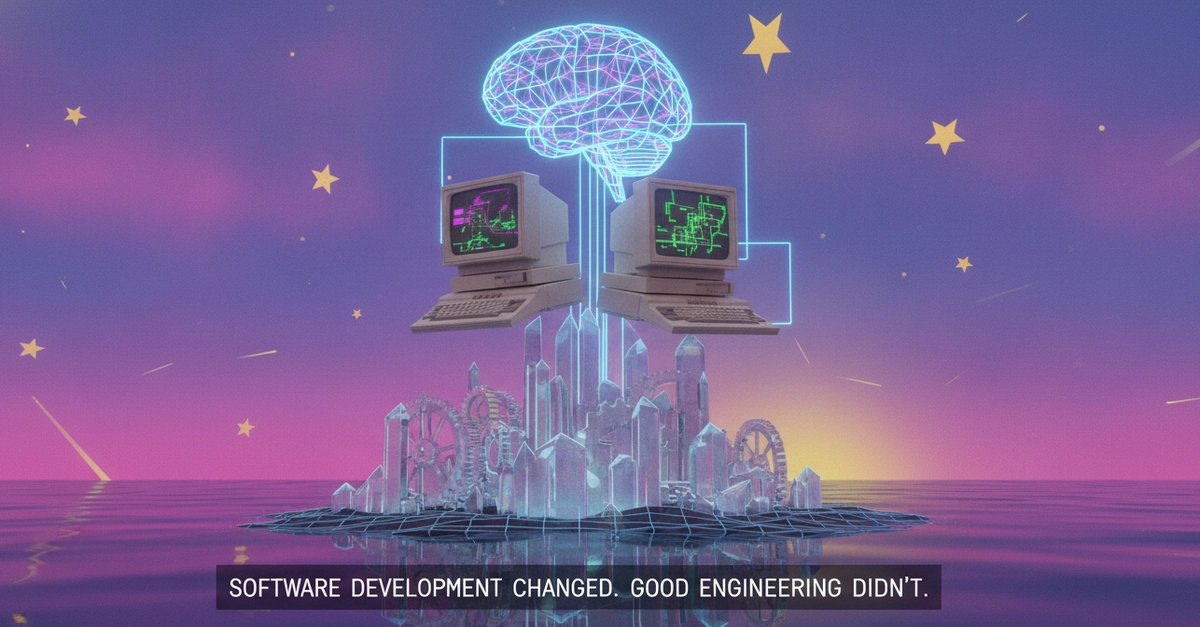
Software engineering is undergoing a significant transformation, its greatest since inception in the mid-20th century. What began as a niche discipline focused on algorithmic problem-solving has evolved into a complex field shaping nearly every aspect of modern life. With the rise of AI, agile methodologies and interconnected systems, software engineering stands at the brink of another revolution.
This article explores the (1) historical evolution of software engineering, (2) changing nature of complexity, (3) critiques of modern practices and (4) a glimpse into the future. We will also address key questions about software complexity, AI governance recommendations and the emerging role of AI software engineers.
How Software Engineering Came To Be
From its humble beginnings in the 1950s, software engineering has transformed into a foundational and influential field for/of the modern era. This journey is not just about technological advancements but also about the cultural shifts shaping how we think about software today.
As we trace its evolution, we uncover a story of innovation, evolution and relevance. As each decade brought new challenges. Today software engineering stands at the forefront of a new revolution, where artificial intelligence is redefining what it means to code, collaborate and create. Here we explore this fascinating timeline to understand how we arrived at this pivotal moment in human history.