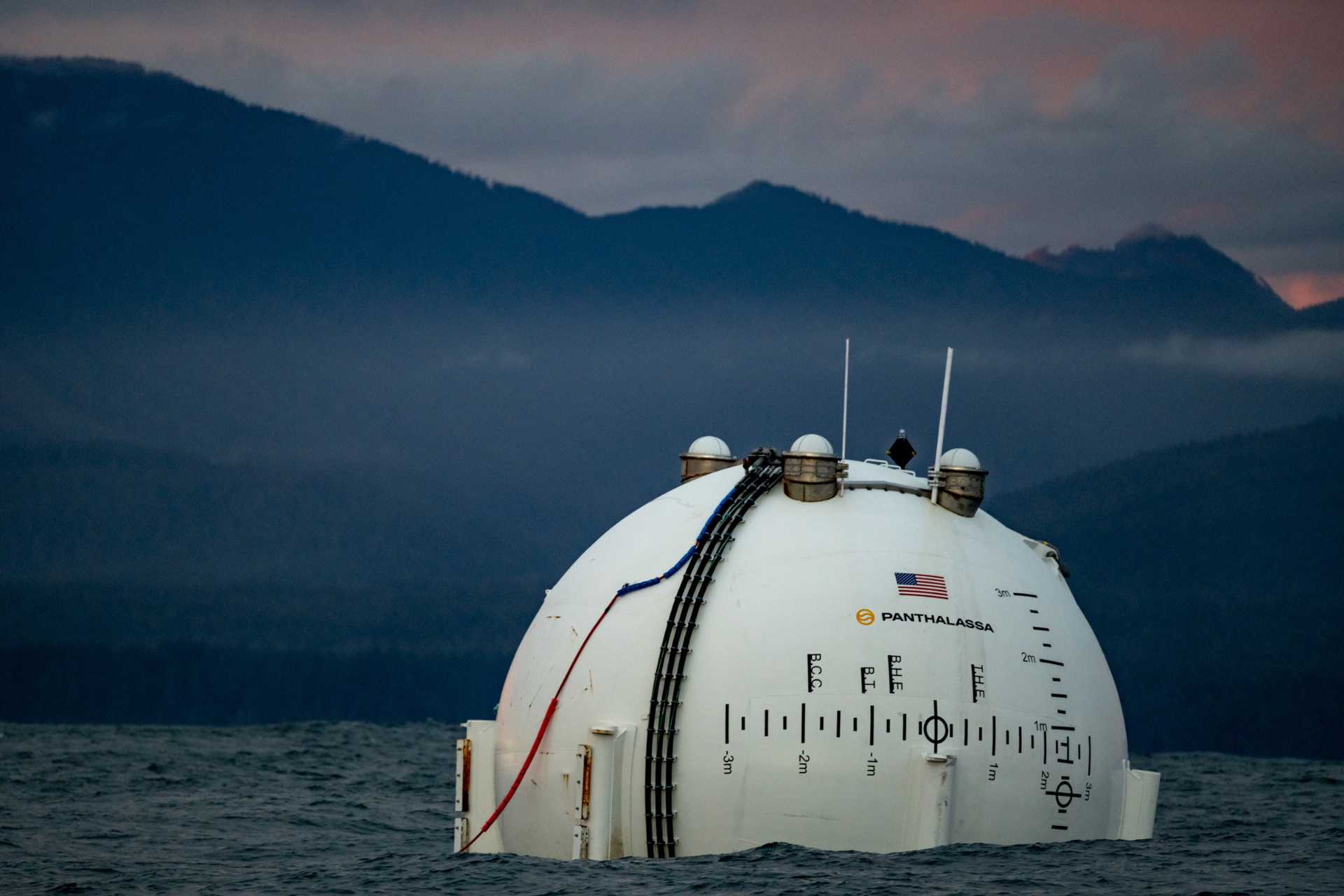
Fifteen years ago, a crop of startups promised to make wave energy a mainstream renewable resource. None succeeded, and today the technology remains niche. But now, as deep-pocketed investors seek novel ways to power data centers, the idea is getting renewed attention.
The basic technology is nothing new. The first tide wheel was built back in 1844, and ever since inventors have been iterating, trying to harness waves. They are energy-dense, predictable, and estimated to hold the potential to generate up to as much as 2.64 trillion kilowatt-hours just off the coast of the U.S., according to the EIA.
But the hurdles are many: Developing technologies capable of surviving the harsh ocean conditions and the infrastructure needed to transmit the energy produced have historically driven costs too high for wave energy to compete with cheaper forms of clean power.
Many of the wave energy startups that have been founded since the 1990s have since ceased operations or pivoted away from energy production, mostly because of a lack of funding, and because of the fact that the ocean is a difficult place in which to put expensive tech. Just last year, for example, the Finnish company AW-Energy Oy, which was developing an oscillating wave surge converter to be anchored near the shore, filed for bankruptcy; AquaHarmonics, a U.S. company developing an offshore buoy system, also ceased operations in 2025.