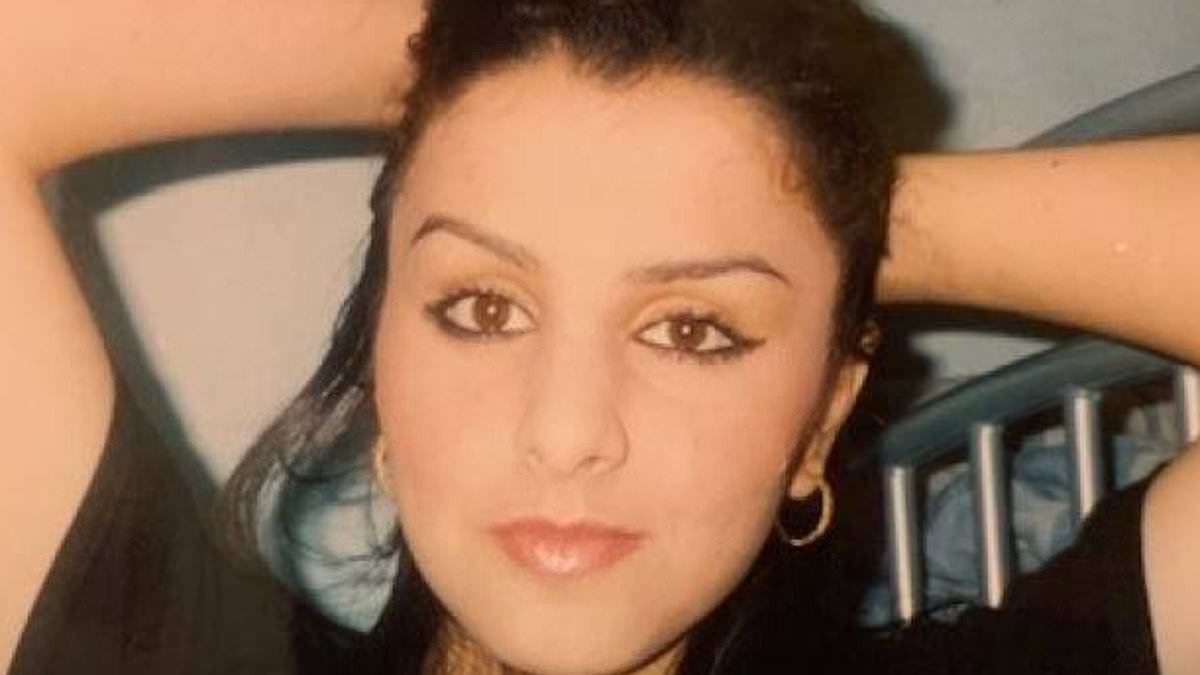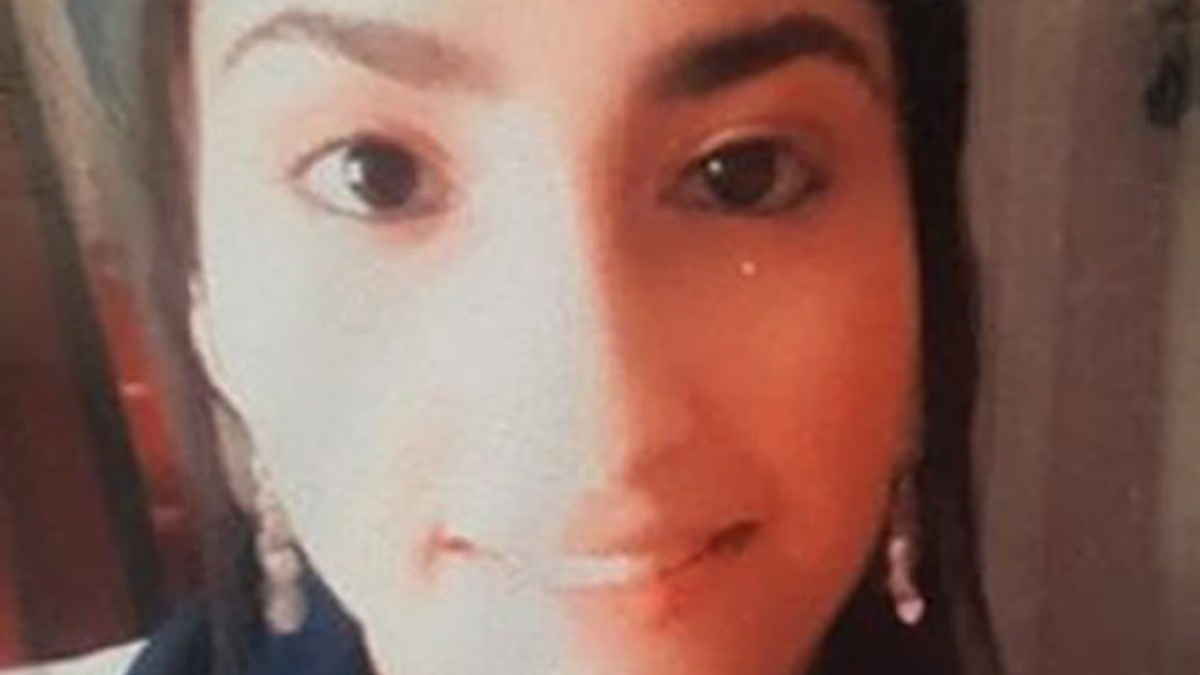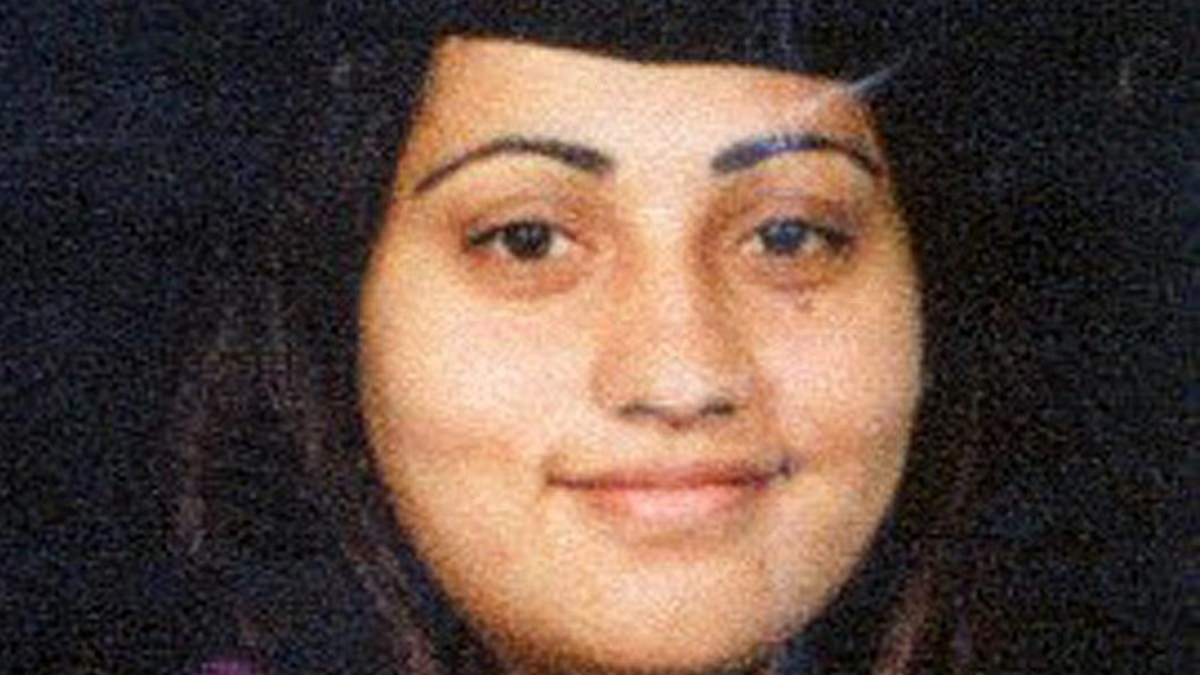
Samaira Nazir gleams with pride as she poses for the camera in her black graduation cap and gown, ribboned diploma clutched firmly in her hand.First in her family to earn a degree, Samaira had every right to be proud of herself after graduating from Thames Valley University with a BA Hons in travel and tourism.But tragically, this would be one of the last pictures taken of the intelligent, determined and ambitious young woman as a few years later her young life would be cut short by those closest to her.Samaira, 25, was stabbed to death by her own brother Azhar in their family home in Southall, west London, while her mother watched on, refusing to stop the bloodshed.She was chased and attacked from 'one end of the house to the other' and a neighbour saw a bloodsoaked arm emerging from the front door of the terraced home as Samaira made a desperate attempt to escape, before her elder brother dragged her back into the property by her hair.Another neighbour heard screams of 'help me, help me' and her last words, 'you are not my mother anymore'.Samaira was held down, tied with a silk scarf and slashed in the neck by her brother, father and cousin, all while her beloved two young nieces, Azhar’s daughters, were forced to watch on.In a crime so horrific and brutal it is barely believable in modern-day Britain, this young, talented, articulate graduate with her whole life ahead of her was killed simply 'for loving the wrong man.' Samaira Nazir, an ambitious 25-year-old university graduate, had her life cut short by her own family after they killed her in the name of 'honour'Samaira, who was working as a director at her brother's recruitment business, had fallen in love with Salman Mohammed, an Afghan asylum seeker who had arrived in the UK at the back of a lorry.The pair were in a secret relationship for six years, but in March 2005 Samaira had finally told her parents with hopes they would accept their marriage.But it was the beginning of what would come to be an extremely tragic end. She was seen to have brought 'shame' and 'dishonour' on the family by falling in love with the 'wrong' man.Salman was seen to be from a 'lower caste' to Samaira, who was of Pakistani-descent, and her family believed he was only after their money.The caste system is an ancient social hierarchy which originates from South Asia and categorises families based on historic occupations and nobility, with those from 'higher' castes often refusing to accept marriages into the 'lower' castes.Samaira's father, also named Azhar, was enraged and threatened Salman with a knife at his workplace, while her brother, who the court heard 'loved his sister more than anything', told Salman on a phone call that he would kill them both if they were to get married.On the day of her murder, Samaira's mother Irshad Begum had tried in a last ditch attempt at a relative's house to convince her daughter and Salman to call off their relationship.When Samaira refused to back down, the family decided the only way to restore their 'honour' was to end her life.Samaira's murder remains one of the most harrowing 'honour' killings to have taken place on British soil, but the case is not isolated, nor has the practice been eradicated.It is estimated that at least 12 'honour' killings take place in the UK every year and hundreds more are subjected to 'honour'-based abuse (HBA) - but many cases are still not correctly identified.You won't believe what this evil killer is doing nowHello, I'm Alex Matthews, Editor of The Crime Desk.In 2014, Cambridge-educated Rurik Jutting was sentenced to life in prison in Hong Kong after being found guilty of two horrific murders. He's one of Britain's most dangerous killers ever - so what he's doing now beggars belief. Sign up here to get our exclusive piece for FREE. While increased attention was brought to the subject in the early 2000s, amid a growing realisation that the dangerous practice was spreading unchecked, it continues to be carried out in the shadows.'Honour' killing victims are, in the most cases, young girls and women who are seen to have damaged the family 'honour'. This can be for behaving in a 'western' manner or wishing to be with a partner that their family refuses, but can also happen for other reasons, such as choosing a career path that isn't seen to be of 'high' status, questioning your sexuality or gender identity, or going against any values that the family or community believe."The practice does not only take place in one particular culture or religion, but has been seen to be used by controlling perpetrators of any background. But at the core of it, as former Chief Crown Prosecutor for northwest England Nazir Afzal explains, remains the battle of 'power and control' and the belief that women cannot choose for themselves how they lead their lives.Mr Afzal OBE led the UK's first taskforce against 'honour' killings, first launched in 2004, and was at the centre of the court case which saw Samaira's killers brought to justice.Savera UK, a charity for which Mr Afzal is a patron, has been campaigning against HBA and 'honour' killings for over 15 years, both through supporting survivors and by pushing for widescale training in public services to help spot signs of HBA and harmful practices.The Crime Desk has teamed up with Savera UK to campaign against the horrific form of violence and murder which has seen innocent lives such as that of Samaira taken too soon.From the outside, Samaira's family were fairly progressive. Originating from Pakistan, they had settled in the diverse community of Southall and made a success of themselves. Azhar Nazir, Samaira's brother, was said to have loved his little sister 'more than anything' yet would go on to kill her after the family disapproved of the man she wished to marry Imran Mohammed, 17, was jailed after it was found he and Azhar had 'worked together' to murder Samaira. They believed it was the only way to restore the family's 'honour'They owned a busy grocery store and her 'loving' older brother Azhar, who all the evidence suggested cared for Samaira dearly, ran a recruitment consultancy business S&F Stafflink.They were seemingly content with Samaira living an independent life - the accomplished young woman went to university, and went on to become a director at her brother's firm.But, as Mr Afzal explained, there was a 'line' that could not be crossed. And that was that the 25-year-old had chosen an 'unsuitable' partner. The former chief prosecutor, who described 'honour' killings as 'organised crime', said: ‘The Samaira Nazir case went under the radar. It was very, very early days into 'honour' killings being acknowledged, and people were scared about touching the subject.‘I held the first national conference on tackling 'Honour'-Based Abuse in December 2004 and started work on it in 2005. This murder happened in 2005.‘This story was particularly shocking because she was a university graduate, had set up her own recruitment business, the family were fairly wealthy, they had their own grocery store, they were part of the local community.‘You would not have anticipated it. You would think they were a fairly modern family, they let her daughter go to university.‘But there was a line you couldn’t cross, and that line in their minds was that she could not choose her own partner.'Samaira had been introduced to Mohammed by her brother, the same man that would murder her for falling in love with him.Salman had visited Azhar's store for employment advice after being smuggled into the country and went on to become a friend of the family.Having met in 2000, Salman and Samaira fell in love, but kept their relationship secret for six long years, fearing her family's reaction.She knew her father would oppose any marriage outside of the family's caste or tribe.She was twice taken to Pakistan to find a suitor for marriage but refused both times.After Samaira revealed her relationship to her family, her brother threatened Salman in one phone call: 'We can get you anywhere if you get married, even if you are not in this country'.What struck Mr Afzal during the case was that all the evidence showed Azhar loved his sister 'more than anything'. But the fact she would bring shame upon the family by marrying the love of her life meant she had crossed a line even he couldn't save her from.Mr Afzal said: ‘What was crazy is that all the evidence showed that Azhar loved his sister. He loved his sister more than anything.‘But there was a line. He loved her until she chose her own partner. It’s difficult logically to make it make sense.'On the day of the murder, on April 23, 2005, Samaira had tried to reason with her mother at a relative's house, who tried to urge her daughter to break off the relationship. Samaira was chased through her terraced home in Southall, west London (pictured), as she was attacked by her family. At one point, a neighbour saw her bloodsoaked arm emerge from the front door in a desperate attempt to escape, before she was dragged back in by her brotherInstead, she was summoned to the family home, where she entered oblivious to the fact she was walking to her death.‘It might be presented to be about 'honour', but as I say is the reality in most 'honour' killings is that it is about money', Mr Afzal said.‘That morning that she died, her mother took her to her lover and said to him “tell her that you wash your hands of her, tell her that you don’t love her". 'But he said he loved her and she said she loves him.‘That was the mother’s last ditch attempt to save her daughter’s life. An hour later she was killed.‘And they tried to blame it all on the youngest member of the family, the cousin, because they knew he would get the lightest sentence.‘But we knew, we all knew that it wasn’t true. The witness evidence showed the brother was implicated.’She was chased around the house as she tried to free herself, but was held down and stabbed.A neighbour heard her screams for help and rushed over, only for Samaira's father to answer the door and turn them away, claiming their daughter was having a fit.During her final moments, Samaira had turned to her mother and let out her last words: 'You are not my mother anymore'. Her father, brother and 17-year-old cousin Imran Mohammed were arrested and charged with Samaira's murder, but her father went on the run to Pakistan after being released on bail, where he is believed to have died shortly after.Her mother was initially arrested but the charges against her were dropped.As he was led away by police, her brother Azhar claimed: 'There had been a problem with my sister.'She does not wish to have an arranged marriage. We only allow marriage within the family.'He was handed a minimum sentence of 20 years, and the Mail can reveal he was released and deported back to Pakistan in November last year.But obtaining the evidence needed to prosecute them was not a simple feat, especially at a time when the practice of 'honour' killing was so little understood.Covert recording devices were placed in and around the home, on which detectives were able to prove Azhar and Imran's role in the murder.The family had initially tried to place the blame entirely on Imran due to the fact he was underage and would take on a shorter sentence. ‘There was a code of silence. There tends to be a code of silence with these cases,' Mr Afzal explained.‘So we had to authorise covert listening devices to be used, to be placed in the home.‘That gave us enough evidence against the father, who was also involved in her murder.‘This was organised crime. They deliberately made the youngest member of the family take the hit because he would get a lighter sentence.‘I always say to people in these cases, leave your logic outside the door. Otherwise you’re not investigating the truth. And they won’t come to you with the truth. The silence in these cases are very, very loud.‘And don’t treat this as a domestic abuse case. It is organised crime. It requires the use of undercover officers and covert recording.'Honour' killings are usually a conspiracy by a group of people, it is rarely a single person acting alone. And 1 in 9 are actually carried out by hitmen, and not one did it for money. They do it because they actually believe it is the right thing to do.'‘It comes down to power and control, and women not being able to live their lives.‘It’s about protecting assets, the family’s name.'Really, it was that she had made her own choice.‘They go to these extreme lengths to defend what they think is 'honour' but is actually dishonour.'The entire family was destroyed, and for what? It was all over her choice of lover.’While the recorded number of 'honour' killings in the UK have reduced, from around 22 murders a year in the early 2000s, as Mr Afzal warns, they have become 'more sophisticated'.'Once people realised police were zoning in on 'honour' killings, they started killing them abroad instead.'For Afrah Qassim, CEO and founder of Savera UK, the Samaira Nazir case continues to be a harrowing reminder of why they carry out the important work that they do, and why it is vital that those suffering from 'honour'-based abuse have a safe space to turn to for support.'Samaira should still be here today, loving freely and pursuing her dreams and ambitions. 'Her story highlights how ‘honour’ can be invoked when an individual crosses a family or community’s boundaries. 'These boundaries do not reflect any culture or faith, but are rather a method of control and abuse, and a violation of human rights.'Despite the threats against her, Samaira maintained her resistance in wanting to choose the person she loved and wished to marry.'This choice is a human right and greater understanding about ‘honour’-based abuse as a violation of these rights – rather than a part of any culture - is vital, if we are to stop ‘honour’ killings, HBA and harmful practices. 'This is why we work to ensure people know their rights and where to seek help if those rights are removed through threats and abuse.' Savera UK is a leading charity working to end ‘honour’-based abuse (HBA) and other harmful practices, including forced marriage, spiritual abuse and conversion ‘therapy’. It provides lifesaving and life-changing services for survivors and those at risk, regardless of age, culture, ethnicity, disability, sexuality, or gender, and help and advice for professionals, training and education, research and campaign work.National helpline: 0800 107 0726 (10am – 4pm, Monday – Friday)Get help online: https://www.saverauk.co.uk/I-need-help/If you are at immediate risk, please ring 999
I jailed a family for killing their daughter in the name of 'honour'
Samaira Nazir gleams with pride as she poses in her graduation cap and gown. But this would be one of the last pictures taken of her before her young life would be cut short by those closest to her.
2,484 words~11 min read