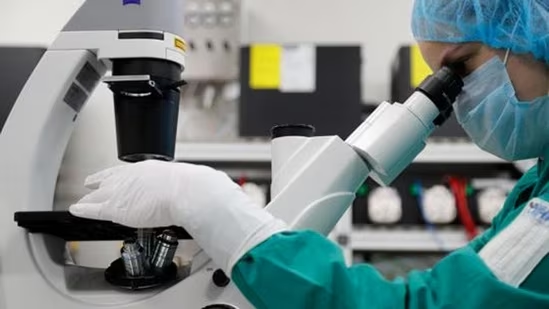
India’s position as the global provider of affordable medicine is undisputed. We have spent decades mastering the complexities of global supply chains, regulatory compliance, and high-precision manufacturing. But today, a new chapter is being written. The conversation is shifting from our ability to scale existing solutions to our capacity to institutionalise the discovery of original ones.Biotechnology REUTERS/Anton Vaganov (REUTERS)Drawing from recent industry analysis, it is clear that the proof of concept phase for Indian-origin Intellectual Property (IP) is behind us. We are no longer asking if India can innovate; we are now in the critical process of building the machinery to ensure it happens regularly.The traditional global R&D model is hitting a wall. With R&D costs soaring to over $2.2 billion per drug and a $300 billion patent cliff looming by 2030, Big Pharma is facing an efficiency crisis. The solution, however, is no longer just about cost; it is also about geopolitical resilience.While China has emerged as the new kid on the block in discovery - capturing nearly 30% of the global innovative pipeline - rising tensions and data-security concerns are creating a demand for safe harbour innovation hubs. We see emerging activity in Singapore and South Korea, which have positioned themselves as agile, high-trust environments for early-stage R&D. In this landscape, India’s value proposition is unique: We offer the high-trust environment of a safe harbour combined with a scale of scientific talent and patient diversity that smaller hubs cannot match. By leveraging our unique structural advantages, we can provide the global ecosystem with ‘more shots on goal’ for every dollar invested.A central pillar of our thesis is what we call Recruitment Alpha. In the high-stakes race of clinical trials, time is the ultimate currency. India’s vast, diverse patient pool and specialised medical infrastructure allow for patient recruitment speeds that are often 10x faster than in the West.When you combine this speed with a high-calibre scientific workforce, the math changes. We estimate that Indian startups can reach Phase II trials for much less than $50 million. This creates a paradigm shift: For the cost of one traditional drug candidate in the West, the Indian ecosystem can support three or four. This statistical advantage - this Alpha is the bedrock upon which we are building a repeatable innovation engine.The strongest signal of India's readiness is the shift in policy philosophy. Initiatives like the ₹10,000 crore Biopharma Shakti and the ₹1,00,000 crore RDI Fund represent a sophisticated understanding of the innovation lifecycle.Crucially, the State is moving beyond just direct investments in startups. We are seeing a significant focus on upgrading national infrastructure and regulatory processes. By streamlining approval timelines and building world-class shared lab facilities, the government is treating biopharma innovation as a strategic national priority. This platform building is what will allow us to move from isolated success stories to a high-output ecosystem.We already have the North Star successes that validate this new direction across various modalities:The AbbVie-IGI deal: A ~$1.9 billion partnership that validates Indian research at a globally competitive valuation.Wockhardt’s Zaynich: Achieving US FDA acceptance for a New Drug Application (NDA) proves that Indian-led discovery can navigate the world’s most stringent regulatory hurdles.ImmunoACT: A landmark for original IP in the CAR-T space. With a successful local launch and proven patient outcomes, it demonstrates that India can develop and commercialise cutting-edge advanced therapeutics for its own people and the world.Eyestem: Currently a top global contender for Age-Related Macular Degeneration (ARMD). Standing shoulder-to-shoulder with the best labs in the West, Eyestem proves that India can lead in first-in-class treatments for global unmet needs.These successes have cleared the path, but the bridge to a $300 billion bioeconomy by 2033 is still under construction. To reach that goal, we must focus on the mechanics of consistency:Strengthening translational research: Ensuring breakthroughs in university labs have a friction-free path to commercialisation.Expanding GMP infrastructure: Providing companies with the pilot-scale manufacturing facilities required to validate their IP for global markets.Attracting patient, late-stage capital: Moving from early-stage venture funding to the deep, long-term institutional capital required for global scale.Is India ready for original biotech IP? The pioneers have already proven it is possible. Our task now is to strengthen the ecosystem so that these wins become a standard output rather than a rare achievement. We are moving beyond the fast follower mindset. As the global industry seeks a reset, India’s combination of scientific excellence, regulatory evolution, and capital efficiency makes it the logical next hub for global biopharma.The pharmacy of the world is evolving into the laboratory of the world and while the machinery is still being assembled, the foundation is firmer than ever.(The views expressed are personal)This article is authored by Vedha Sampathkumar, partner, Endiya Partners.
Is India finally ready for original biotech IP?
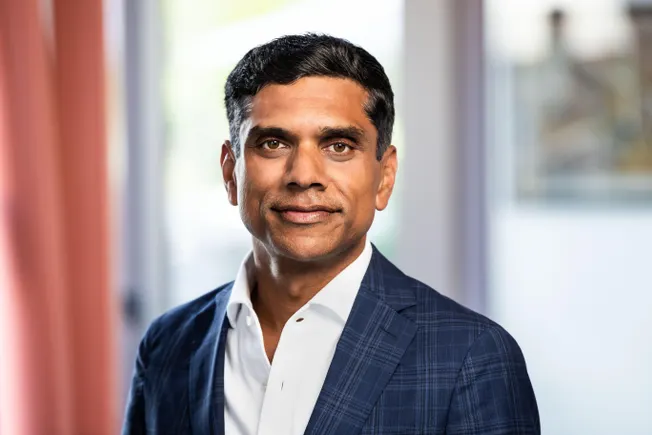
This article is authored by Vedha Sampathkumar, partner, Endiya Partners.
780 words~4 min read