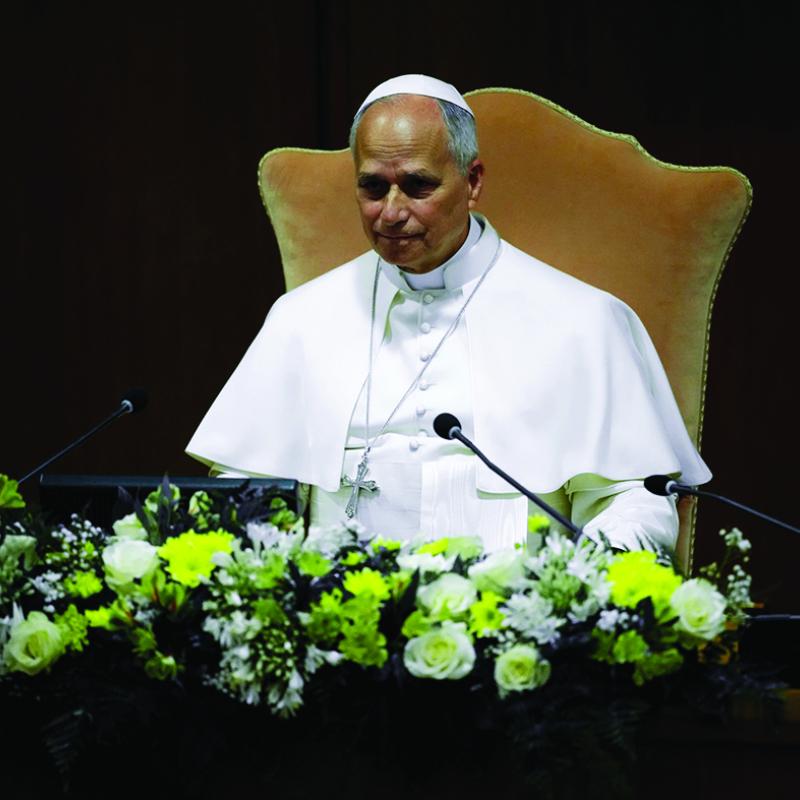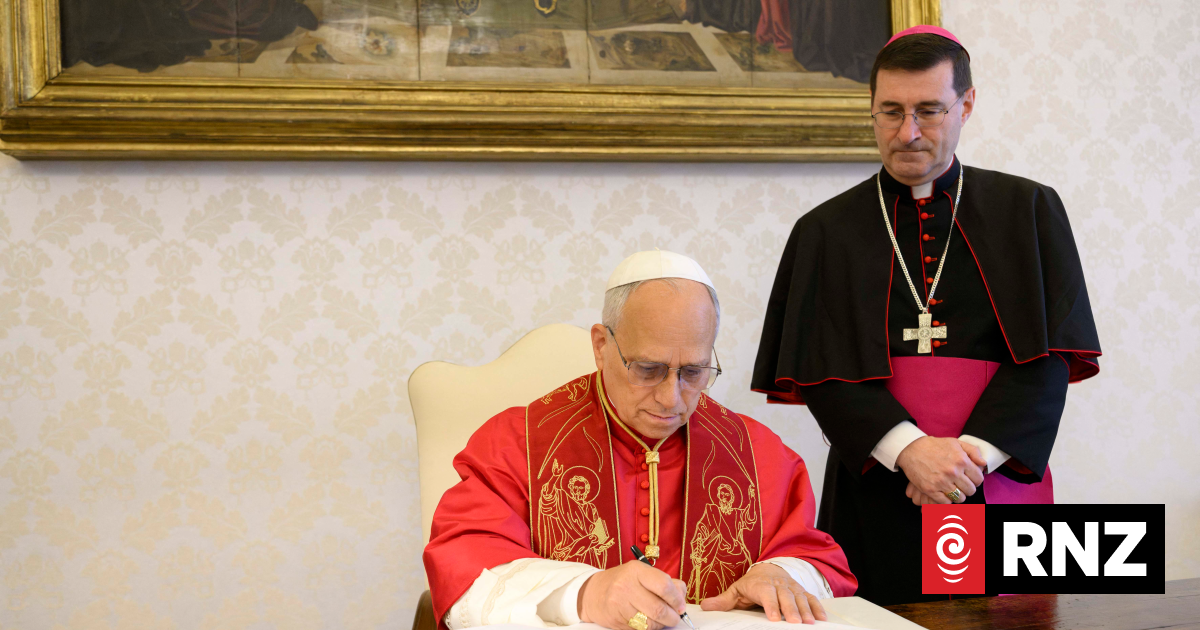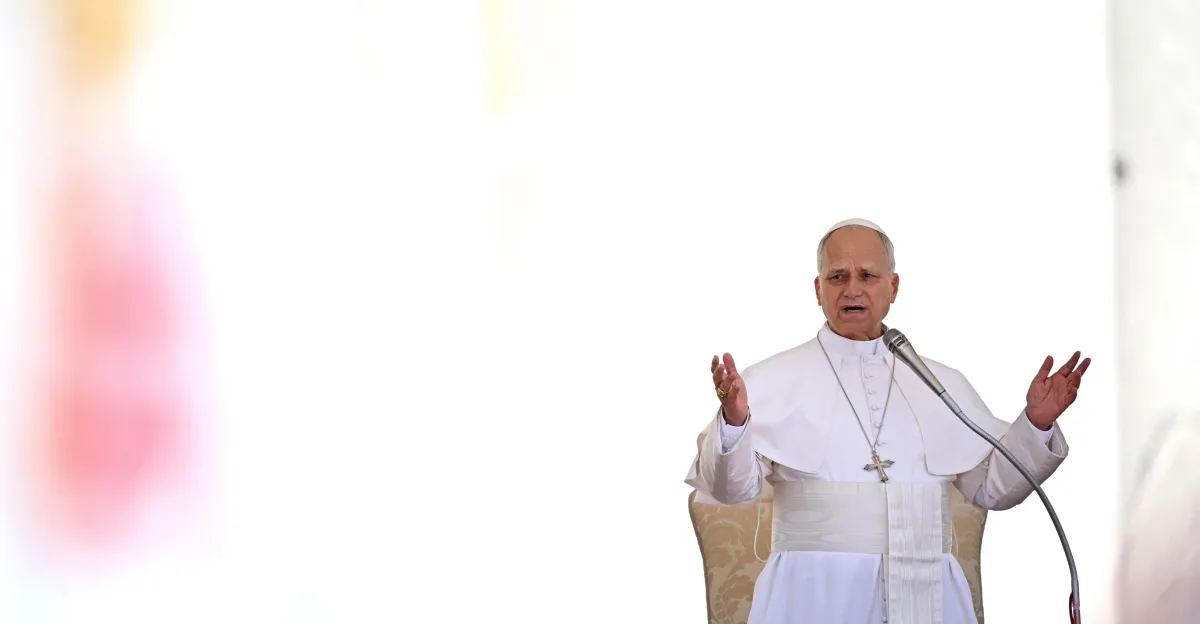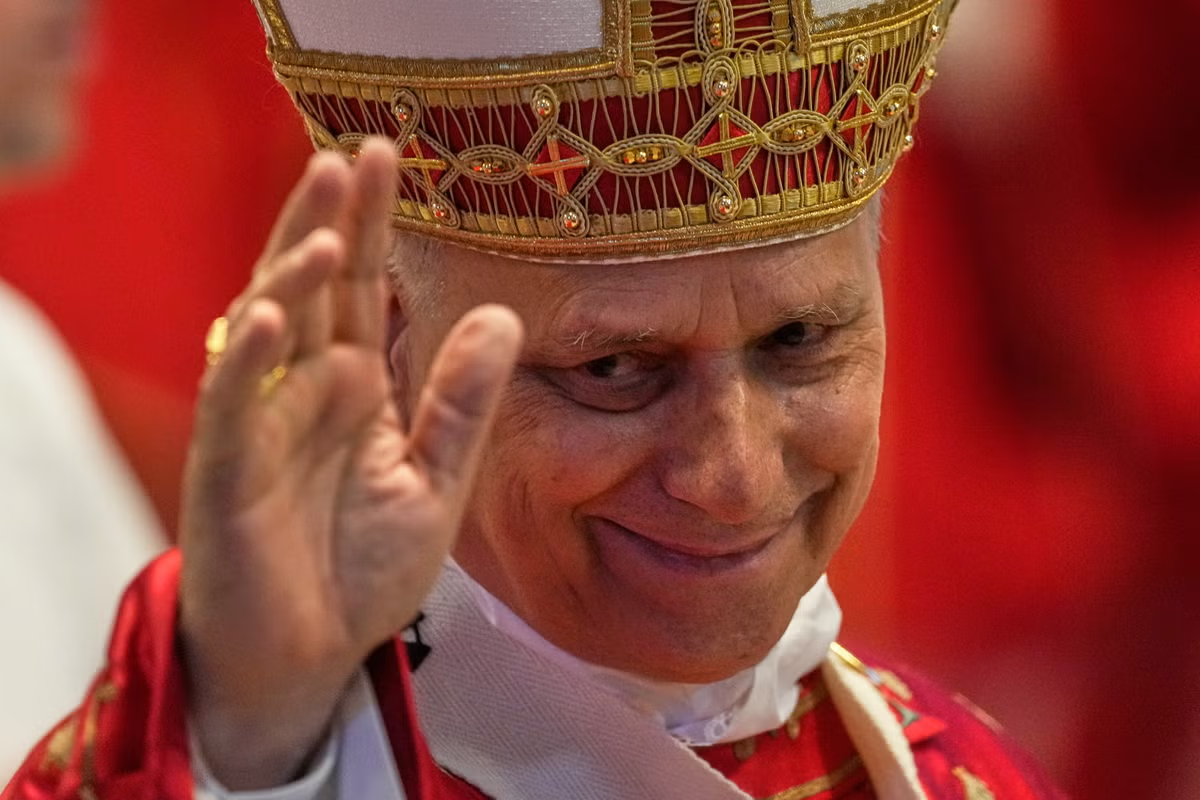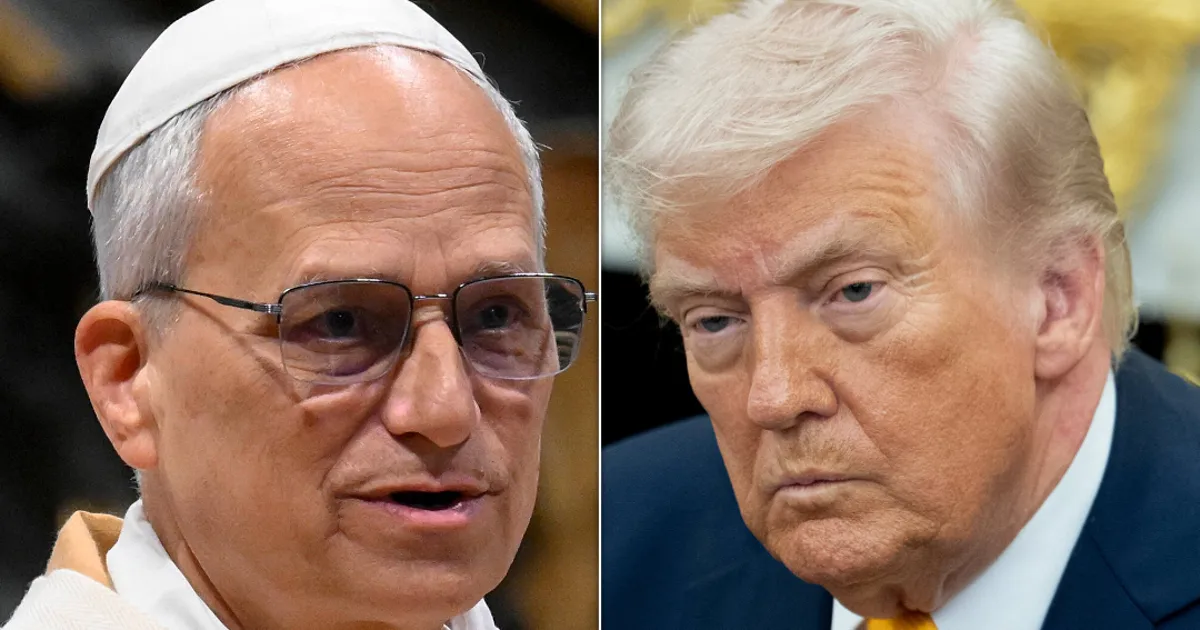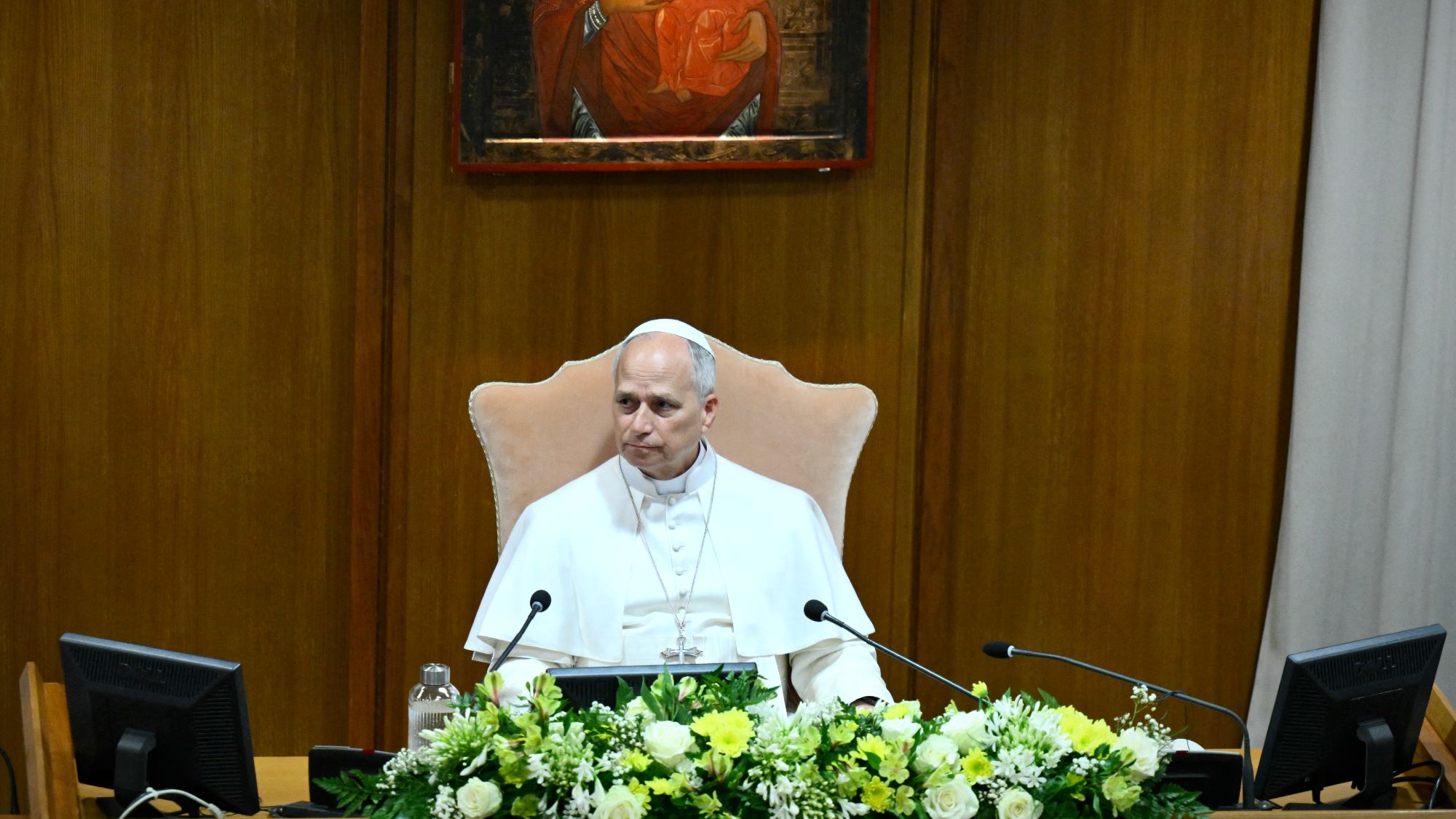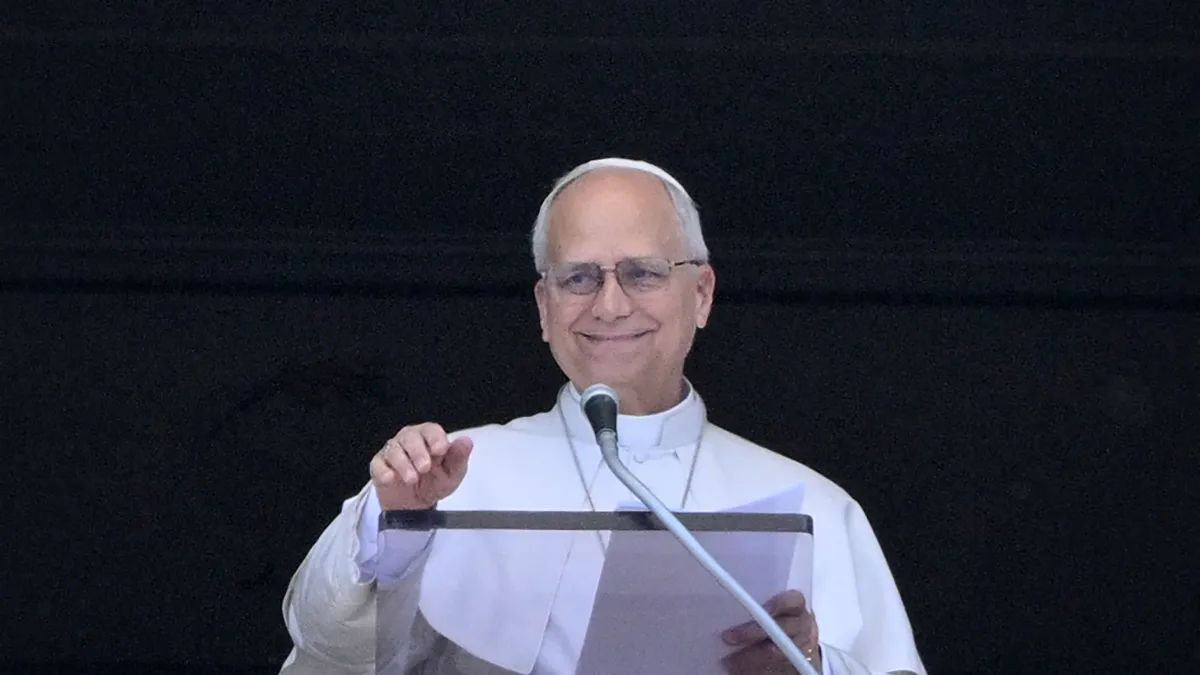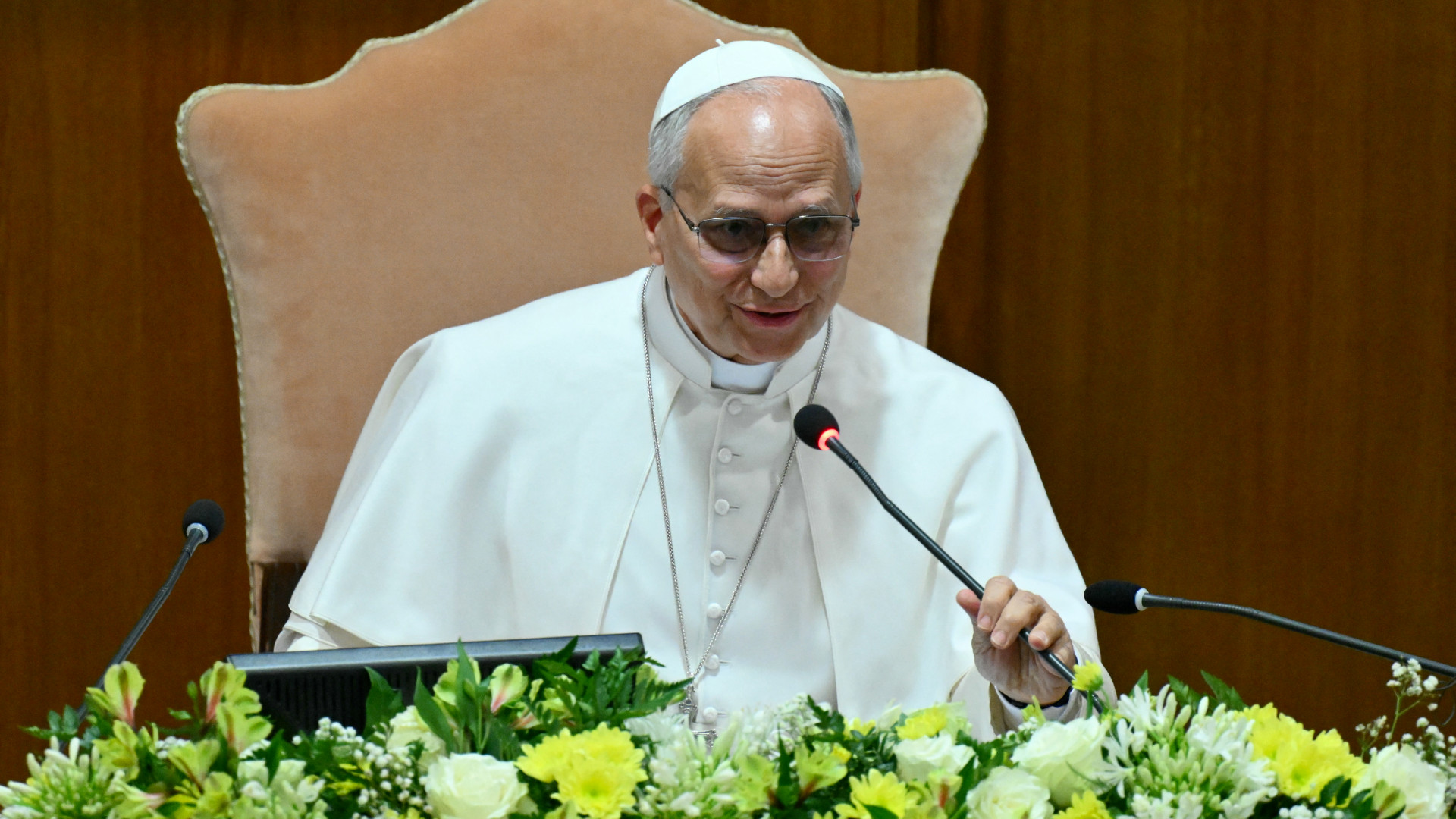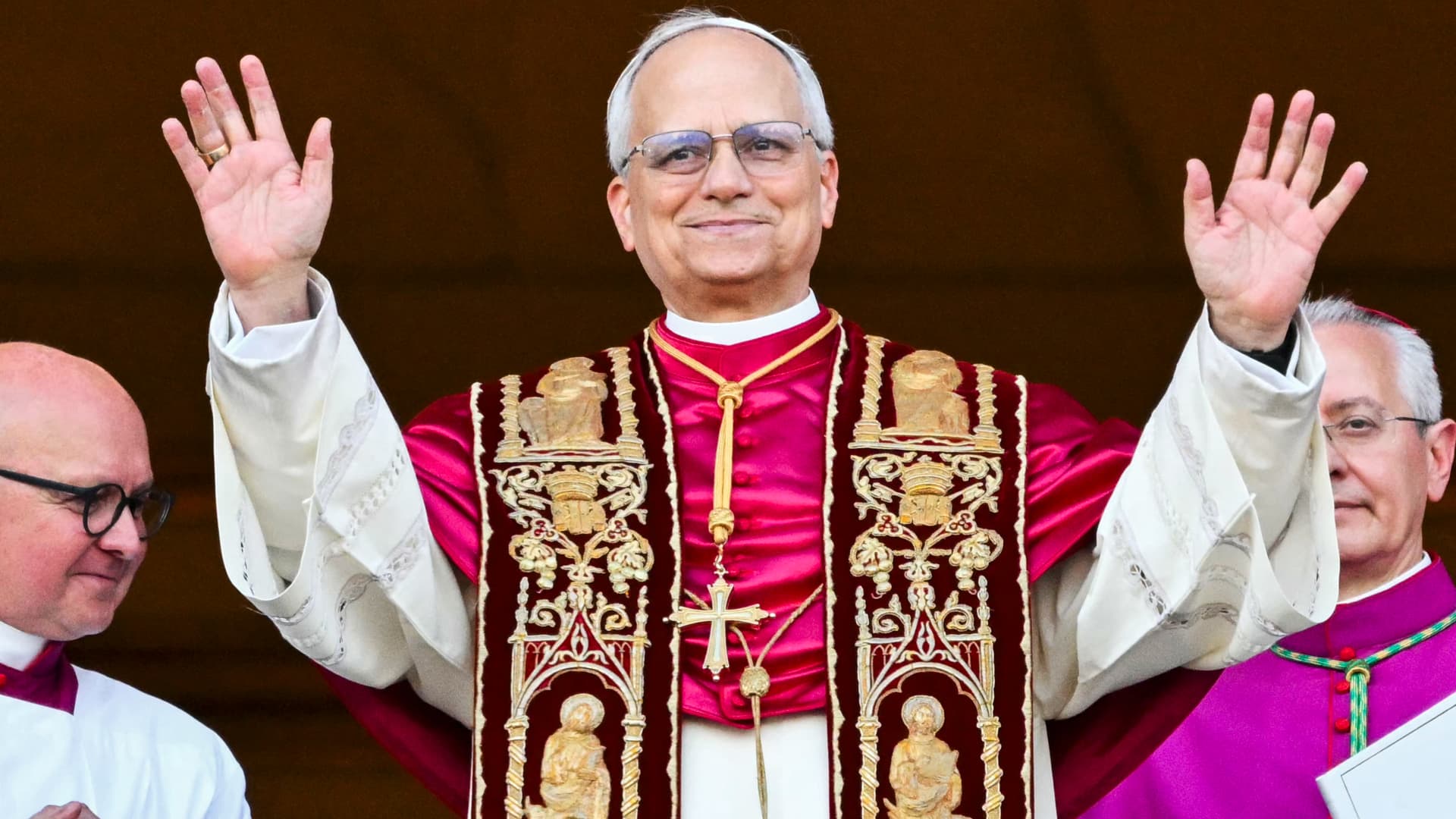
Last year, only months into his papacy, Pope Leo XIV, the first American Pope, called on developers of artificial intelligence “to cultivate moral discernment as a fundamental part of their work.” In response, the Silicon Valley billionaire and troll-in-chief Marc Andreessen began mocking the pontiff by tweeting an idiotic meme at him. The Pope raised the grave concern that artificial-intelligence companies were “totally ignoring the value of human beings and of humanity”; the venture capitalist Peter Thiel reportedly wondered whether the Pope might be in league with the Antichrist. The merchant princes of Silicon Valley appeared concerned that the new Pope would usurp their authority and diminish their power. And now, arguably, he has, in a long-awaited encyclical on artificial intelligence.For years—for decades—tech leaders have described their investments and inventions, their corporations, and even themselves in religious terms, and specifically in messianic terms. They claimed to be driven by a mission to make the world a better place; they were faithful to the misbegotten gospel of disruptive innovation. A “mission” is, historically, the Christian work of spreading the word of the Gospel; disruptive innovation is a theory of change that participates in the rhetoric of salvation. For a time, Facebook’s stated mission was “to give people the power to build community and bring the world closer together,” which is what most clergy of any faith might say is their mission, too, alongside caring for the poor and comforting the suffering. Tech executives, dressed in the ritualized vestments of hoodies, jeans, designer sneakers, and black T-shirts, have acted as if their companies were churches, their TED talks so many homilies, and their products—apps, platforms, and video games—temples, mosques, and chapels. More recently, these same people—men, really—have heralded the arrival of artificial intelligence as ushering in what Mark Zuckerberg calls a “new era for humanity.” This week, the Pope offered his own understanding of that new era in his encyclical, titled “Magnifica Humanitas,” or “Magnificent Humanity: On Safeguarding the Human Person in the Time of Artificial Intelligence.” It could hardly be more different from the preachings of the priests of Silicon Valley. They like to say they are saving the world. The Pope fears they are destroying it.Little in the encyclical is surprising; its force lies in its being said all at once. The Pope, who is seventy and was born in Chicago, has been speaking about artificial intelligence since his election to the office, a year ago. “We are truly experiencing an eclipse of the sense of what it means to be human,” he said earlier this month. He took his papal name, Leo, in honor of the last Pope Leo, the thirteenth, because he expected to issue a statement of the scale and historical significance of that Pope’s 1891 encyclical, “Rerum Novarum” (“Of New Things”), an indictment of the profound economic inequality wrought by the Industrial Revolution, and a rejection equally of laissez-faire capitalism and of socialism in favor of collective bargaining and social justice. (Another Pope described “Rerum Novarum” as a papal Magna Carta.) Leo XIV signed “Magnifica Humanitas” on May 15th of this year, a hundred and thirty-five years to the day that Leo XIII issued “Rerum Novarum.” Many things are new. Many things are old. Leo XIII indicted robber barons; Leo XIV indicted tech moguls.The new encyclical, at nearly forty thousand words, bears reading. It is addressed “to all the Catholic faithful, to all Christians and to all men and women of goodwill”—that is, to everyone. In advance of its release, and leery of the inevitable TL;DR reaction, one Texas bishop warned parishioners not to ask a chatbot to summarize it for them. (Earlier this year, the Pope urged priests against using ChatGPT to write their sermons and to instead “use your brains more.”) It is not a beautiful document. It’s often maddeningly, boringly wonky (“this entails establishing norms so that the decision-making behind content selection and its development becomes more transparent and protects personal data”), and it gives every evidence of being written by a committee (“psychological and psychiatric literature has documented with growing insistence how early and unsupervised exposure to digital devices and social media can negatively impact sleep, attention span, control of emotions and relationships”). Some of it reads like a Silicon Valley press release (“Today, the convergence of automation, robotics and AI is rapidly transforming the very structure of work”). Nevertheless, “Magnifica Humanitas” presents a remarkable case for placing moral concerns, and not profit, or competitive advantage, or efficiency, at the center of any discussion of artificial intelligence.If those of us Americans who are Catholic are proud of this Pope, many of us are even prouder that the first American pontiff has taken on this vital matter, and at such a crucial moment. In much of American culture—and especially in the business and tech press—challenging the economic power and oligarchic rule of U.S.-based artificial-intelligence companies is an act tantamount to heresy. Pope Leo is not only willing but eager to dissent. Bless him.Much of the encyclical involves defending the proposition that the Vatican ought to be—and has always been—engaged in making statements about new and very worldly things like artificial intelligence. “The Church is present in history and engages in dialogue with the world,” Leo argues. He agrees with the Sam Altmans and Elon Musks of the world that humanity stands at a crossroads. But at this crossroads, he argues, three questions must be asked: “Where are we going? Toward what goal do we wish to orient ourselves? What direction should we choose as a people and as a human community?” Invoking a Biblical story about hubris, the building of the Tower of Babel, he warns of what he calls the “Babel syndrome”: “namely the idolatry of profit that sacrifices the weak, a uniformity that neutralizes differences, and the pretense that a single language—even a digital one—can translate everything, including the mystery of the person, into data and performance.”Beginning with the fundamental dignity of the human, Leo traces the inalienable, universal equality of persons and their inviolable rights. He establishes, within the Church’s Social Doctrine (traceable to “Rerum Novarum”), principles that include the commitment to the common good, which he defines as “the social expression of the dignity recognized in every person.” Revisiting Pope Francis’s “Laudati Si’ ” (“Praise Be to You”), a 2015 encyclical that called for the protection of the environment, “our common home,” Leo bemoans the rise of the “technocratic paradigm,” or “the tendency to let the logic of efficiency, control and profit alone shape personal, social and economic decisions.” Here, about halfway through the encyclical, he arrives at the problem of artificial intelligence, which he takes pains to distinguish from human intelligence: “So-called artificial intelligences do not undergo experiences, do not possess a body, do not feel joy or pain, do not mature through relationships and do not know from within what love, work, friendship or responsibility mean. Nor do they have a moral conscience, since they do not judge good and evil, grasp the ultimate meaning of situations, or bear responsibility for consequences.” However valuable this tool may be, he argues, it has been developed heedlessly, endangering both “our common home” and our common humanity.The problem is not the technology, the Pope maintains in “Magnifica Humanitas”; it’s the anthropology. Algorithms, forms of automation, and artificial intelligence sort the worthy from the unworthy; they manipulate information and undermine trust; they violate privacy; they enhance the power of the already powerful and reduce the capabilities of the already vulnerable; they make war more ruthless; they undermine democratic governance; they take away the dignity of work, possibly for the mass of humanity. He presses for forms of regulation and especially for democratic control of artificial intelligence, but above all he calls for “disarming” A.I. “To disarm does not mean rejecting technology, but preventing it from dominating humanity,” he writes. “It means freeing technology from monopolistic control and opening it to discussion and debate, therefore making it human-friendly and restoring it to the plurality of human cultures and ways of life.” He worries that the culture around artificial intelligence undermines the search for truth that is necessary for both democratic life and any possibility for a genuine spiritual existence.The Pope’s litany of concerns differs little from those that have been raised by serious commentators for decades, especially in the United States, where automation was earliest advanced and where its dangers were earliest perceived, as I argue in a forthcoming book, “The Rise and Fall of the Artificial State.” The term “artificial intelligence” was coined the year the Pope was born, in 1955, and the malign consequences that simulating—or even surpassing—human intelligence could have on human dignity, equality, and freedom, along with the dangers of replacing the functions of democratic governments with automated systems, were already being noticed. In 1957, Hannah Arendt wrote in “The Human Condition” that “a great many scientific endeavors have been directed toward making life also ‘artificial,’ toward cutting the last tie through which even man belongs among the children of nature,” and wondered whether humans would one day soon “need artificial machines to do our thinking and speaking.” As early as 1962, Americans were already wondering whether they lived in a “cybernation”; soon, the fear of an “automated state” had been named. In 1967, in “The Myth of the Machine,” the American critic and New Yorker writer Lewis Mumford lamented the rise of “cybernetic intelligence,” warning that “instead of functioning actively as an autonomous personality, man will become a passive, purposeless, machine-conditioned animal whose proper functions, as technicians now interpret man’s role, will either be fed into the machine or strictly limited and controlled for the benefit of de-personalized, collective organizations.” Mumford described technological determinism as “a radical misinterpretation of the whole course of human development,” a mistaken belief that had to be abandoned “if we are to get an adequate grip on our mechanized culture before we lose both our consciousness of human purpose and our confidence in being able to control our own creations.”That the concerns the Pope has raised in “Magnifica Humanitas” are not even remotely new does not make them any less urgent. Yet this history does suggest that calls to slow down the development of artificial intelligence and, as Arendt put it, to “think what we are doing” have not been heeded. Then again, before this week, they’ve never been sounded by the Pope, the spiritual leader of nearly a fifth of the world’s population.“Magnifica Humanitas” is in many ways a religious analogue to Claude’s Constitution, released by Anthropic this past January (and on which at least two delegates to the Vatican were consulted). In a move freighted with symbolism, Anthropic’s co-founder Christopher Olah appeared on the dais alongside Leo at the release of the encyclical, which the Pope, in a first for the Church, presented in person, at the Vatican’s Synod Hall. “I am grateful to His Holiness and to the Church for taking up this work of discernment,” Olah said in his remarks. Executives of other A.I. companies are not likely to express that kind of gratitude. Nor are they likely to cede political power willingly, any more than they are likely to become philanthropists, or volunteer to pay more in taxes, or stop tweeting daft things or selling you tools that you don’t need and that you never asked for and that make you miserable, angrier, and stupider.What is to be done? The Pope diagnoses the greatest ill in the world to be a “culture of power” in which those with the greatest resources determine the course of events with regard for nothing but for their own self-interest. The remedy is what he calls, invoking St. Paul VI, “a civilization of love”: compassion for those who suffer, prayer for the needy, openness to dialogue, a commitment to peace and to justice, a rejection of the false idol of “disembodied humanity,” and an appreciation for the grandeur of humanity.As for Silicon Valley, its chest-thumping, finger-wagging response came, unsurprisingly, on X. “Bad take from the Pope,” one tech bro tweeted. Nice. I’ll pray for you guys. ♦
What the Pope Said About A.I.
Leo XIV’s new encyclical, “Magnifica Humanitas,” presents a remarkable case for placing moral concerns, and not profit, or competitive advantage, or efficiency, at the center of any discussion of artificial intelligence.
2,015 words~9 min read