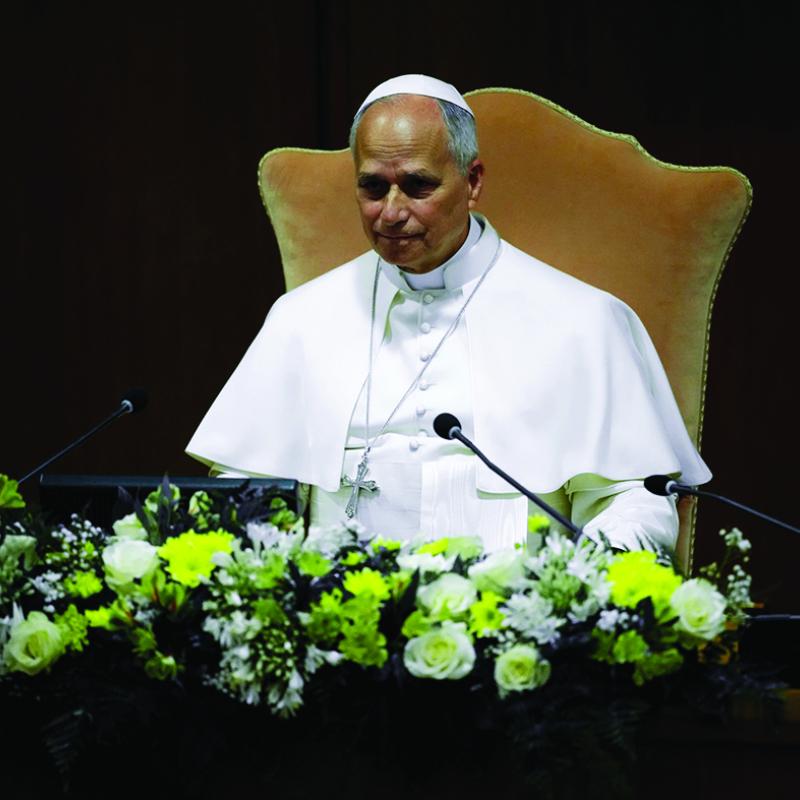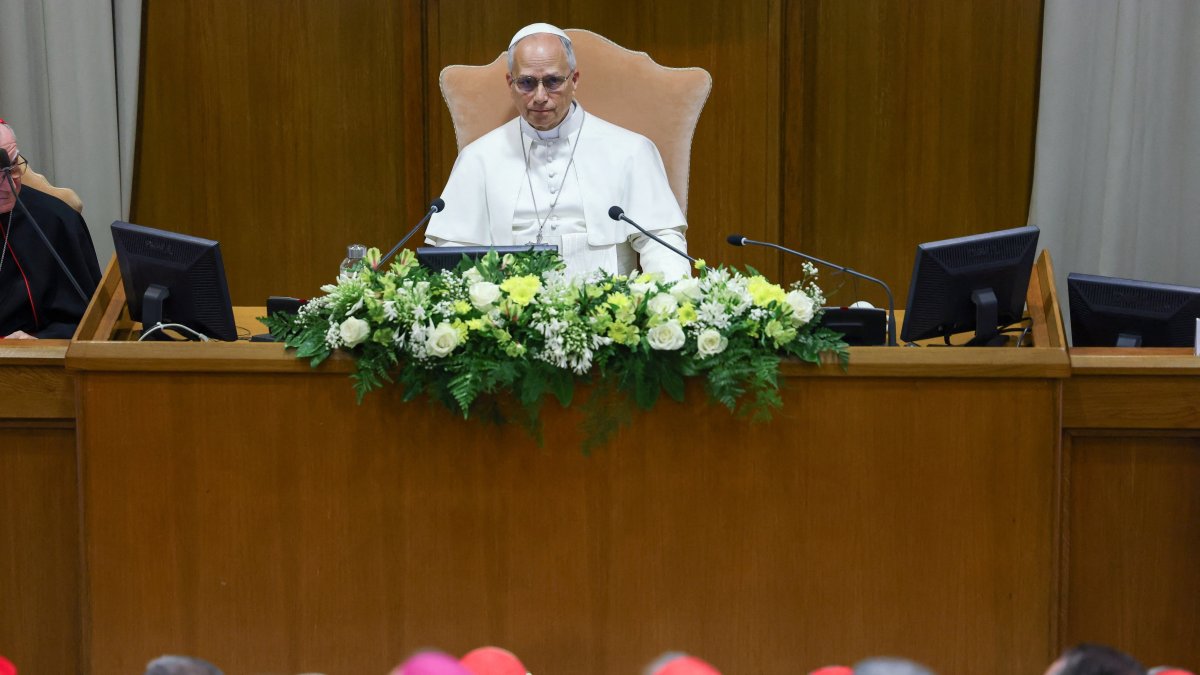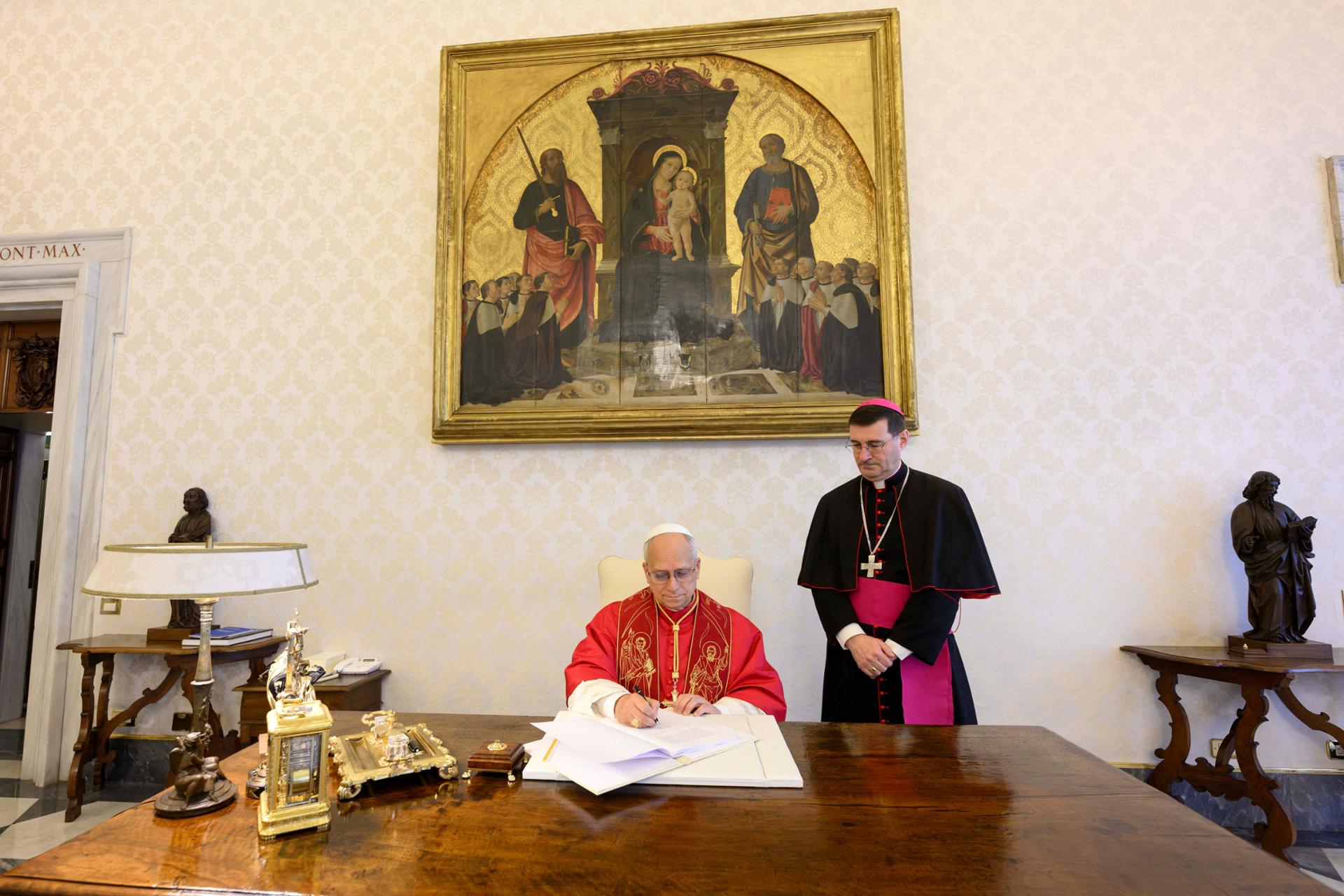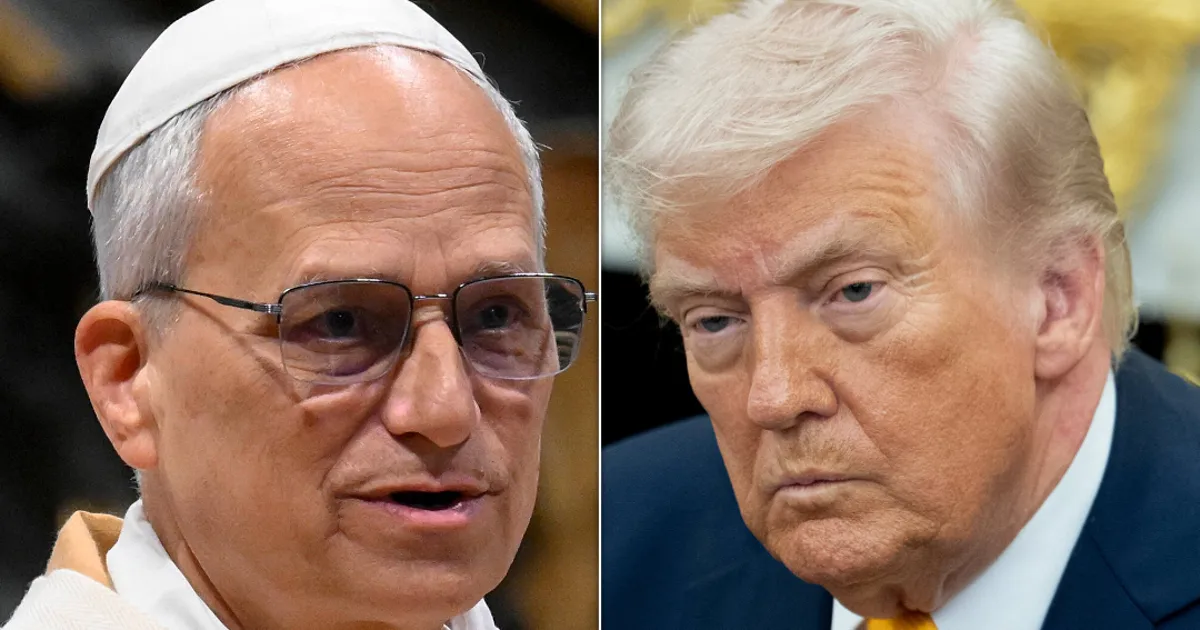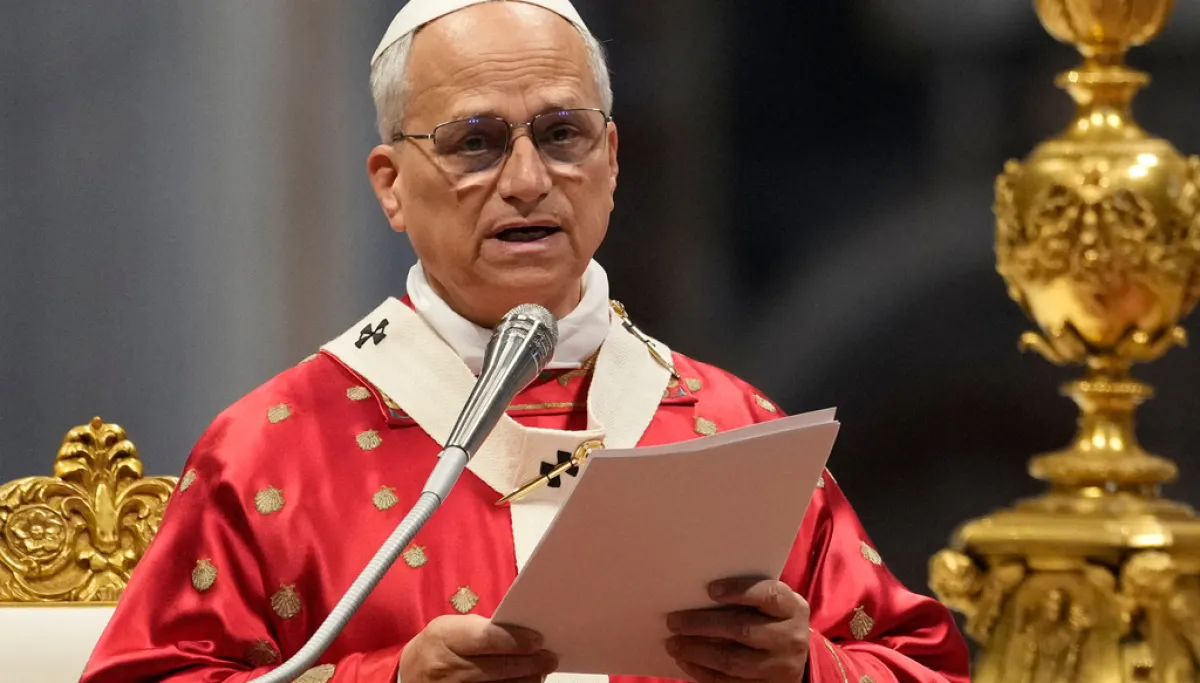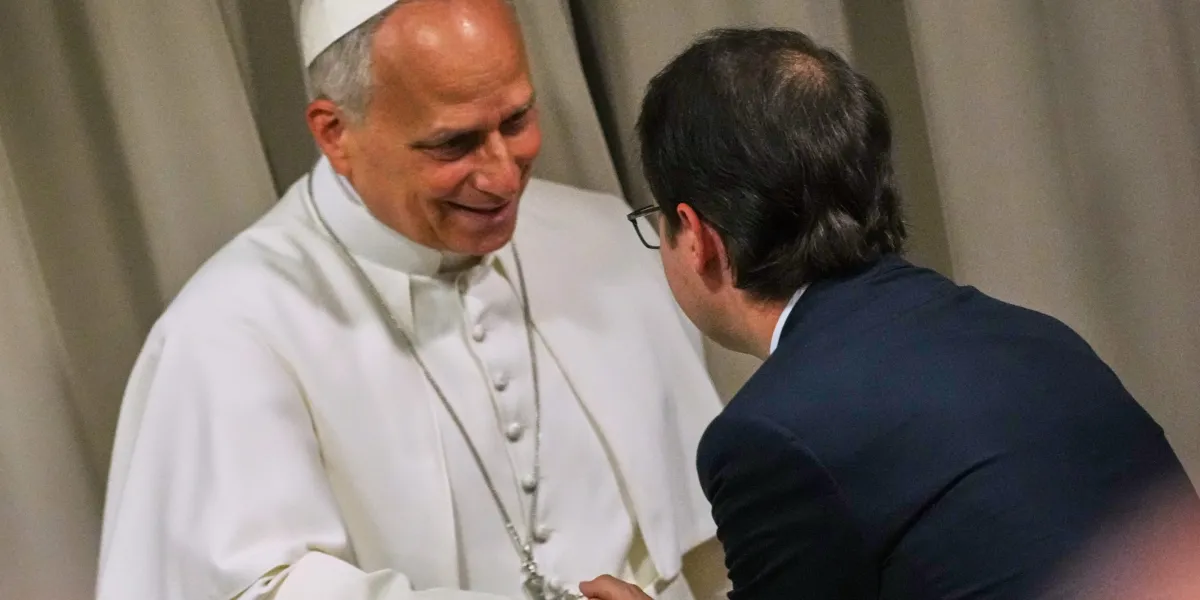
Pope Leo XIV called Monday for robust regulation of artificial intelligence and for its developers to work for the common good rather than profit, issuing a sweeping manifesto on safeguarding humankind as the technology impacts everything from work to war.“Magnifica Humanitas” (Magnificent Humanity), Leo’s first encyclical, has been eagerly awaited ever since history’s first U.S.-born pope announced days after his election that he considered AI to be the biggest challenge facing humanity today.In the text, Leo denounced the “culture of power” driving the AI race, especially in developing ever more sophisticated methods of remote warfare. He declared that it was “not permissible” to entrust irreversible, lethal decisions to AI systems, setting up another flash point between the American pope and the Trump administration, which has worked aggressively to deregulate AI development.Experts in the tech industry, academia and Catholic morality said the document will likely become a benchmark in the debate over AI, a point of reference for policymakers, researchers and ordinary folk alike. It comes as the near-daily developments in the technology trigger concerns rise over AI replacing human jobs and even human intelligence.“It lends itself to people who are at the forefront of these tools and able to see the incredible things that they’re able to do, to have questions about their own ‘What does it mean to be human?’” said Taylor Black, a Microsoft AI executive and director of Catholic University of America’s AI institute. Pope calls out AI companies even as he hosts Anthropic The pope was to present the text at a Vatican launch Monday that featured the co-founder of Anthropic, which is currently locked in a legal battle with the Trump administration over access to its AI technology. The Vatican decided to involve Anthropic as part of its decade-long effort to engage Silicon Valley in dialogue over the human cost of AI.And yet in his text, Leo repeatedly blasted the concentration of power and data in the hands of so few people in the private sector as a danger, especially to children and the most vulnerable, and called for external regulation of their work.“It is not enough to invoke ethics in the abstract; robust legal frameworks, independent oversight, informed users and a political system that does not abdicate its responsibility are required,” he wrote. “A more moral AI is not enough if that morality is determined by a few.” Leo appealed several times to AI developers and political leaders responsible for regulating them to just slow down and reflect on what they are doing. He urged them to use ethical and spiritual guidelines to make the choice to work not for their own profit or power, but the betterment of humanity.AI competitors OpenAI and Anthropic are the second- and third-most valuable U.S. private companies, each valued at hundreds of billions of dollars, more than the GDP of many nations. Experts say the text will become a benchmark In a methodical text, the math major pope traced the history of the Catholic Church’s social teaching and applied its core concepts — justice, solidarity, the dignity of work and the universal destination of resources — to the digital revolution.“I am convinced that this will prove to be a defining document for our era, a profound and prophetic document,” said Paolo Carozza, law professor at Notre Dame Law School and chair of the Meta oversight board.“Pope Leo is offering a clear, comprehensive, and coherent voice urging us to take responsibility for constructing a world in which technology will serve humans rather than degrade them,” he said.In its strongest chapters, Leo denounced how AI had helped accelerate the “normalization of war” by desensitizing people to its cost. He didn’t name specific conflicts, but cited “opposing imperialisms, between powers that wish to preserve their supremacy, and those that aspire to seize that supremacy.”He demanded transparency and accountability by AI developers so that the chain of decision-making command in ordering strikes with AI weaponry is always known. He declared that the Catholic Church’s “just war” theory, which provides specific criteria for when force can be justified, was now “outdated” given the technological advances of warfare. A text in the church’s social justice tradition Leo signed the text May 15, the 135th anniversary of the publication of “Rerum Novarum” (Of New Things), the most important teaching document of Leo’s hero and namesake, Pope Leo XIII. That document addressed workers’ rights, the limits of capitalism, and the obligations that states and employers owed workers as the Industrial Revolution was underway.It became the foundation of modern Catholic social thought, and the current pope cited it at the start of his pontificate in relation to the AI revolution, which he believes poses the same existential questions that the Industrial Revolution posed over a century ago. “Magnifica Humanitas” thus becomes the latest chapter in a century-long history of popes adapting “Rerum Novarum” to the social questions of their times, often dwelling on the dignity of work for human flourishing.AI is evoking both existential fears and utopian vision amid an intensifying debate on whether it will become a catalyst that enriches humanity or a technological toxin that dulls human intelligence while wiping out millions of high-paying jobs.“The pursuit of greater profits cannot justify choices that systematically sacrifice jobs, because the human person is an end, not a means, and the economic order must remain subordinate to human dignity and the common good,” Leo wrote.Leo extended his concern for upholding human dignity in labor to issue the first-ever papal apology for the Holy See’s own role in legitimizing slavery.Past popes have apologized for Christians’ involvement in the trans-Atlantic slave trade. But no pope has ever publicly acknowledged, much less apologized for, the role that popes themselves played in giving European sovereigns explicit authority to subjugate and enslave “infidels.” A decade-long dialogue with Silicon Valley Vatican officials declined to say who exactly contributed to Leo’s encyclical. But Vatican and church officials have been engaged in a dialogue with Silicon Valley tech firms for a decade. Toward the end of his pontificate, Pope Francis began speaking out more about AI and the risks it poses to humanity.The decision to include Anthropic at the Vatican launch was criticized by some who considered it a papal stamp of approval of the AI firm.In February, the Trump administration ordered all U.S. agencies to stop using Anthropic’s technology after it refused to allow the U.S. military unrestricted use of it. Anthropic, which bills itself as the AI company that puts safety and risk-mitigation at the forefront of its research, is currently suing the administration.Brian Boyd, U.S. faith liaison for the nonprofit Future of Life Institute, read the inclusion of Anthropic’s co-founder Christopher Olah as similar to a papal audience with a head of state: not an endorsement. “I think it’s more like a recognition of (how) this is an extremely powerful company that’s currently winning this race to replace human workers,” Boyd said. Anthropic is an “enormous corporation that is taking onto itself an enormous risk and responsibility,” Boyd continued, but said the company has “demonstrated genuine goodwill and integrity and interest in dialogue.”___Winfield reported from Middletown, Connecticut, and Houmani reported from Los Angeles. Associated Press writers Kelvin Chan in London and Colleen Barry in Milan contributed to this report.___Associated Press religion coverage receives support through the AP’s collaboration with The Conversation US, with funding from Lilly Endowment Inc. The AP is solely responsible for this content.
Pope calls for robust regulation of AI in manifesto that ponders the future of humanity
Pope Leo XIV has called for robust regulation of artificial intelligence and for its developers to work for the common good rather than profit
1,233 words~6 min read