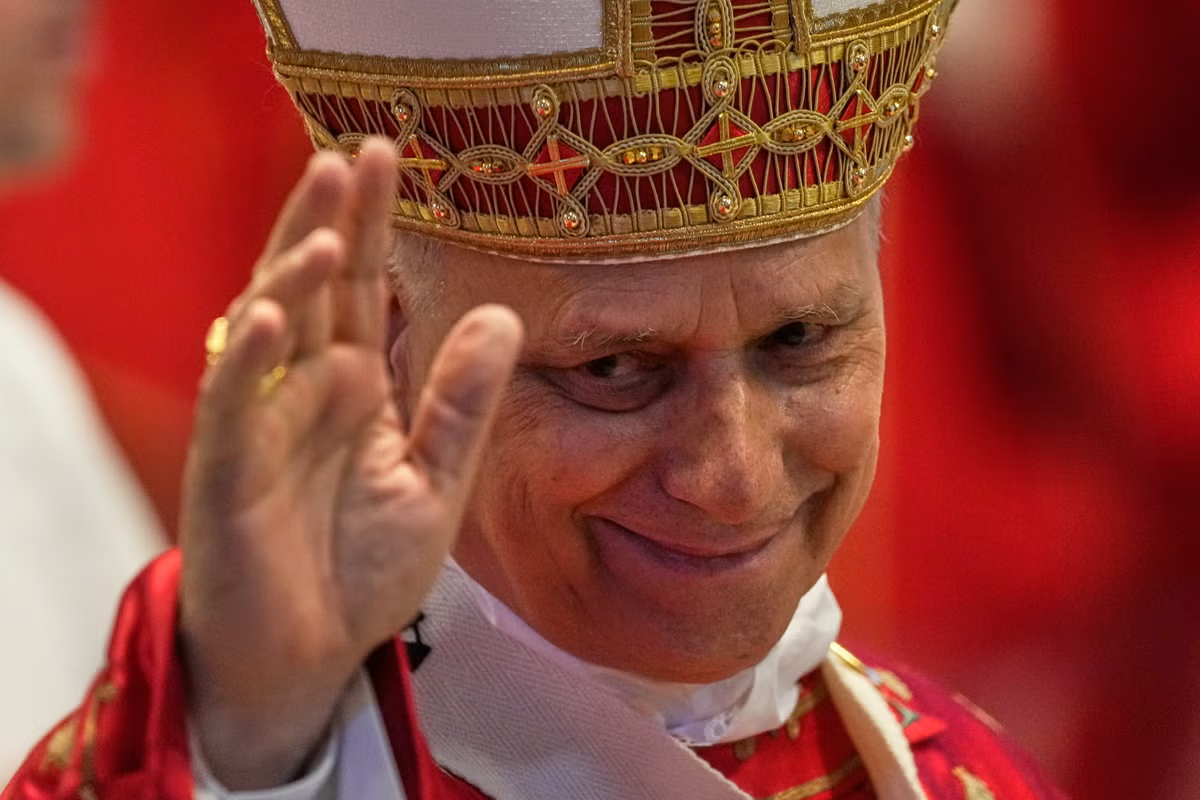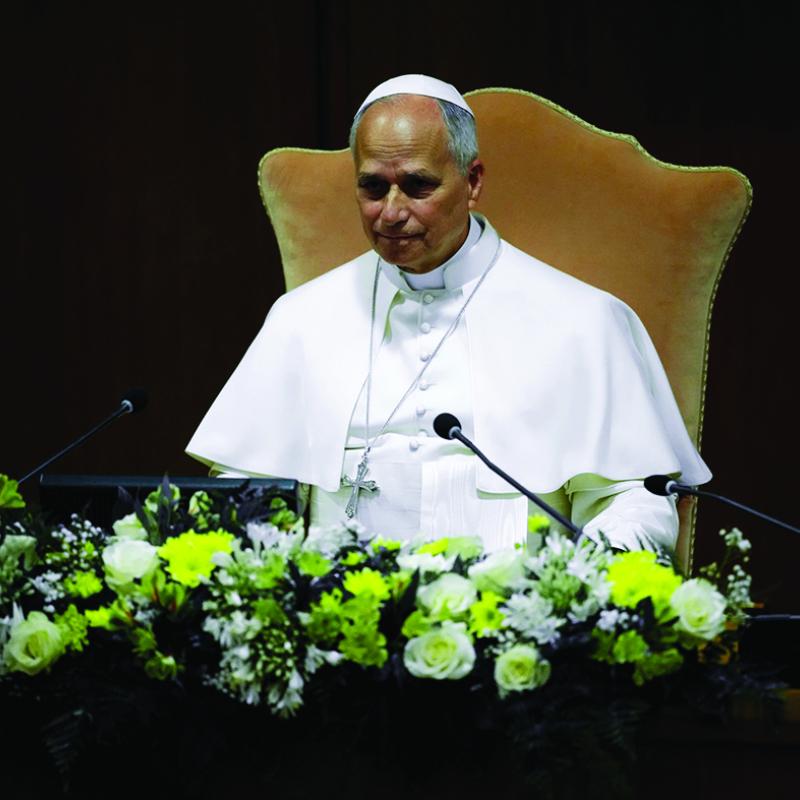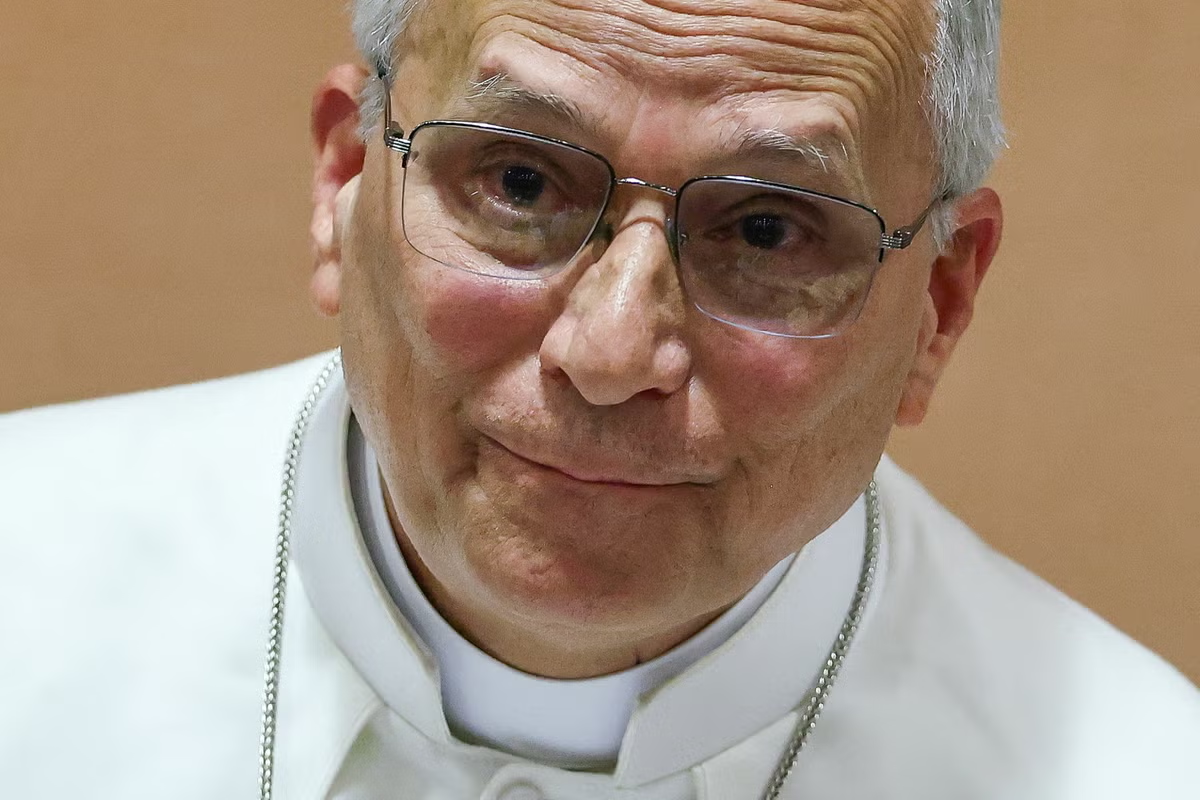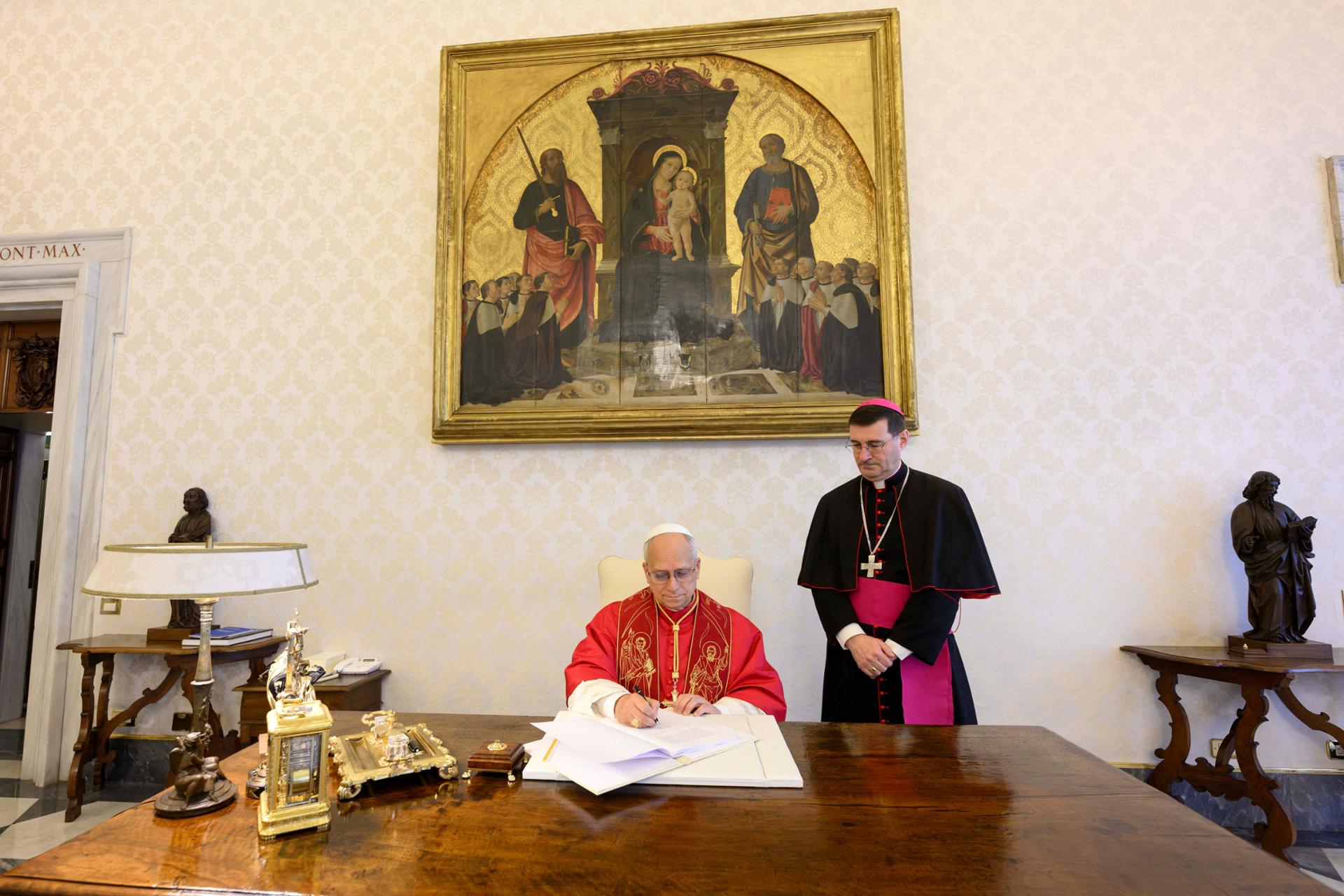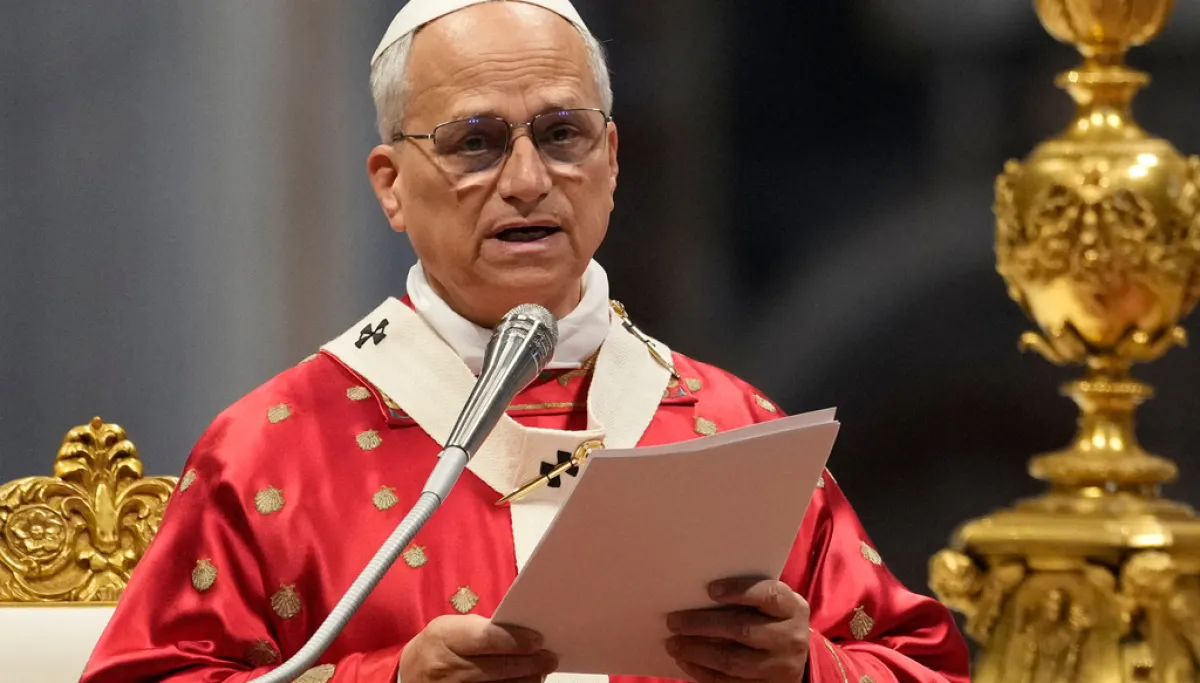
Pope Leo XIV called on Monday for the "disarming" and robust regulation of artificial intelligence and for its developers to work for the common good rather than profit, issuing a sweeping manifesto on safeguarding humankind as the technology impacts everything from work to war.
"Magnifica Humanitas" (Magnificent Humanity), Leo's first encyclical, has been eagerly awaited ever since history's first U.S.-born pope announced days after his election that he considered AI to be the biggest challenge facing humanity today.
In the text, Leo denounced the "culture of power" driving the AI race, especially in developing ever more sophisticated methods of remote warfare. He declared that it was "not permissible" to entrust irreversible, lethal decisions to AI systems, setting up another flash point between the American pope and the Trump administration, which has worked aggressively to deregulate AI development.
Experts in the tech industry, academia and Catholic morality said the document will likely become a benchmark in the debate over AI, a point of reference for policymakers, researchers and ordinary folk alike. It comes as the near-daily developments in technology trigger concerns to rise over AI replacing human jobs and even human intelligence.