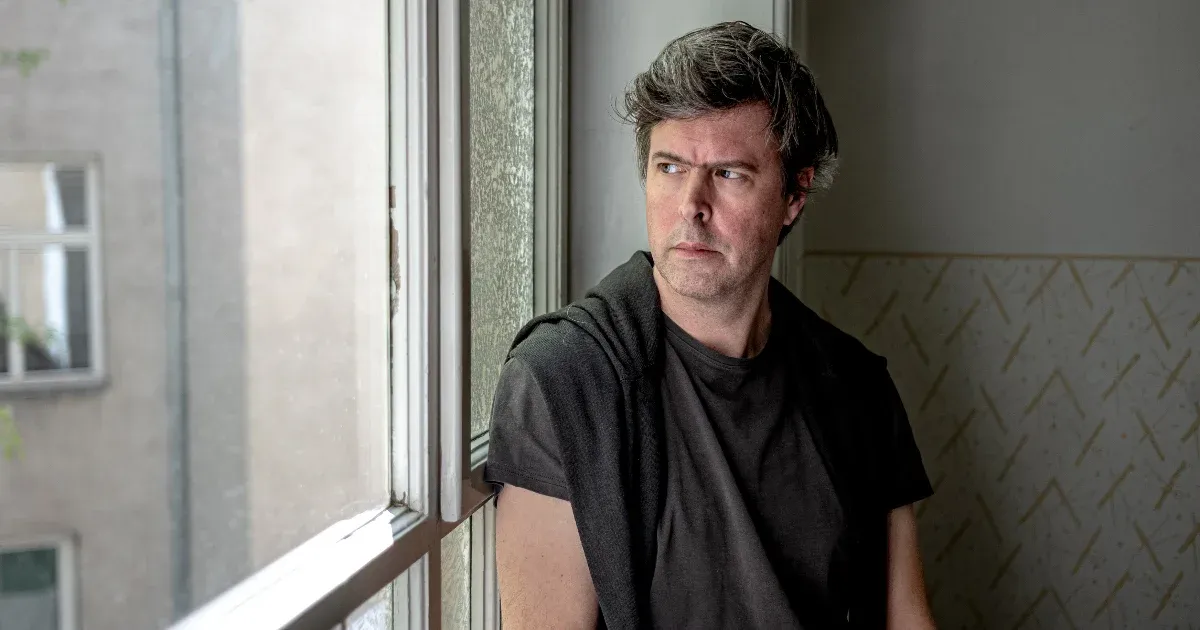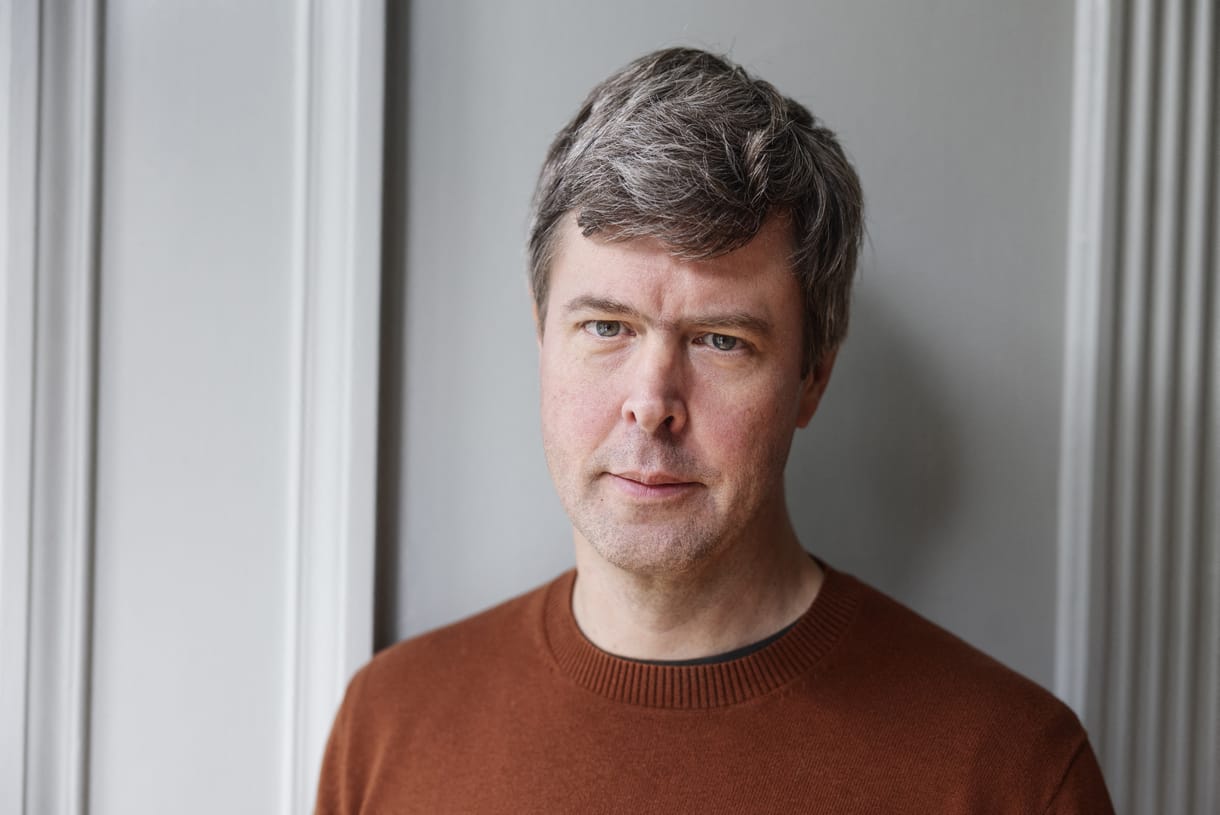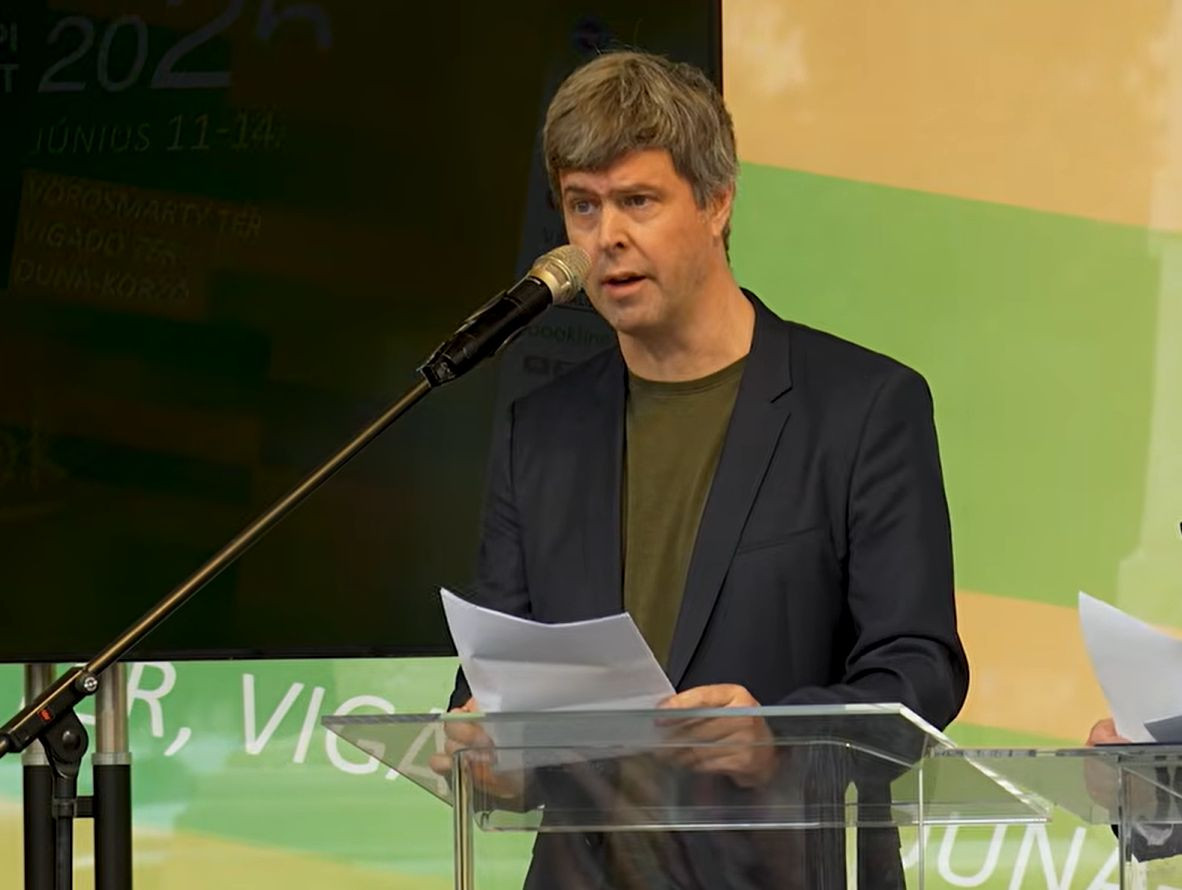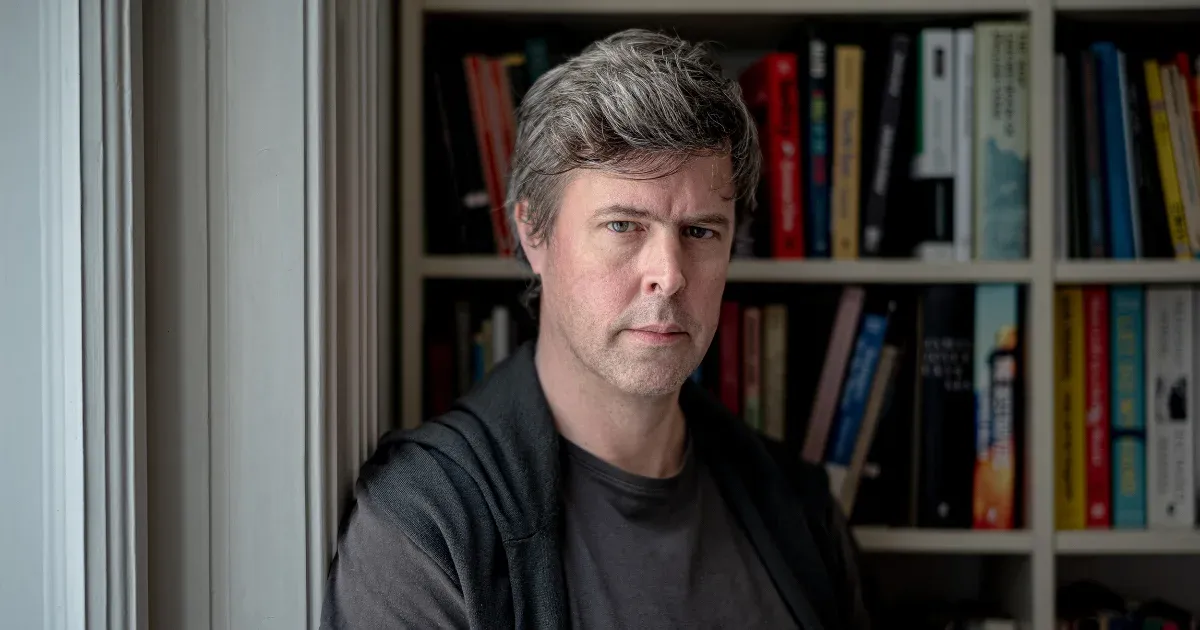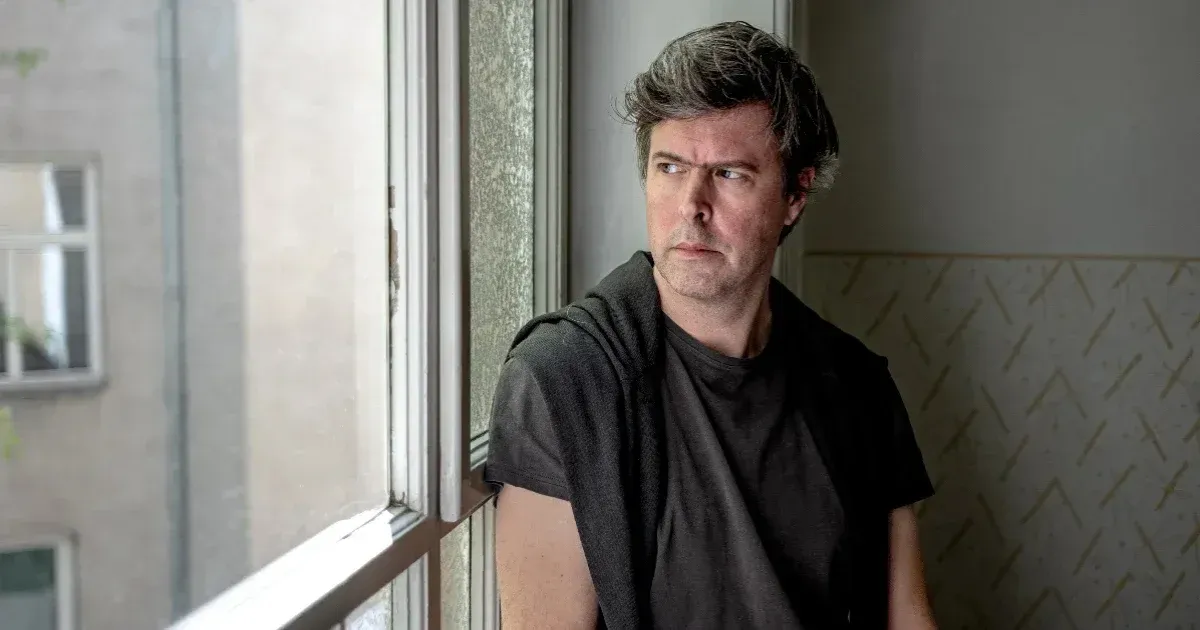
“There’s no question I wouldn't have written this particular book if I hadn't spent quite a few years living in Hungary,” David Szalay said about his Booker Prize-winning novel. According to the author, the mood in Hungary has been distinctly pessimistic for the past few years, but he believes the results of the April election give cause for optimism. In our portrait of him, we described David Szalay as an outsider with an insider's view, and his Booker Prize-winning novel also explores the possibilities and limitations of navigating between two worlds. Flesh is undoubtedly a reimagining of the story of Eliza Doolittle. Its protagonist, István, spends his adolescence living in a town in southern Hungary. Later, he serves in Iraq, and after that, he tries his luck in London. First, he works as a bouncer at a nightclub, then he becomes the driver for a wealthy family, and eventually gets involved with the lady of the house, Helen.Not only did Flesh impress the judging panel of the Booker Prize and earn praise from numerous critics, but writers and celebrities such as Zadie Smith, Colm Tóibín, and Dua Lipa have also spoken highly of it. The book has so far been translated into forty languages, and is now available in Hungarian as well, in a translation by András Barabás. To mark the occasion, we spoke with David Szalay, who welcomed Telex at his apartment in Vienna. Surrounded by the books of Imre Kertész and László Krasznahorkai on his shelf, he shared some of his childhood memories from Pécs, and we found out why Tony Blair came to his mind on the night of the 2026 Hungarian elections. We discussed gray areas, the power contained in words, coming to terms with existence, and the cozy solitude found outside of society. Why did Szalay believe the stakes for Hungary were so high on April 12? Why does he think Fidesz won the previous elections, and why did it lose this time? All this and more is covered in the interview.In Flesh, the protagonist's life changes from chapter to chapter. How much has your life changed since your novel won the Booker Prize in November 2025?I've been traveling a lot and talking about the book a lot. My life has changed in that way that it's suddenly much more busy. I have many more emails to answer than I did before and that kind of thing. But it's maybe too early to say in any kind of deeper way how, if at all, it has changed. So it's like the dust hasn't settled on that yet.The book has been selling very well, predictably, that easily happens with the prize. And there have been lots of translations, now about 40 languages. That's a wild flush.This also shows that Flesh has not only impressed the Booker Prize jury, but also numerous critics, writers and celebrities such as Zadie Smith and Dua Lipa. I’m curious to know if you’ve heard any personal stories from Hungarians or other Eastern Europeans who—like István—found work in London. Because I think Flesh is their story too.I wanted to write about the phenomenon of people moving from Hungary—or anywhere in Eastern Europe—to Western Europe. Before Brexit, England was the most popular destination, but many also headed to Germany, Sweden, and the Netherlands. I have a personal connection to this topic, as one of my cousins moved from Hungary to England in 2005, although her life bears no resemblance to István’s! But I was familiar with people doing that and when I came to Hungary in 2009, most of the young Hungarians who I met had spent some time in Western Europe. Maybe it was only six months or a year. But it was kind of a rite of passage for that generation. I only really realized this when I was living in Hungary.So I wanted to write a novel that had both an English and a Hungarian aspect and going with the story of a character who made this particular journey of moving for essentially economic reasons to England. And there's no question I wouldn't have written this particular book if I hadn't spent quite a few years living in Hungary.As you mentioned, the East-West economic migration plays an important role in the novel. And I think no matter how high István rises in British society, a single gesture or sentence can convince the reader that he is seen as an outsider. They try to be extremely polite with him, but both István and the reader feel, that they don’t really respect him. Based on your own experience, how do Londoners view an Eastern European?It's complicated for me, because my father is an immigrant from Hungary. So my own relationship with England has always been slightly colored by having an obviously Hungarian name, a Hungarian parent, and the fact that my mother is an Englishizer Canadian, meant that I grew up in England with a slight sense of difference by sort of classmates. It wasn't a problem. I mean, there was nothing negative about that. So my own perspective is a bit more complicated than just something with an entirely English background looking at this.But yeah, being a person of Hungarian origin in England in the 1980s or 1990s was different from after 2005. Because in the 1980s and 90s it was a very small number of people like this. Hungarians probably seemed quite exotic. You know, the Hungarians there were often fleeing from communism which attracted sympathy to them.And then when large numbers of people from Central Eastern Europe arrived in the first decade of this century in England, that slightly changed the whole sort of perception of these countries and their communities in England because suddenly there were hundreds of thousands, or in the case of Poles, perhaps a million people.It wasn’t that there was hostility to them. The Polish plumber became a kind of cliched figure in England around that time. The idea that the Polish plumber was this guy who would come and do good work for a cheap price. He was a kind of a positive figure. People who would fix your pipes or deliver your groceries from Tesco or those kind of jobs that created an image of people from the whole region, which was based on that kind of work, on that kind of social position, basically. And so that is a kind of prejudice in itself, which informs probably to this day the relationship of these communities with English people, with the country. And István encounters that soft prejudice, if you like, in his experience in England, sure. And somehow he made an attack as we see that it's not enough to me, to be a part of a working class in London, but I rise so hard.And I think by moving away from that working class and sort of, in his case working as security bouncers, bodyguards, that's the kind of job which would be normal for someone from the region to do, he moves into a slightly sort of gray area where people aren't quite sure how to deal with him perhaps. I felt this perspective in the novel.Let's talk a little more about this gray area. From another perspective. “Most of the things on display here are either religious in nature, more or less pornographic, or social success stories, or perhaps some combination of these three,” Helen tells István about the National Gallery’s collection. I was thinking that this actually seems to apply to the novel as well. More precisely, almost every part of it is true. Physicality and the relationship to power need no explanation, but religion appears only in a very brief episode, and István ultimately does not find a home in the Baptist community. It is as if the book suggests that metaphysics has disappeared from the everyday life of 21st-century people. So, in a way, this might be a gray area, too. And perhaps the title reinforces this as well.Those three things that Helen mentions there are three aspects of the book in the way you suggest, definitely. But I think that the religious-devotional objects are more complicated. Yes, István goes to this Baptist church when he's bereaved and it doesn't work for him. He can't believe and he stops. But I'd say that István does go to a place at the end of the book, which is outside of the other two things. His interest in social status and in physicality and sex go away. So then there's a sense that he's entered an area where he had never been before.But I personally feel and I hope that the effect at the end of the book is that István has found some kind of accommodation with existence. Some kind of peace, even. Which has some kind of religious aspect to it.The book’s closing sentence also convinces us of this: the solitude he had found outside society.And then being alone of course means being outside, away from sexual, physical and the status thing. Those are about other people, those are about interacting with the others. So the aloneness is a withdrawal from that.Another great paradox for me in the book is that, while the language is brilliant, it also explores the emptying of words and the questioning of their authenticity. At least in my reading, Flesh is also about the walls we build around ourselves with words. It may seem strange that I’m asking this of a writer, but how much do you think we can trust words?As a writer, your medium is words, and so you're aware of the possibilities of words, the potential power of words. But you're also aware, at least I am in my experience, of the limitations of words. Because you're always working with words, you become very aware both of what they can do and of what maybe they can't do or what they struggle to do. So you're absolutely right.And guess what? The German title of the book ended up being Was nicht gesagt werden kann, it translates as what cannot be said or that which cannot be said. I was really happy about it. Because it's a very important aspect of the book, which is about this way that some things can't be said or at least are very difficult to say. And in a way this goes back to what we were saying about the end of the book, where it's trying to communicate something which I think is extremely difficult to express in words.There’s a scene in the book where István and Helen are discussing whether she’s in love with her husband. Helen replies: yes, no, maybe. This is also about the limitation of words I think.What does love actually mean? We use that word as if it means something fixed, but it isn't really like that, words aren't really like that. And in fact, words simplify reality.Words simplify reality, You said. So let's talk about pictures, because the book contains numerous references to art and art history. From the visit to the National Gallery to the fact that Helen’s friend is a visual artist and her son, Thomas is studying art history. Is there a particular artist, or perhaps a specific work, that inspired you? Or perhaps the frequent presence of visual art references in the book suggests that images are closer to reality than the words.Well, but are they? I mean, in a way, yes.And of course there were some images that just happened to be in my line of sight when I was writing the book. There's a picture by Cézanne of some trees. And the point of it, I guess, is that it's very much a picture of some trees. But he's just put strokes which build up to an impression of a tree, and he obviously hasn't said it himself, now I'm painting a tree. He's just painted the light that he saw and an image of a tree just kind of emerged from this. I just had this postcard on my desk when I was writing the book, and it was a very kind of unconscious relationship, but I did realize at some point that this picture was an important companion when I was writing the book.It’s interesting that you singled out the trees and the light. We encounter many claustrophobic spaces in the book, but it’s precisely the light and the trees that bring a breath of fresh air to the chapters. So, to me, they can be considered important characters. Let me ask You about another important character: Thomas. At the high school, he plays the role of Horatio in Hamlet, but I often had the feeling that he was a bit more of a Hamlet-like figure. What do you think about this interpretation? Can Flesh be read as a Shakespearean tragedy?If the book has a Hamlet pattern, then Thomas is in fact Hamlet and Istvan is Claudius, the stepfather of Hamlet.And yes, I did see the book as a kind of tragedy. And it's more like a Greek tragedy than a Shakespearean one, but obviously very thoroughly clothed in the contemporary world. It's about fate. It's about suffering and coming to some kind of terms with that state of existence. And obviously it's István's tragedy not Thomas' tragedy.What was your writing process while you working on this book?The first part of the book to be written was the first chapter. That's not always the case, but this time it was. When I wrote that first chapter, I wasn't totally sure whether it would be just a short story on its own, or whether it would be the beginning or part of a novel. I think it's quite possible that I envisaged it at the very beginning as just being a short story maybe. But then I thought, when I'd done quite a lot of work on it, that this would be a very good first chapter for a novel.But the style, those very short sentences are very stripped down style, the way of dealing with emotions through a great restraint and also showing exterior things which communicate the emotion. So the style was created when I was writing that first chapter and it was created, because I felt writing it like that would increase the dramatic and emotional impact of that particular story of the first chapter. And then obviously when that story was expanded or grew into the novel, it was natural to just keep the same style, which is then become part of the characterization of István.Let me ask you about the first chapter, in which István lives somewhere in the southern part of Hungary, it really seems to me that it is Pécs in the 1990s. You mentioned before that you arrived there in 2009. Yet your descriptions of rural Hungary in the 1990s—and specifically the city of Pécs—are very accurate and brilliant. Did you have a local guide who helped you capture the city’s atmosphere at the time and its distinctive details?Although it isn’t mentioned in the book, we’re talking about Pécs, of course. I've been visiting Pécs as a child since about 1980 or even earlier. The very first time I went back to Pécs my father couldn't come. My mother took myself and my sister as very small children because my father couldn't return to Hungary at that point because he had left the country illegally in 1968. So I've been going to Pécs since I was very small and I have extremely vivid childhood memories of Pécs in the 1980s. And I have many more memories of the city in the 90s when I would go there as a teenager.In a previous interview, you mentioned that in 2009 you originally planned to spend only a month in Pécs, but ended up staying for ten years. Why did you choose this city and why did you feel at home there?The reason I went to Pécs and not anywhere else was because of the family connection. I have uncles, aunts, cousins in Pécs.And that's why I went when I left London in 2009 to go to Hungary, I thought just for a few summer months. I went to Pécs for that reason because I knew some people there. Okay, it was cheap. That was a factor, too. But obviously, I really love Pécs. I still spend quite a lot of time there.As we’ve already mentioned, you moved to Hungary in 2009, one year before Viktor Orbán and Fidesz took power. How do you remember the first years of the Orbán regime?When I arrived I knew very little about Hungarian politics. I mean, I hardly knew who Viktor Orbán was. So I was completely innocent about Hungarian politics at that point and in a way that was nice! It took some years before I became fully aware of what was happening or at least much more aware of what was happening in Hungarian politics and indeed Hungarian society.In an interview, you mentioned that you were in Pécs on the day of the April elections. How would you describe that day?My father is retired now and my parents have a flat in Pécs where they live from April to October. So I took the children home and then I spent the evening and stayed the night at my parents' flat. And that was the night of the election. It was an extraordinary atmosphere. I'm very glad that I could be there that day. And it was an almost unbearable intensity the stakes were so high. Then, when the results came out it was an amazing moment. What it reminded me of most of all I suppose was in London in 1997, when after the Conservatives had been in power for 18 years, Tony Blair won the election.That was the most similar atmosphere in 2026 in Pécs. That was the situation I was in, in 1997. I couldn't remember a Britain which hadn't been ruled by the Conservatives. So it seemed completely extraordinary. It was just the idea that somebody else would now be in charge, have the power was just something that was hard to imagine. And I'm sure that younger Hungarians have exactly the same response now.Why do you think this election was particularly important?I'm not sure how important it will be for Europe. We will have to see, I guess that will depend on what happens in the next years. But obviously for Hungary, it's incredibly important. There was a genuine question, I think, about whether Hungary was still a fully functioning democracy. This election says that yes. I remember saying to people in the last year that the only way of proving that Hungary is still a fully functioning democracy is for an election to remove the government and replace it peacefully with a different one. That is happening now.I think that the sense that it can happen and that I think that for the confidence of Hungary as a society it's a big deal. Recently, the possibility that Hungary might somehow be forced out of the European Union has begun to seem increasingly real. In my opinion, that would have been an unimaginable disaster for the country. I am confident that with the change in government, we will be able to avoid this as well.In 1989 Hungary emerged from being a Russian colony. And then almost voluntarily returning to that situation a few decades later would have been grotesque. So there was a huge amount at stake. This election has got to do with the reassertion that Hungary is a free society. The reassertion that Hungary is part of Europe.When Mervyn asks István in Flesh what Hungary is like, he simply replies, “It’s okay.” In your opinion, what has life been like in Hungary in recent years, and what is Hungary like now?The first half of the roughly decade that I spent in Hungary, there was a sense that things were going well for everybody. Orbán was in charge, but the economy was doing very well and people were getting wealthier. Hungary was developing in terms of prosperity and economic development until about 2019. And I think that was why Fidesz won the elections in 2014 and also in 2018 because everything was going pretty well and people were happy with the way things were going. That went on until basically almost COVID when the economy started to suffer first and then the war in Ukraine started to become a big weight on the economy. I also I would say the corruption under Fidesz was also a weight on the economy that wasn't so noticeable when things were going well but became more noticeable when things were going not so well.In the recent years, there's been a very gloomy atmosphere in Hungary. And yes, I think, I hope that this recent election will give a chance of a new start that will bring some optimism.At the beginning of our conversation, you mentioned that you were very familiar with the stories of Eastern European workers who moved to England before Brexit, since you had personal connections to them. Without those connections, Flesh could hardly have been written. As a father or as a writer, do you find the current situation in Hungary more compelling?Well, more as a father. I have two children who live in Hungary and they go to Hungarian school. That meant I had a very direct stake in the situation. The sort of indifference to Hungarian politics, which I described when I arrived in 2009, was impossible for me.You told The Guardian in February that your career changed after being shortlisted for the Booker Prize nine years ago. You added that you’re grateful the Booker wasn’t awarded to you back then, because it would have made you lazy. Have you felt any signs of laziness since November as you work on your new novel?I haven't been lazy the last six months. I haven't really had time. I've been working extremely hard, but not just on writing. When I said that in 2016, I was half joking, but half serious. I hope that I'll be able to just carry on working and writing as I did before.Luckily, I'm already halfway through a new book that I started before because Flesh was finished two and a half years ago. So there is something going on. I'm not staring at a blank page now and I'll do my best to finish it soon.For more quick, accurate and impartial news from and about Hungary, subscribe to the Telex English newsletter!
David Szalay: There was a huge amount at stake, but the election was a reassertion that Hungary is part of Europe
According to the Booker Prize-winning author, it would have been grotesque if Fidesz had steered the country back into Russia’s arms. We spoke with David Szalay about his childhood memories of Pécs, the power of words, power struggles, and the move away from sexuality. An interview.
3,767 words~17 min read