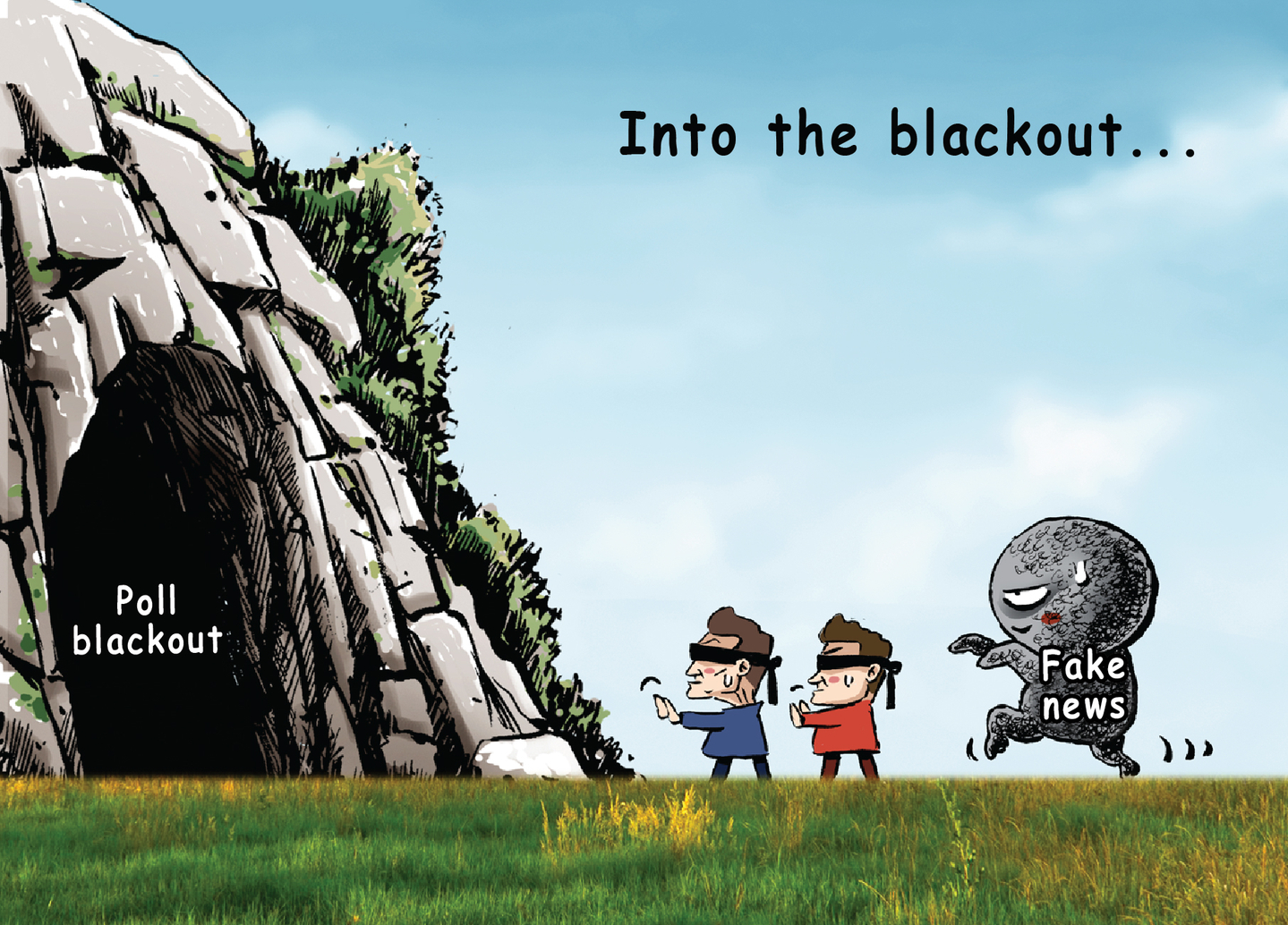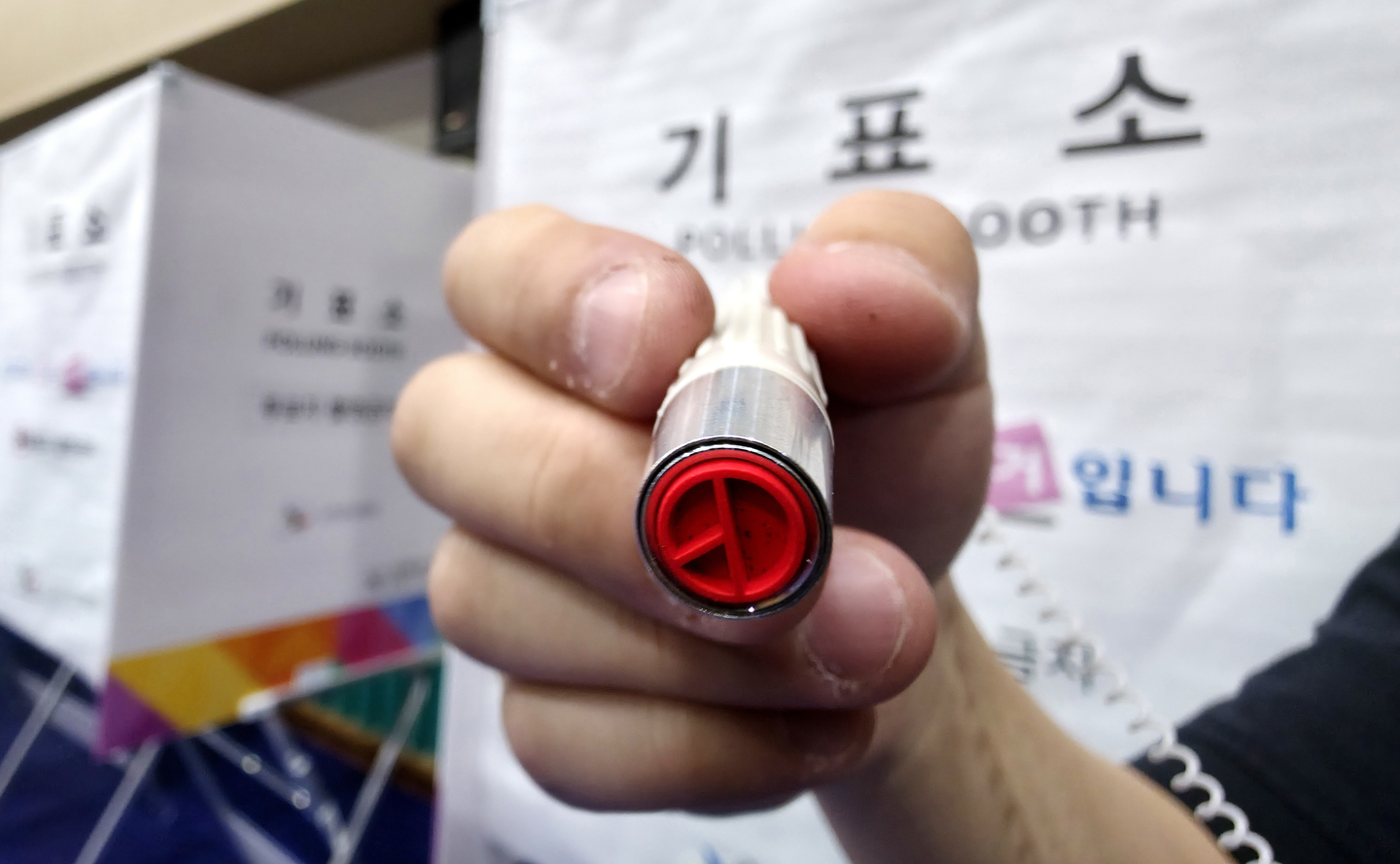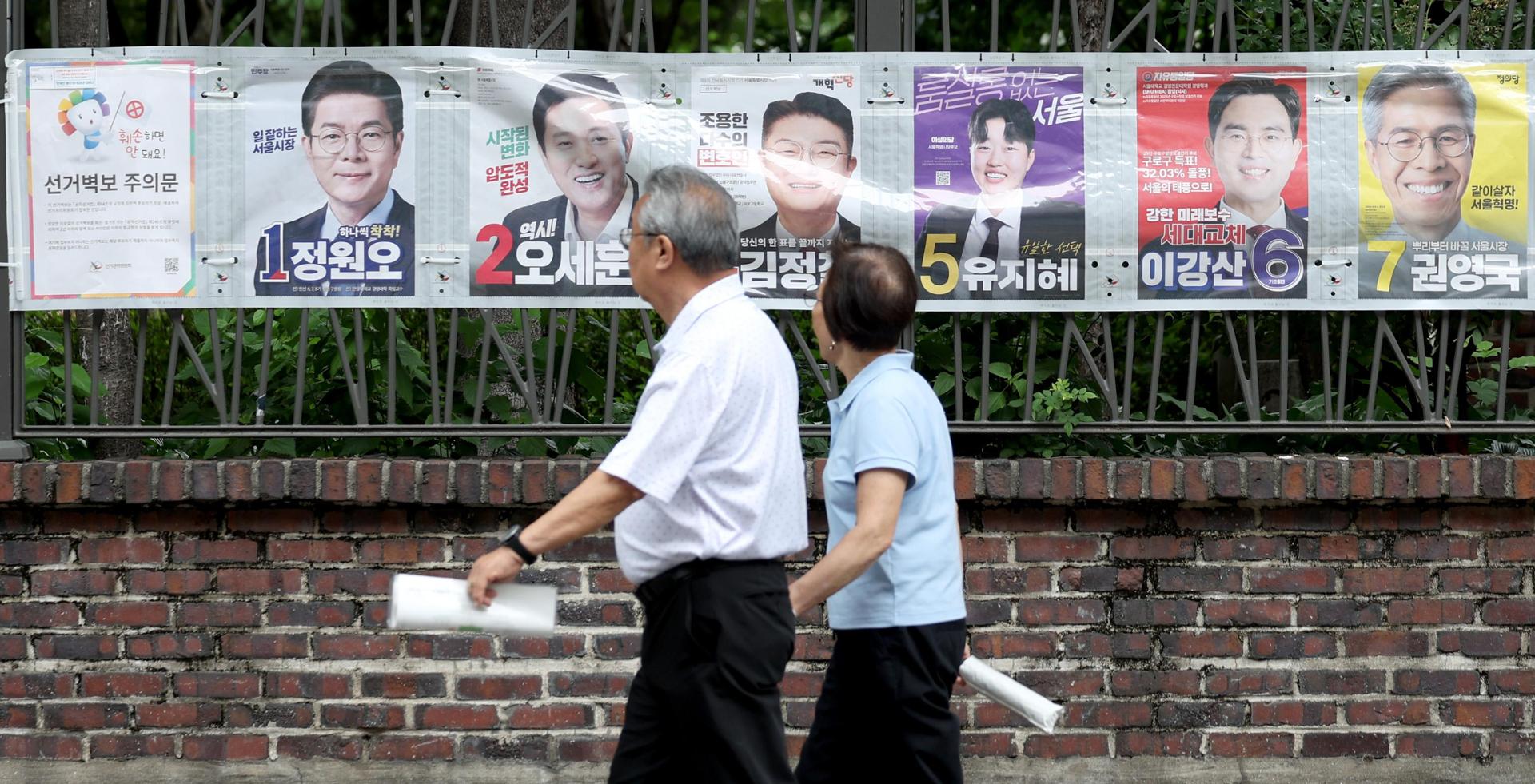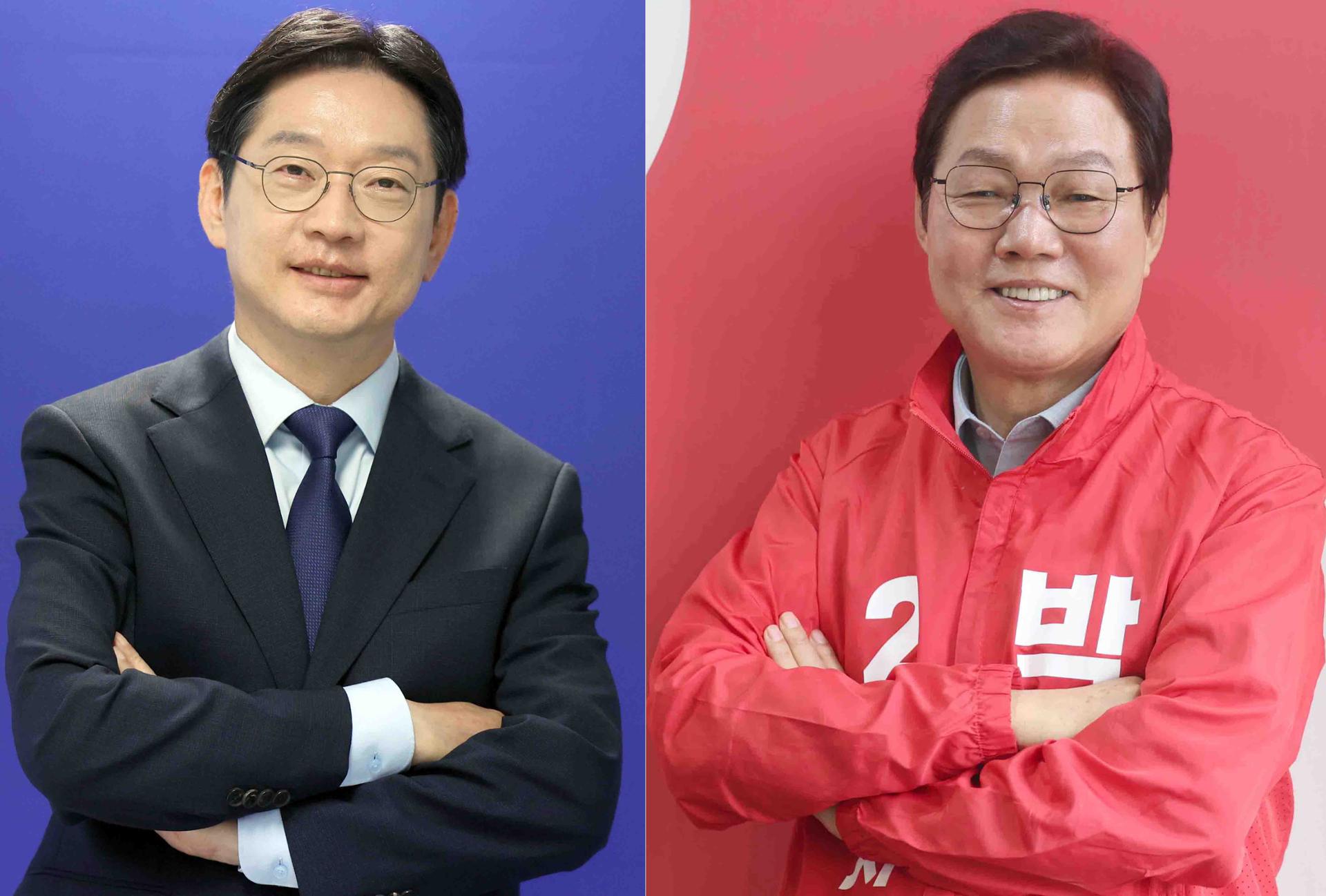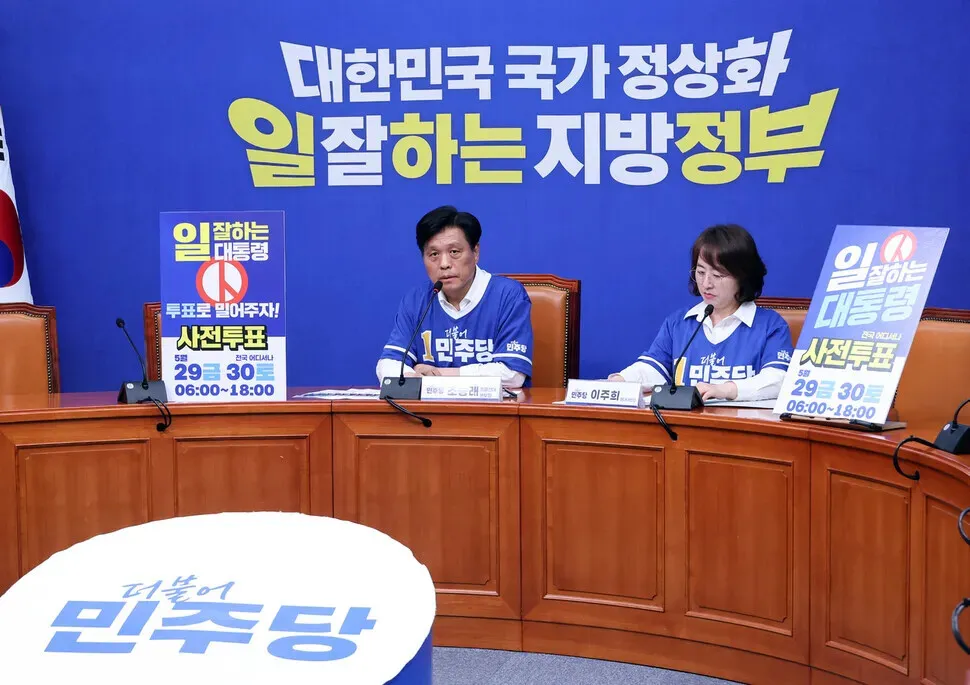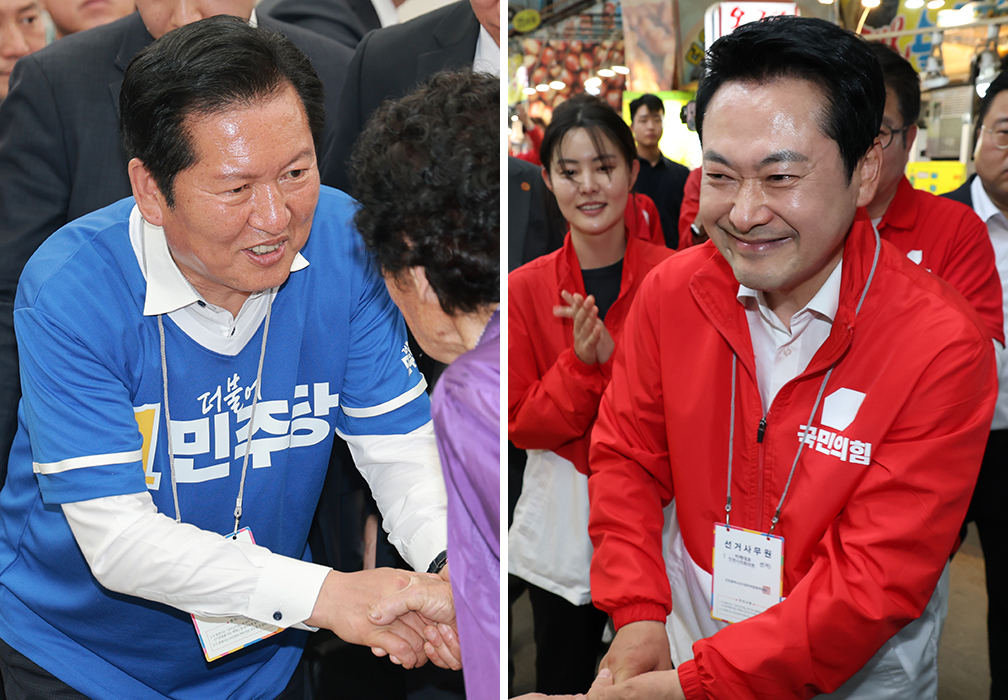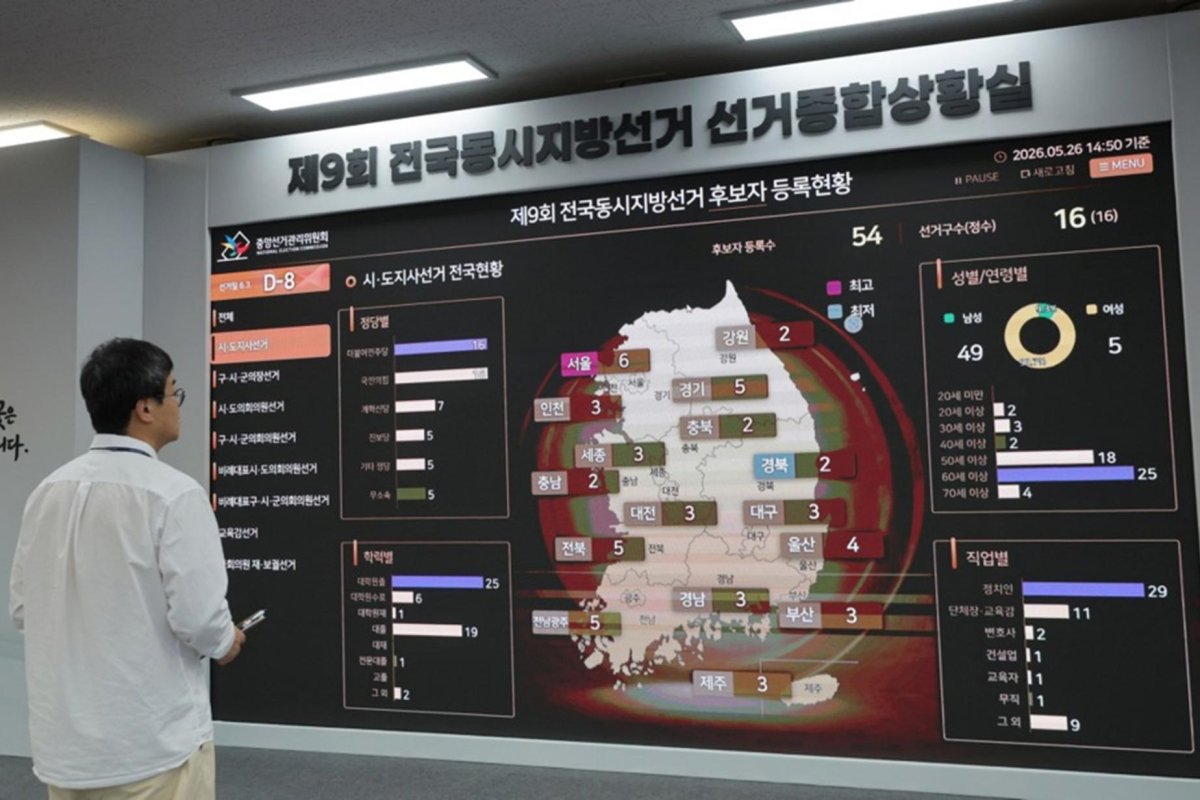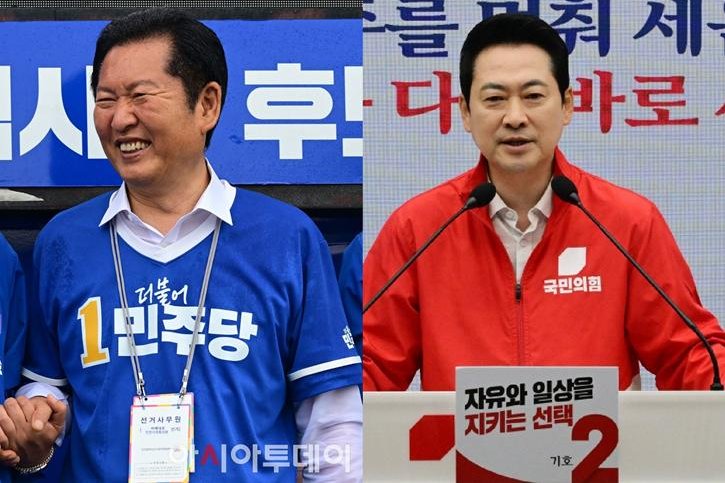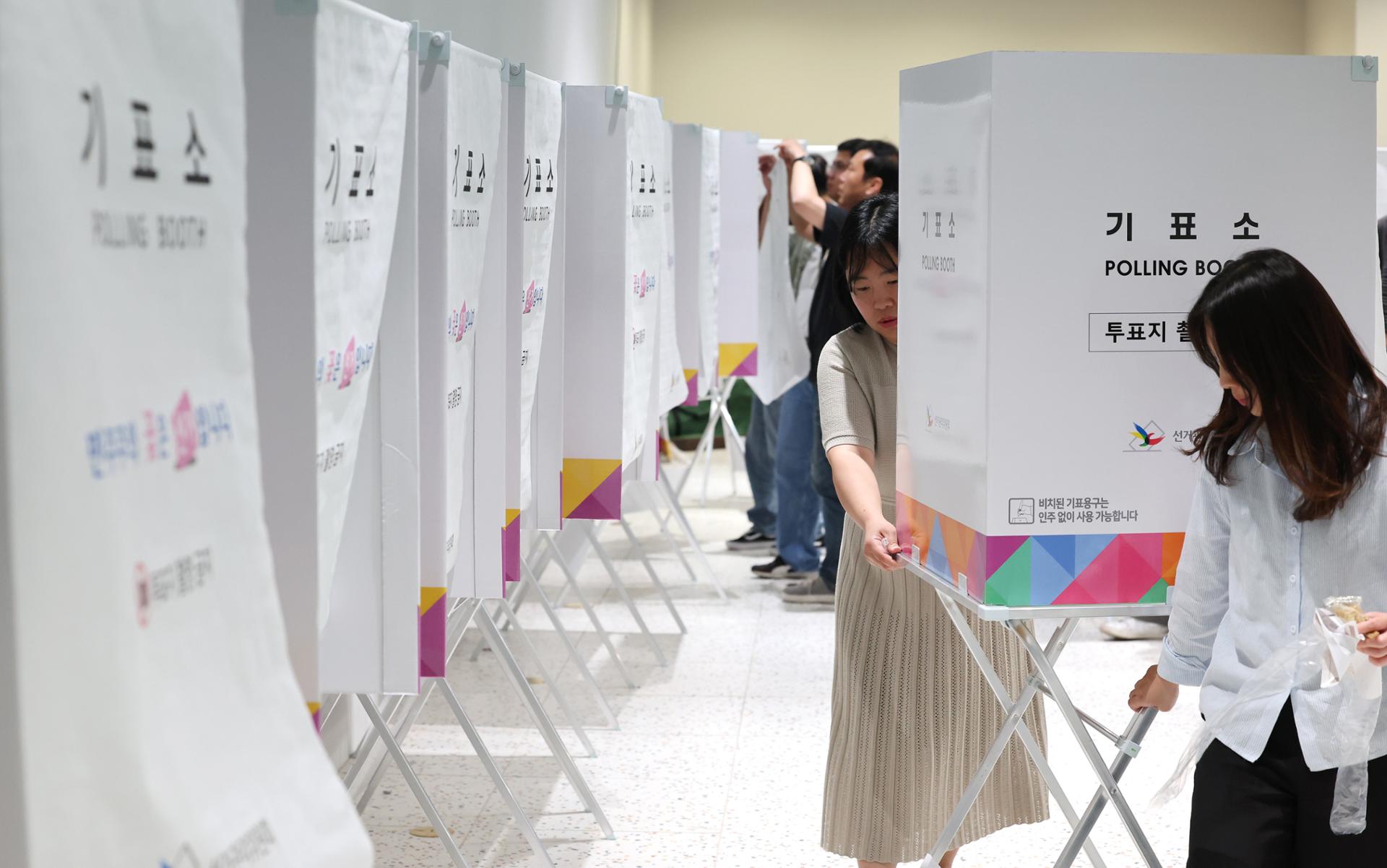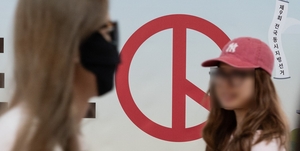
This photo shows a voting stamp mark at Incheon Airport on Wednesday. (Yoon Chang-bin/The Korea Herald) South Korea's June 3 election race is heating up, with opinion polls hinting at closer-than-expected races in many key battlegrounds eyed by the ruling Democratic Party of Korea and the main opposition People Power Party.The latest polls indicate that about half of the races for 16 major mayoral and gubernatorial posts are tightening, contrasting the Democratic Party's earlier expectations of a landslide victory.Opinion polls suggested that many ruling party candidates' leads have narrowed or been overtaken. This includes key areas such as the mayoral races for South Korea's two most populous cities: Seoul and Busan.Wednesday is the last day before the weeklong election blackout period begins Thursday and runs through June 3. Media coverage or citation of opinion polls conducted during the period are banned.A telephoned opinion poll released Tuesday by Hankook Research put ruling party Seoul mayor candidate Chong Won-o's popularity at 42 percent, 6 percentage points higher than the incumbent conservative mayor Oh Se-hoon.The poll, conducted on 800 people Thursday through Monday, was the first to show Chong's lead that fell below the margin of error. The previous three opinion polls showed Chong's lead against Oh was larger than 10 percentage points.Another pollster, Gongjung, placed Oh ahead of Chong by 0.4 percentage point, with Oh recording 44 percent support.In Busan, an opinion poll by Hankook Research indicated that 46 percent of respondents favored Democratic Party candidate Chun Jae-soo, whereas 34 percent favored incumbent Busan mayor Park Heong-joon. However, a Realmeter poll over the past weekend suggested that Chun was leading Park by 2 percentage points.The Democratic Party candidate was behind in opinion polls for the gubernatorial election in North Jeolla Province, a liberal stronghold, amid lingering controversies over the party's decision to expel incumbent governor Kim Kwan-young.Kim was forced out of the party after leaked footage showed him distributing cash envelopes to young party members and councilors in a restaurant. He now runs as an independent candidate. Kim had also been ahead of Democratic Party candidate Lee Won-taeg in opinion polls. Lee was embroiled in a similar scandal, but the party went on to nominate Lee as the gubernatorial candidate.Rep. Jo Seoung-lae of the Democratic Party, who leads the party's campaign committee, has picked mayoral races in Seoul, Busan, Daegu and Ulsan, as well as gubernatorial races in South Gyeongsang Province and North Jeolla Province, as being highly contested.The Democratic Party eyes another victory in the upcoming election, following consecutive wins: the 2024 general election, where the party won a majority of National Assembly seats, and the 2025 presidential election.Of 16 posts for key municipalities, 11 are currently held by the People Power Party, and three are occupied by the Democratic Party. One in North Jeolla Province is held by an independent governor, and the other in Daegu is empty.Meanwhile, parliamentary by-elections for 14 electoral districts will be held alongside the local elections.Four districts considered highly contested are Busan's Buk-A, Gyeonggi Province's Pyeongtaek-B, Ulsan's Nam-A constituency and South Chungcheong Province's constituency comprising Gongju, Buyeo and Cheongyang.Any loss in one of these contested constituencies would reduce the Democratic Party's lawmaker numbers, as 13 of the 14 up for contest were previously held by the Democratic Party.Neither rival party chair, Rep. Jung Chung-rae of the Democratic Party or Rep. Jang Dong-hyeok of the People Power Party, has defined their goals regarding the number of seats they hope to win.
Race tightens in key battlegrounds as blackout period begins Thursday
South Korea's June 3 election race is heating up, with opinion polls hinting at closer-than-expected races in many key battlegrounds eyed by the ruling Democrat
576 words~3 min read