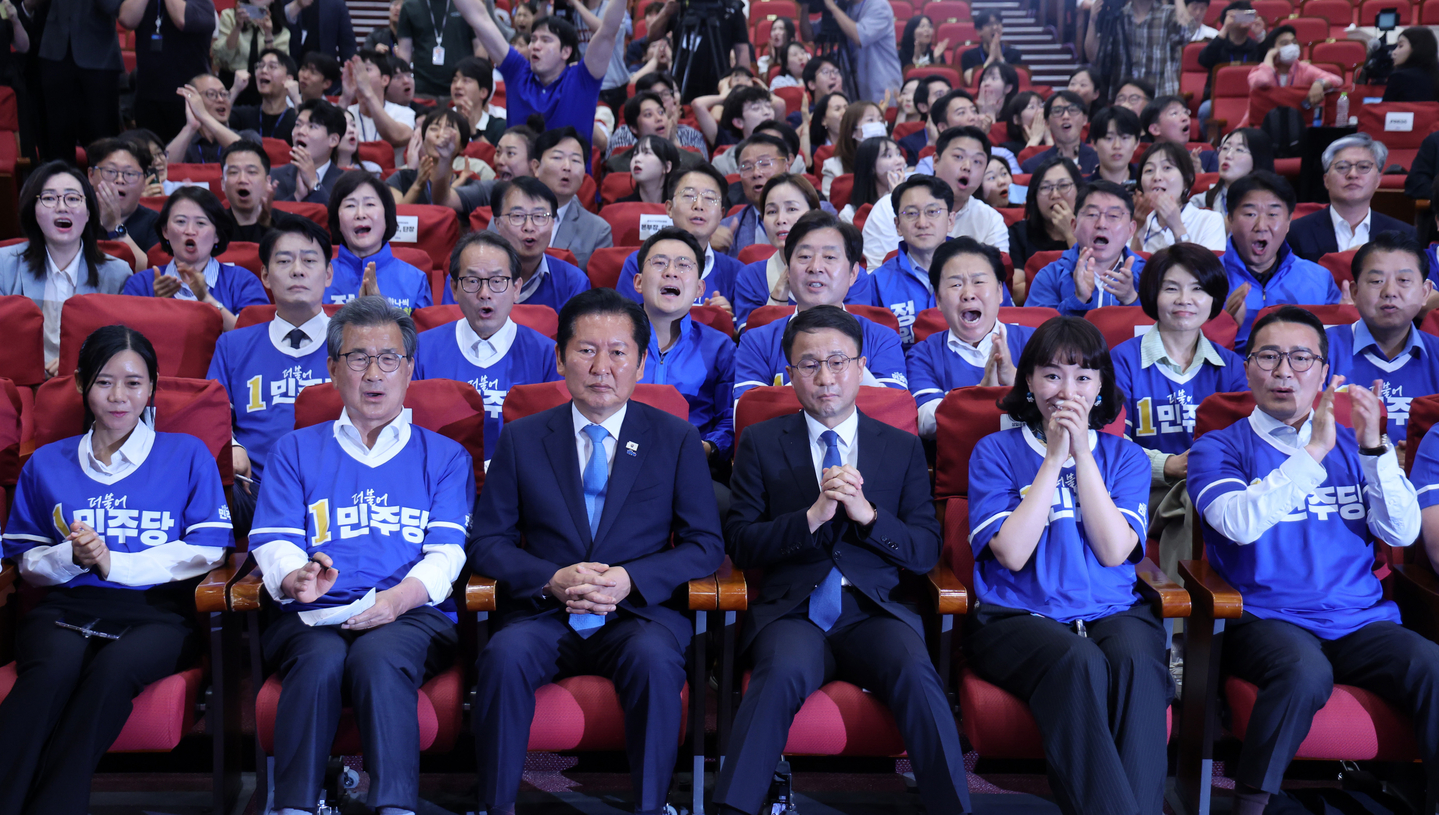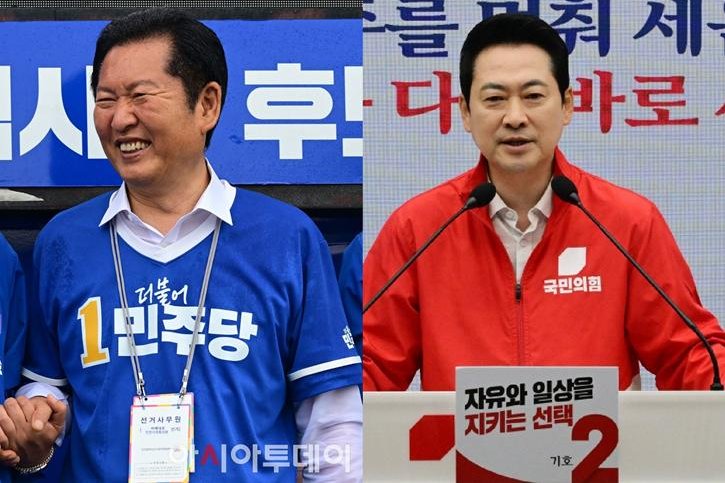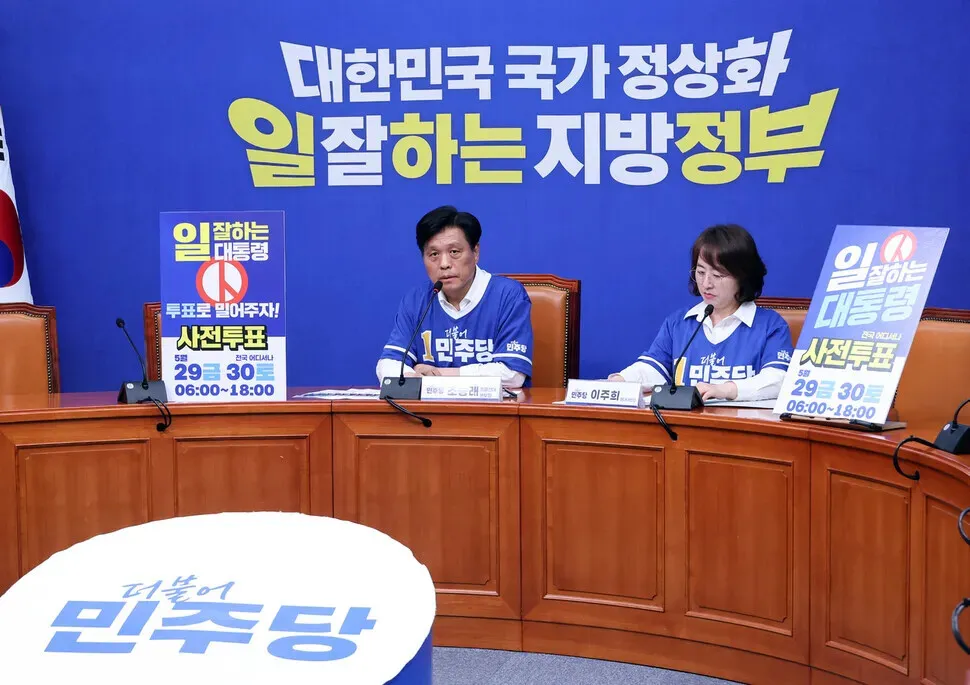
Rep. Jo Seoung-lae, the head of the Democratic Party’s election headquarters, gives a briefing on the upcoming local elections from the National Assembly building in Yeouido on May 28, 2026. (Yonhap)
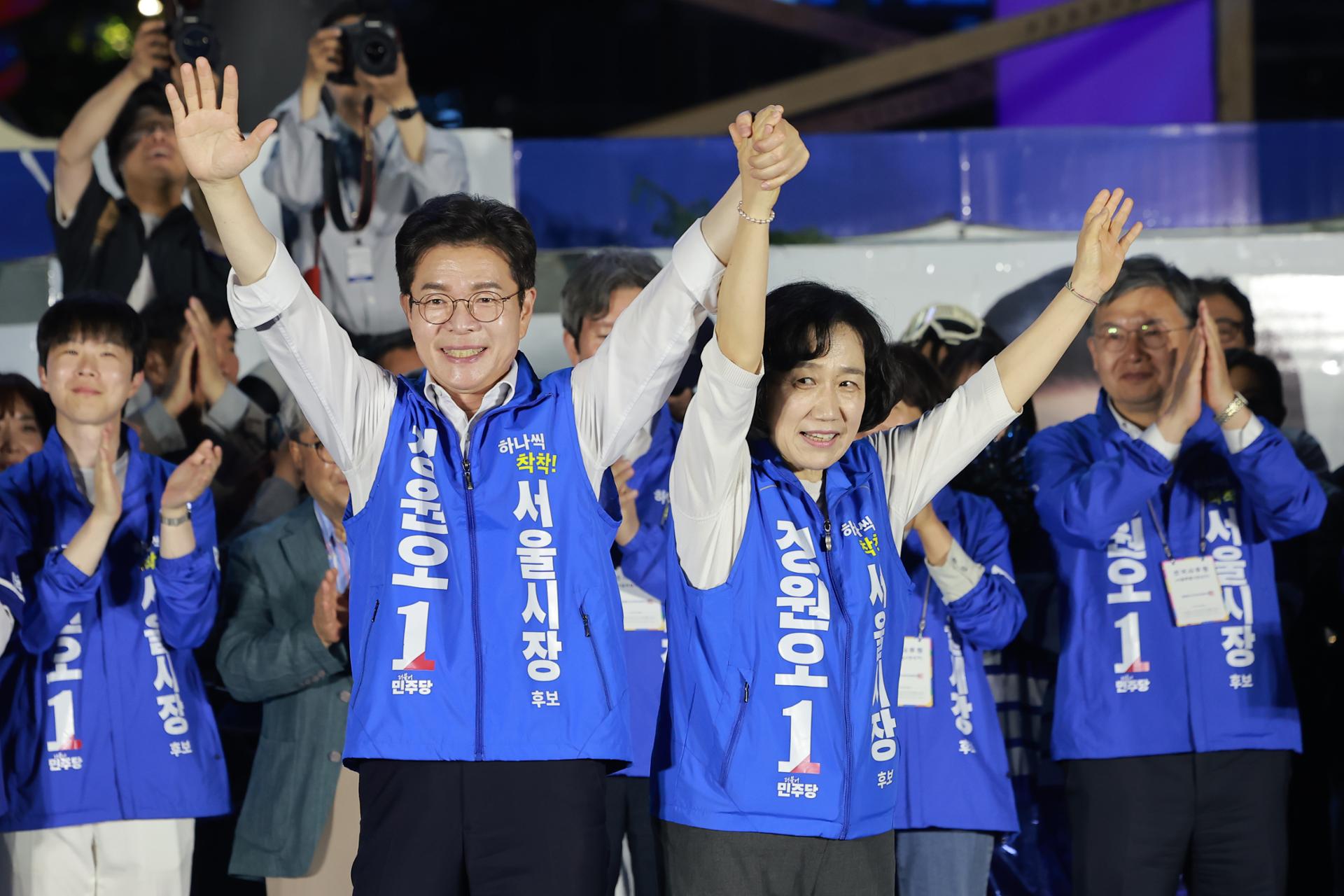
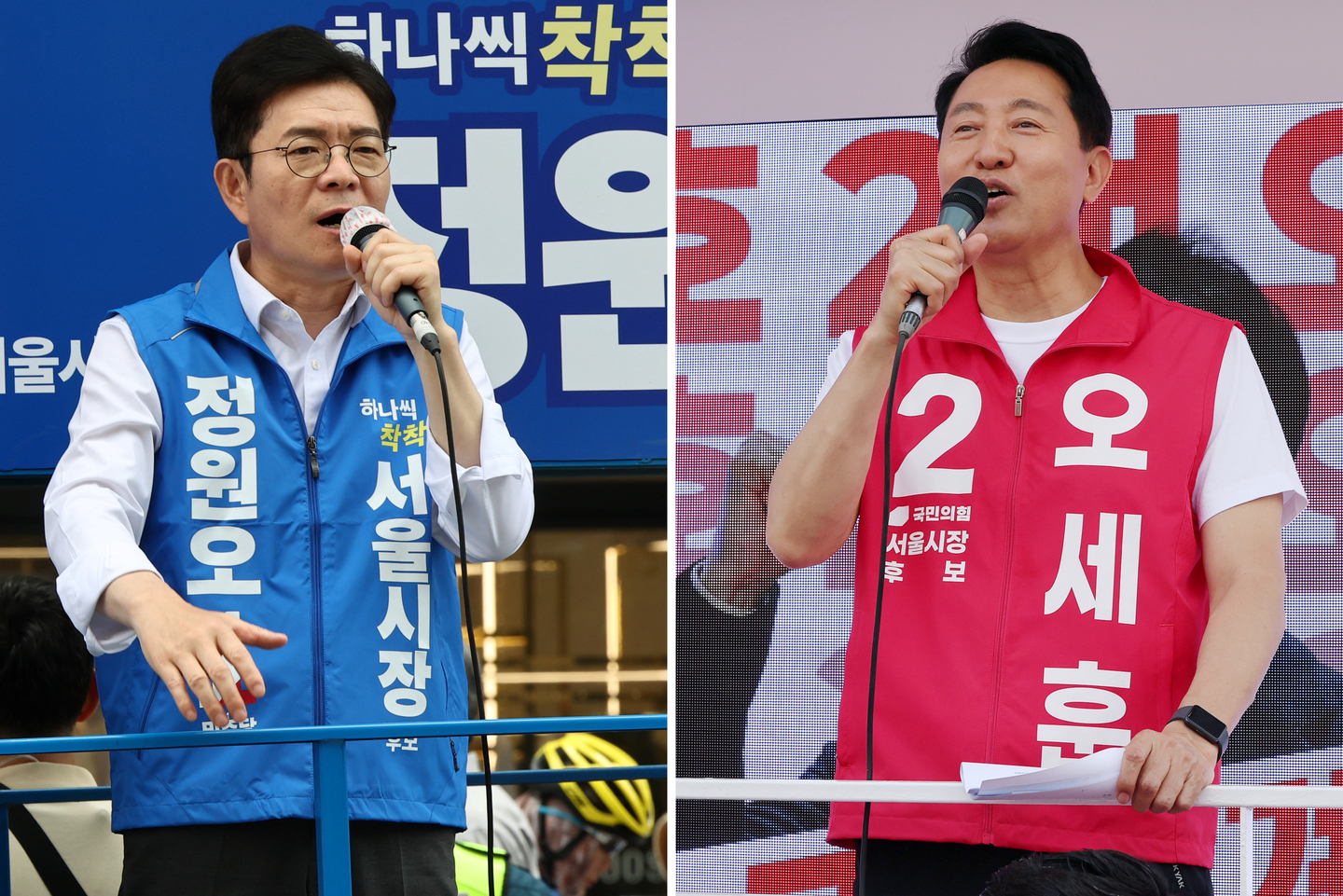
On Thursday, the day before early voting began for next week’s local elections, Korea’s ruling Democratic Party projected victories in nine mayoral and gubernatorial races across the country’s 16 metropolitan cities and provinces, while the main opposition People Power Party expected to win two. Both parties projected close contests in the Seoul, Busan, Ulsan and South Gyeongsang Province races.Parties’ scorecards ahead of election dayDemocratic Party🟢 Leading: 9 races🟡 Toss-up: 6 races🔴 Trailing: 1 racePeople Power Party🟢 Leading: 2 races🟡 Toss-up: 7 races🔴 Trailing: 7 racesRep. Jo Seoung-lae, who is overseeing the Democrats’ election headquarters, told a news conference Thursday at the National Assembly that no major changes had occurred in his party’s forecasts announced Tuesday: six close races (Seoul, Busan, Daegu, Ulsan, South Gyeongsang and North Jeolla Province) and one closely contested (North Gyeongsang Province). This indicated the party’s confidence in winning mayorships in Daejeon, Gwangju, Incheon, and Sejong, and governorships in Gangwon Province, Jeju Island, North Chungcheong Province, South Chungcheong Province, and South Jeolla Province.Rep. Jung Hee-yong, the head of the PPP’s election campaign headquarters, told reporters that his party expected favorable outcomes in two races — the Daegu mayoral race and the North Gyeongsang gubernatorial race — while considering seven others competitive: mayorships in Busan, Daejeon, Gangwon, Seoul and Ulsan, and governorships in South Chungcheong and South Gyeongsang provinces.By not mentioning Incheon, Gyeonggi, Sejong, North Jeolla, Jeju, North Chungcheong, South Jeolla and Gwangju, he implied that the party did not expect to come out on top in races there.Races in Daejeon, South Chungcheong and Gangwon were deemed strongholds by the Democrats and battlegrounds by the PPP. The latter predicted it would take the Daegu mayoral race, while the ruling party called it a toss-up.Both parties also offered no details on what they would consider a successful outcome in Wednesday’s elections. “From the outset, I had no intention of defining electoral victory in numerical terms. The goal is to win as many races as possible. Every region counts,” said Jo.Jung called it “pointless to mention specific numbers at this point.” “All we can do is give it our all,” the PPP leader said. Yet many in both parties increasingly see the mayoral races in Seoul and Busan as the key battlegrounds that will ultimately determine who can claim victory.“Victories in Seoul and Busan are ultimately the most important,” a source within the Democratic leadership said. A PPP lawmaker said that only winning only in the traditionally conservative Yeongnam region, made up of the two Gyeongsang provinces and Busan, Daegu and Ulsan, would amount to “nothing more than ‘a decent showing.’”The minor center-left Rebuilding Korea Party meanwhile hopes to win a number of races, including those for open National Assembly seats. Party founder Cho Kuk is running for an open seat in the Pyeongtaek B district, while Bae Su-jin is running for the open seat in Gwangju’s Gwangsan B district. The party also hopes to win seven races for heads of municipalities, counties and districts in the traditionally liberal southwest Honam region. The minor center-right Reform Party has set a goal of “winning as many elections in multi-member constituencies with three or more members as possible.” The progressive Jinbo Party hopes to produce five or more heads of local government offices, while the Justice Party has set an objective of winning 10 or more races for everything from city council seats to major mayoral races. By Jang Na-rye, staff reporter; Ko Han-sol, staff reporterPlease direct questions or comments to [english@hani.co.kr]